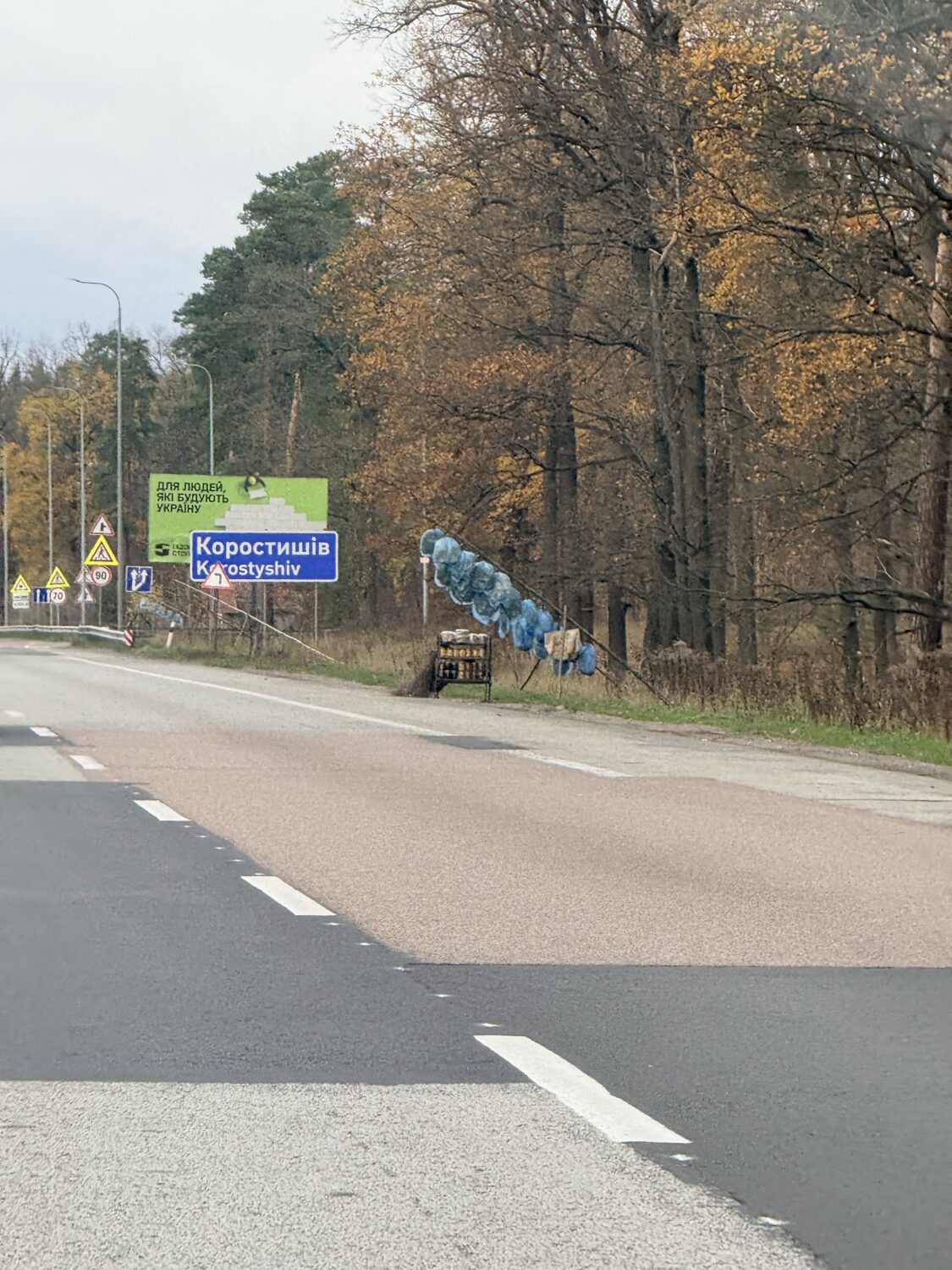
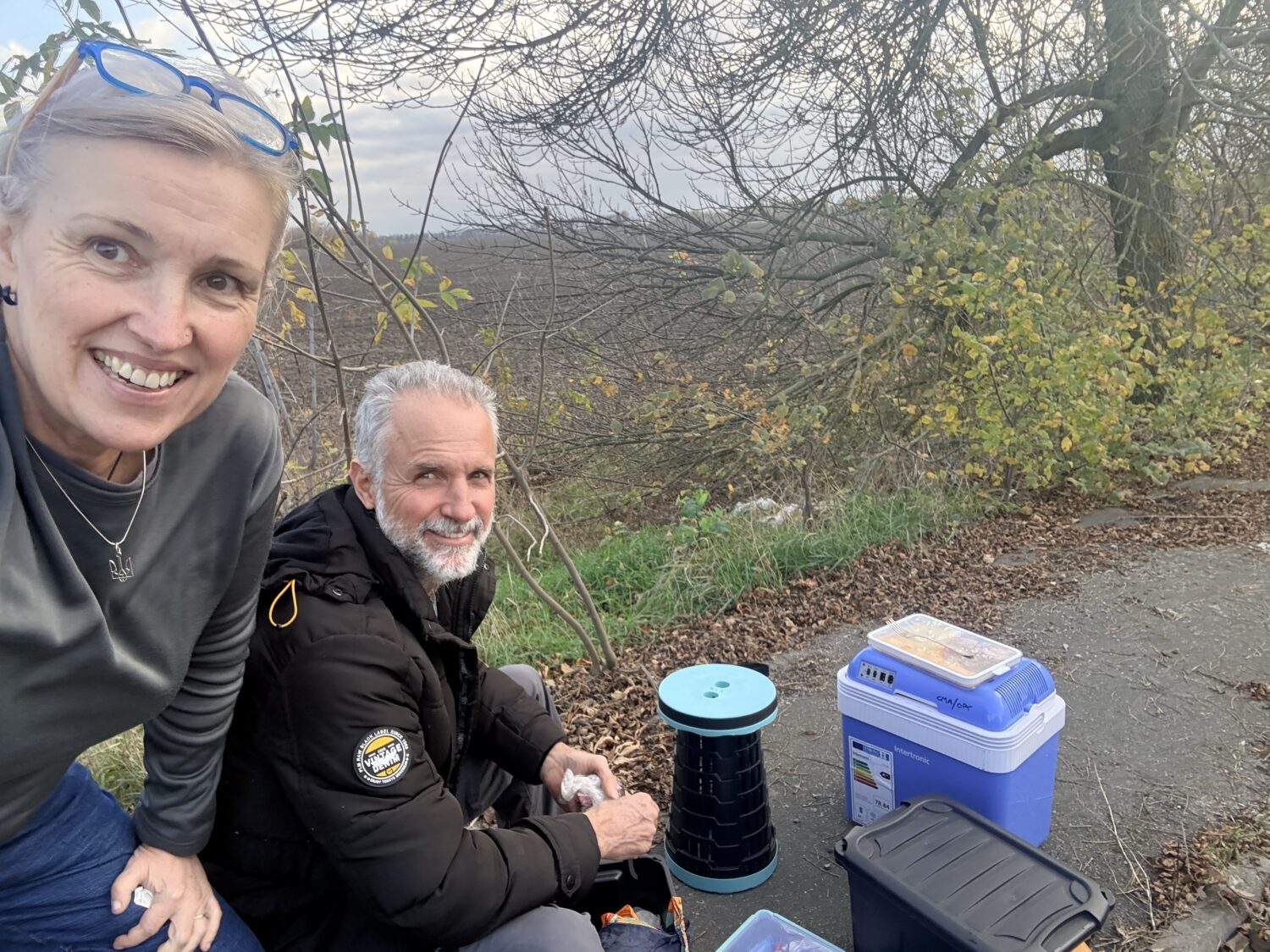
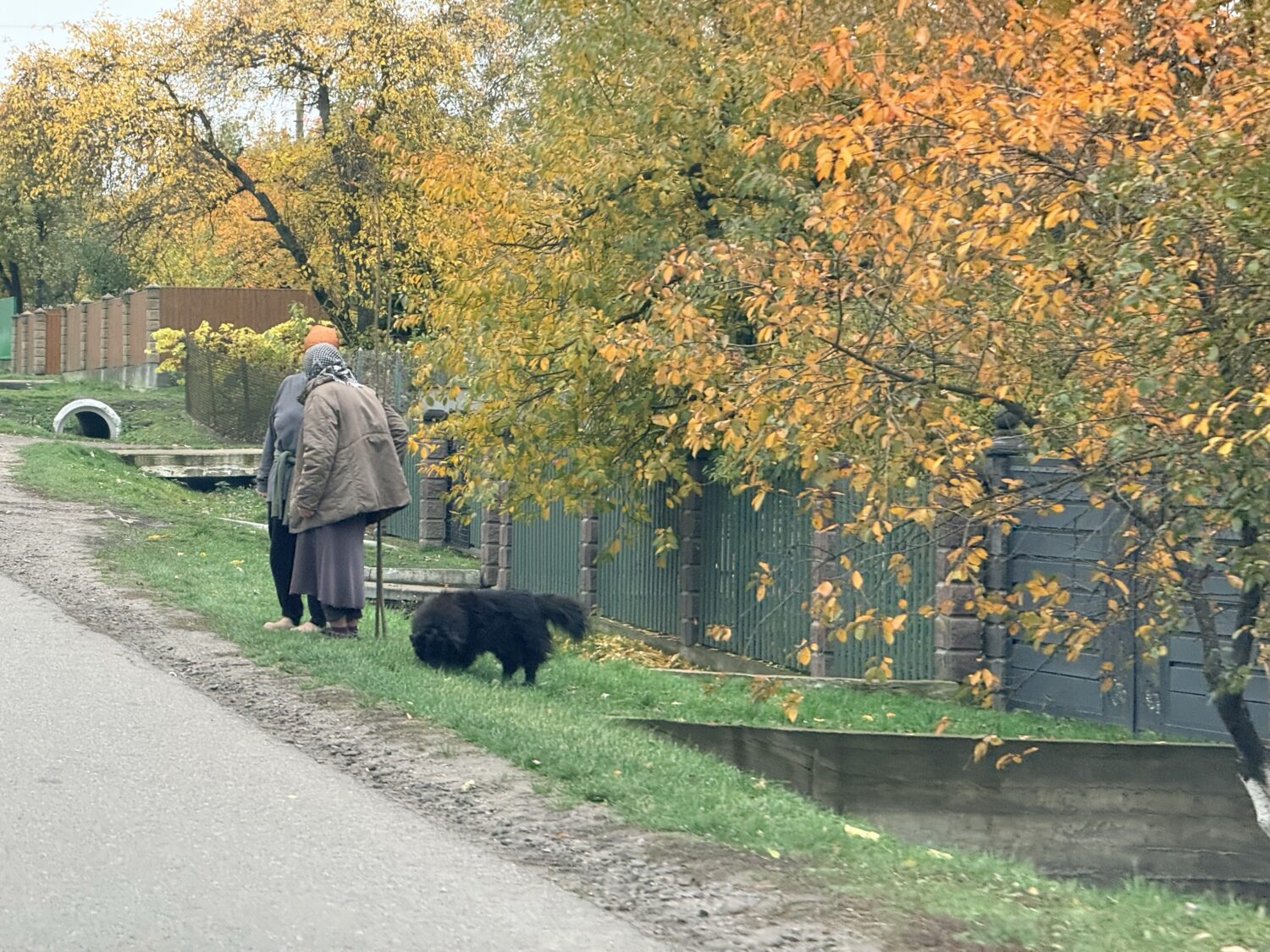
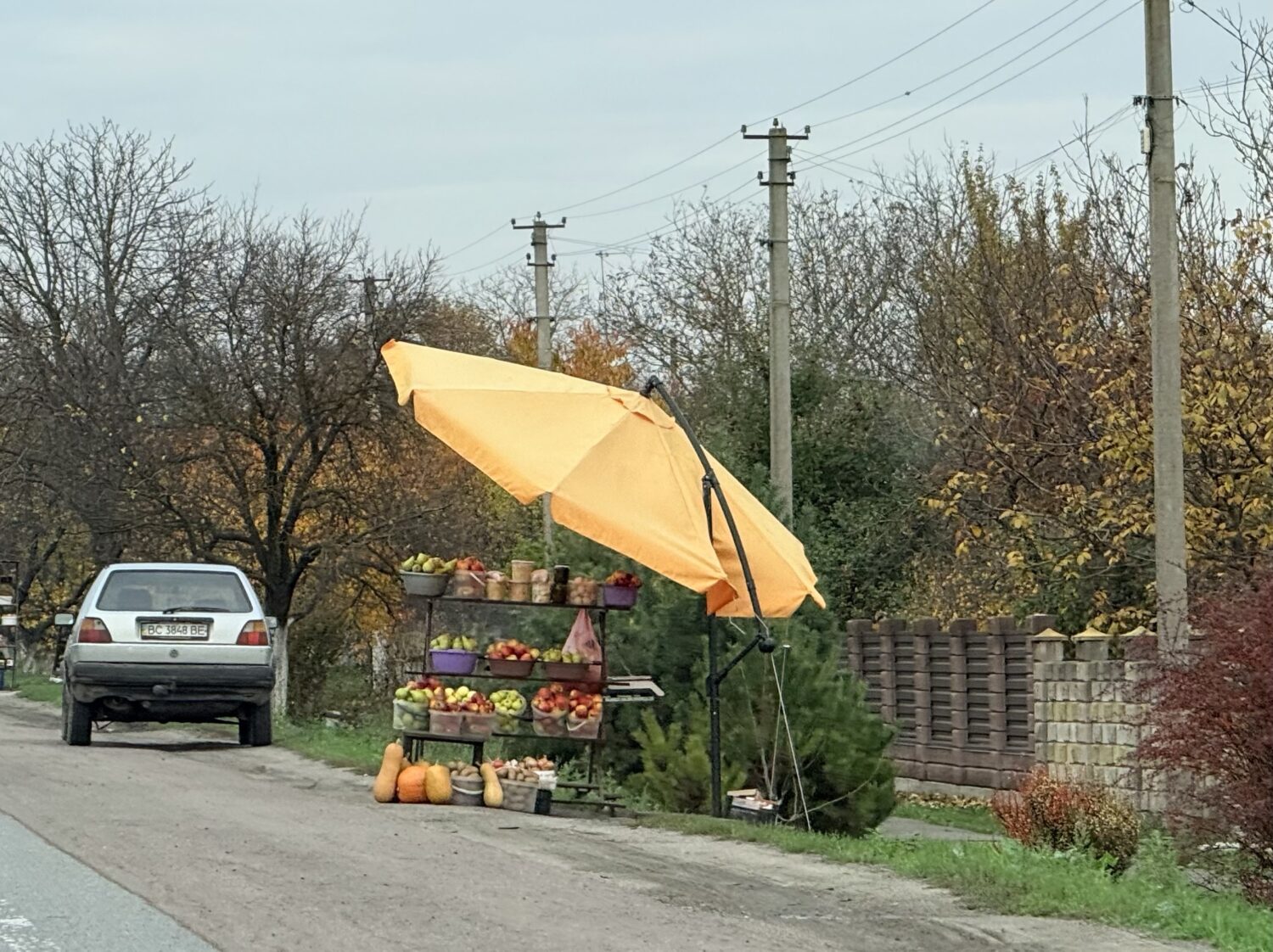
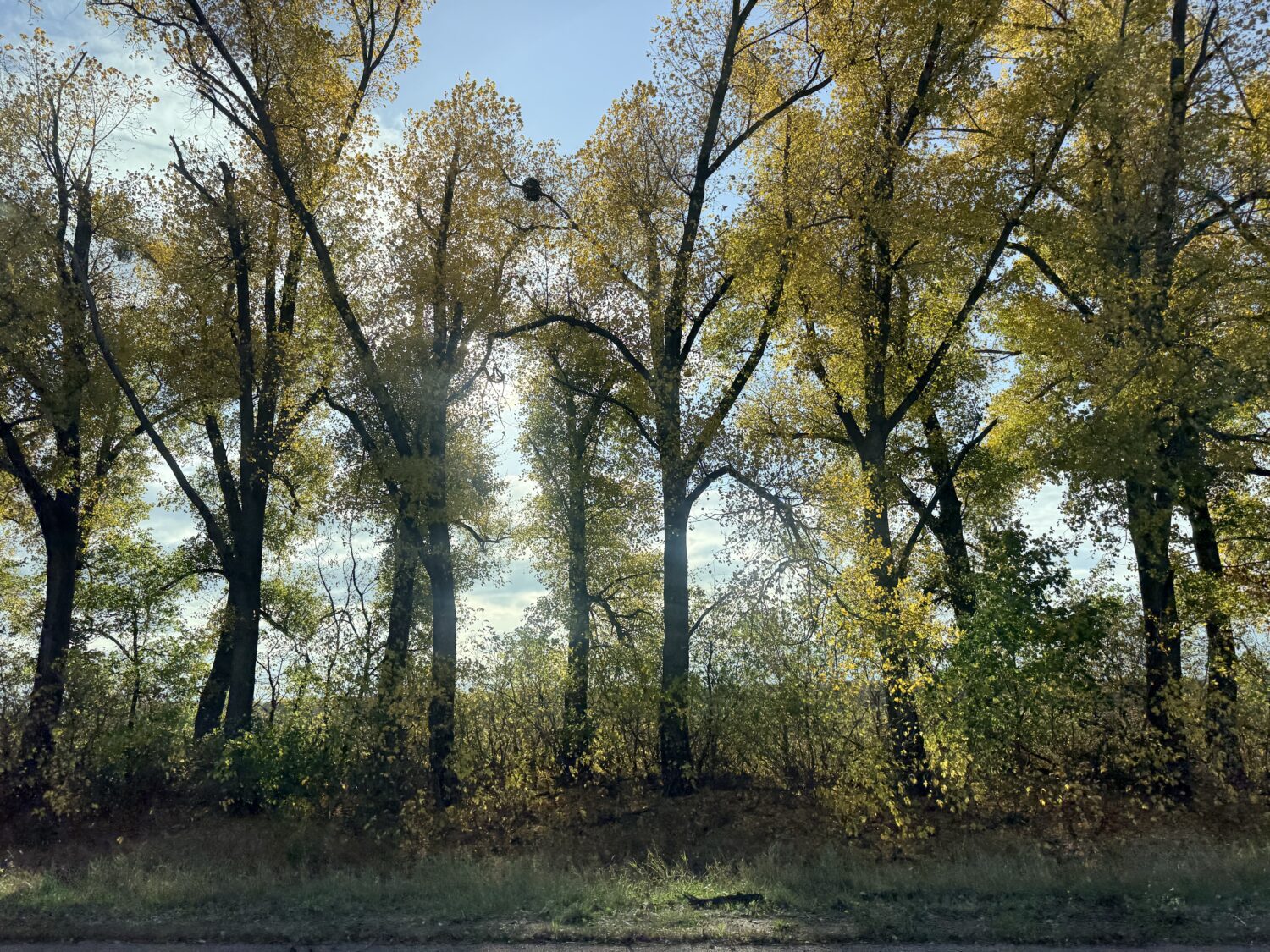
Again we were driving to Kharkiv. And again, Ukraine gave us its usual contrast in a single day: forests and fields in full autumn colour, a roadside picnic in crisp air — and then, because this is Ukraine, the reminders came.
Losing the Navigation, Keeping the Bridge
You drive through Kyiv hoping you don’t lose your navigation app to an air alert halfway across the city. We’ve learned not to rely on it too heavily; these days we’re simply grateful when we finish a trip without losing it at all. This time we were rerouted away from the main bridge. The detour was annoying, but the gratitude at still having navigation at all smoothed it over quickly. The bridge itself had been struck twice by missiles a few days earlier and was closed. Russia has threatened to take out every bridge crossing the river that divides the country. Air defence machine guns line what’s left of them — photographing them is an offence, so you’ll have to take our word for it. Kyiv is darker at night now. Traffic lights don’t always work. Winter is looming as large as ever.
Finding Fuel After Dark
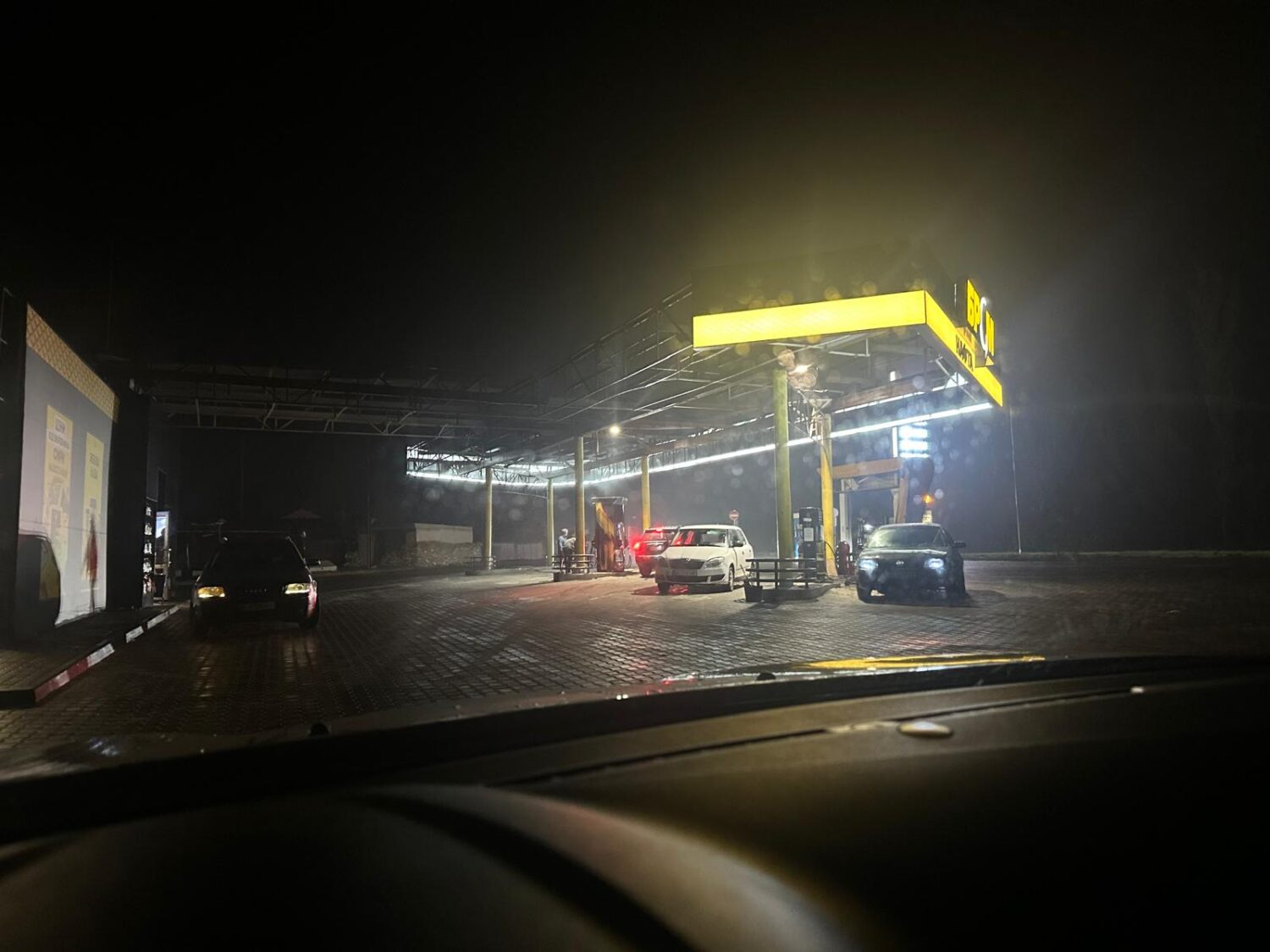
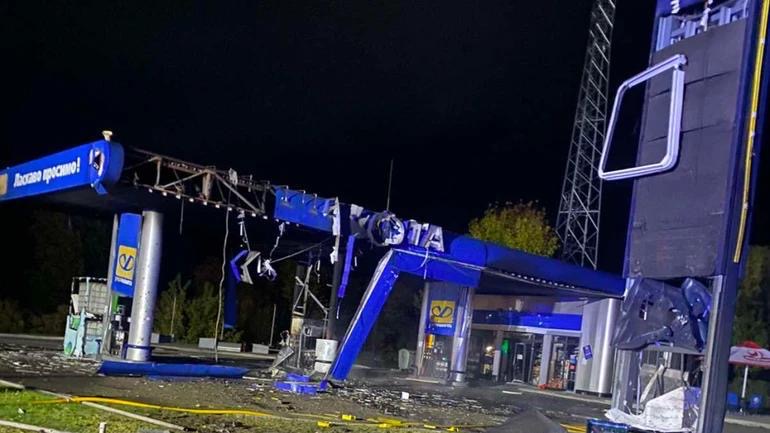
Refuelling isn’t the simple decision it should be. We already knew from our last trip that nearly every petrol station along one long stretch of highway had been hit by Shahed drones. What struck us most was that around a third of them were back open anyway — patched up as best they could, made a little safer, and getting on with it. Some were simply boarded. Others had sandbags, concrete blocks, rock gabions, or drone nets strung overhead. A few had even built their own small shelters alongside. It’s hard to do anything but admire that kind of determination.
After dark, you can’t always tell if a station is open — the windows are deliberately dim, we assume, so as not to catch the eye of the next loitering drone. So you look for one that seems open, check the board for diesel (plenty have sold out), check for the all-important toilet sign, and then check the air raid app one more time before committing. If there’s an alert, you keep driving. We don’t think the staff would serve you under an alert anyway, and given the damage we saw, it’s entirely possible some of them have already lost colleagues to one. At one station we pulled in, realised we were under an alert, and left straight away — only to pass a fresh, twisted wreck of a fuel truck in the exit lane on our way out. It had been hit by a drone.
Convoys, Checkpoints, and Trenches
Along the road we found ourselves in the middle of a convoy of troop carriers, thinking, as we often do, about the very ordinary people inside them heading to places no one should have to go. Then a checkpoint, armed soldiers waving us past bunkers and nets. Then the defence lines — vast trenches running in parallel, barbed wire, dragon’s teeth — scarring some of the most beautiful countryside you’ll ever see, an insurance policy against the unthinkable. Entering a drone-net tunnel 25km long for the first time stirred up a few feelings I’m still sorting through.
A Hotel That Wasn’t Quite As Advertised
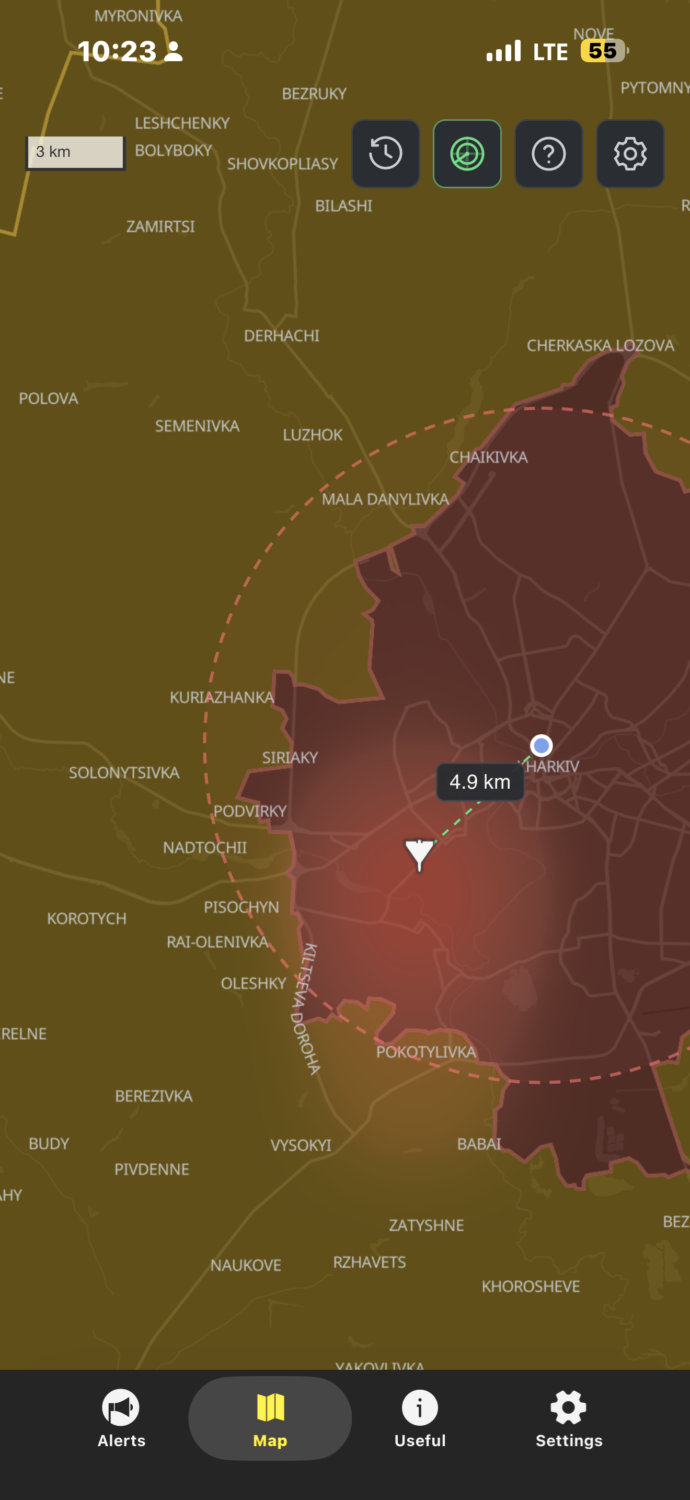
Finding our hotel in Kharkiv in the dark, we stopped to look up at a strange, differently shaped shahed type drone overhead — narrow wings, a sound like a scooter on constant revs. Not a typical Shahed. Not on the alert app either. Everyone on the street was looking up as it sputtered across above us, above the city buildings and into the dark. We still don’t know what it was.
The hotel itself turned out to not really be ‘as advertised.’ Our booked ‘basement room’ was in fact on the ground floor, and its heating was broken, so they ‘upgraded us’ — at no extra charge — to the ‘suite’ upstairs. ‘City views’ doesn’t have quite the same ring in a country where apartment blocks get hit by Shahed drones on a regular basis. The wifi didn’t work, the little electric heater fought the cold all night and mostly lost, and we weren’t entirely convinced the place was even a legal hotel. Still, we had electricity, which these days counts as a genuine win. We stayed one night only — fully aware that very few people here get to simply choose somewhere else.
The Night a Hospital Was Hit
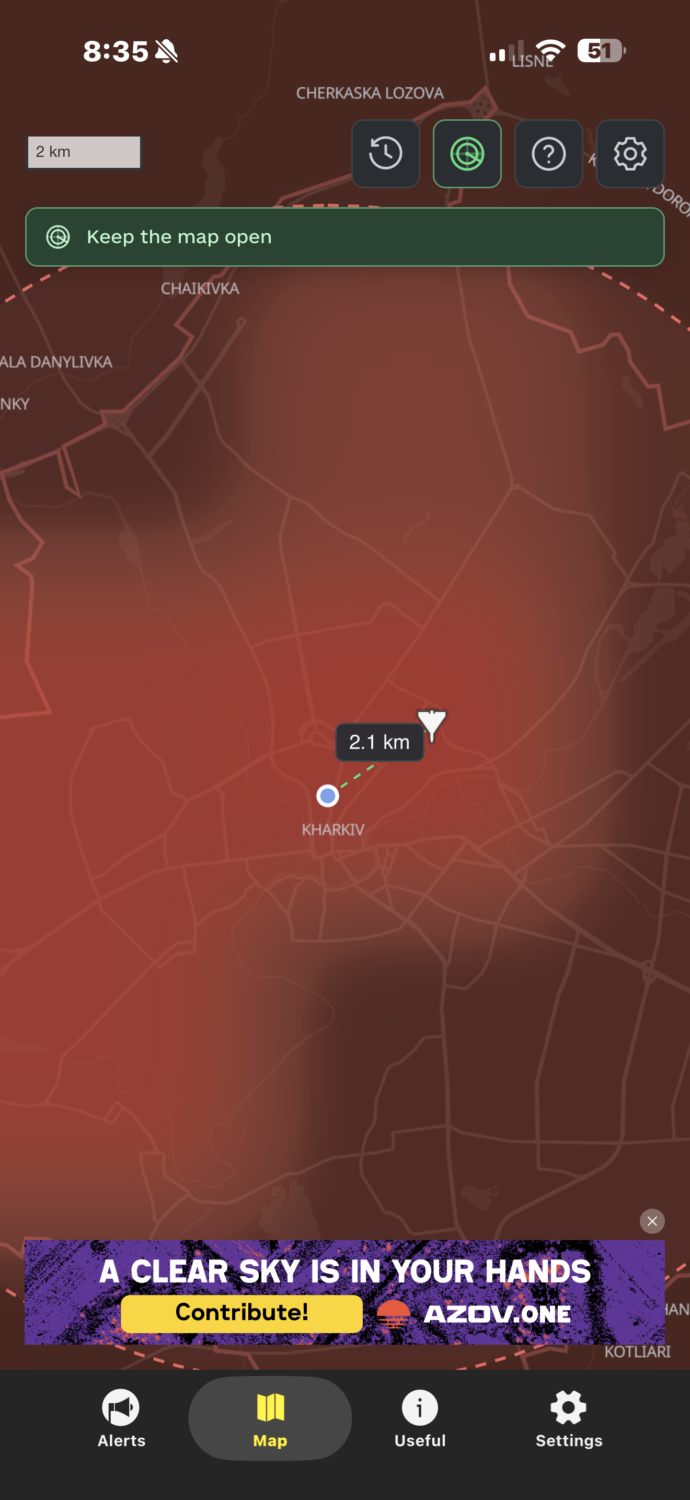
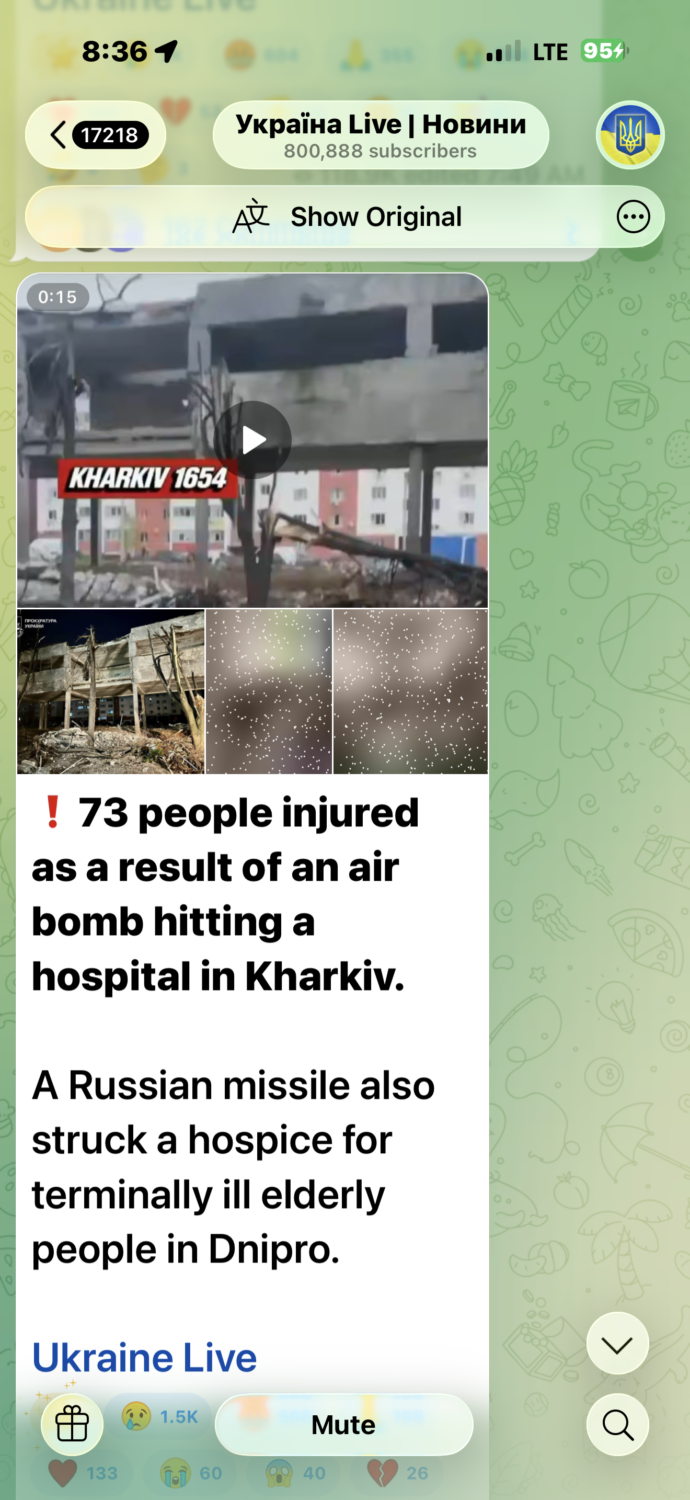
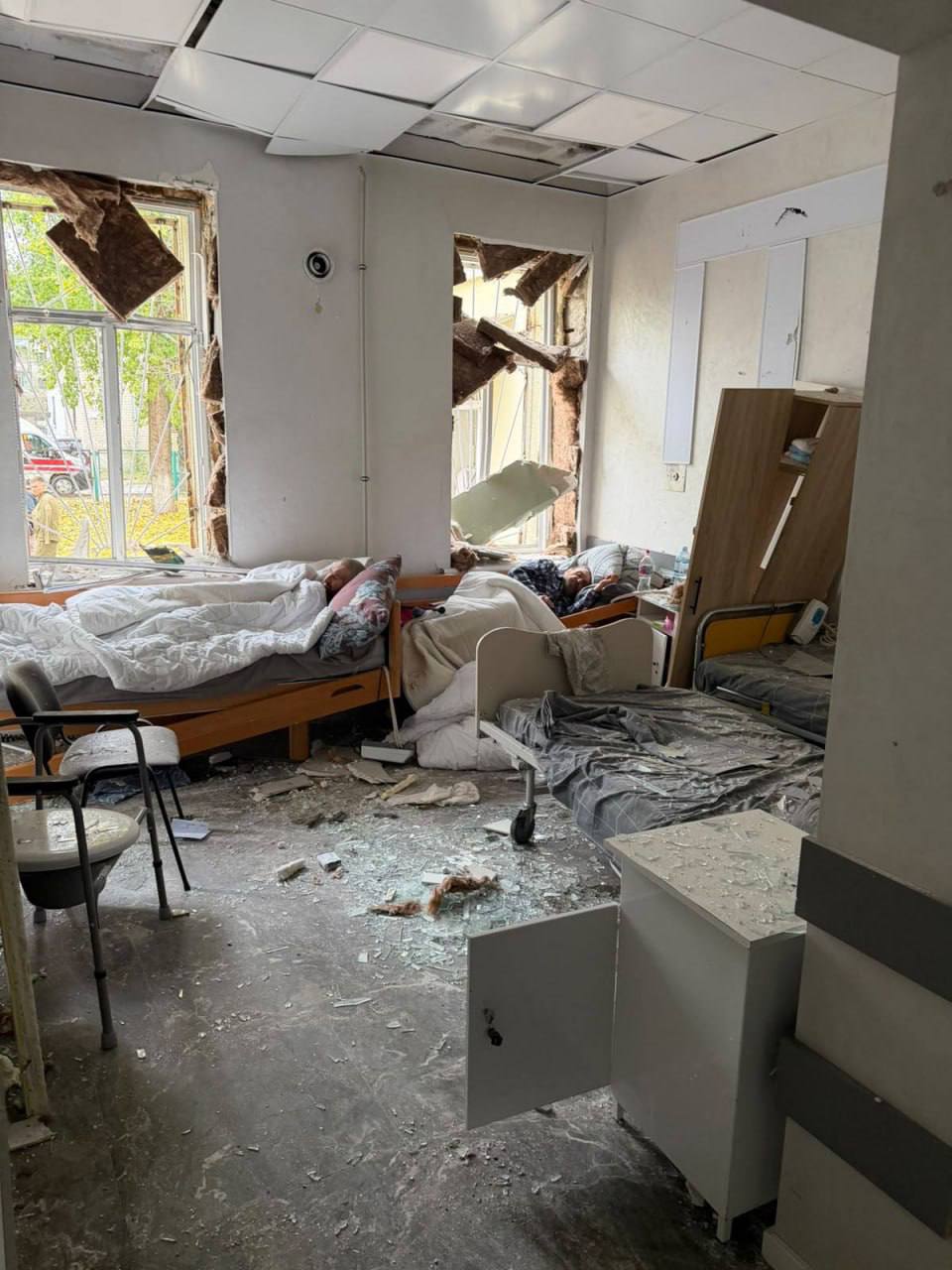
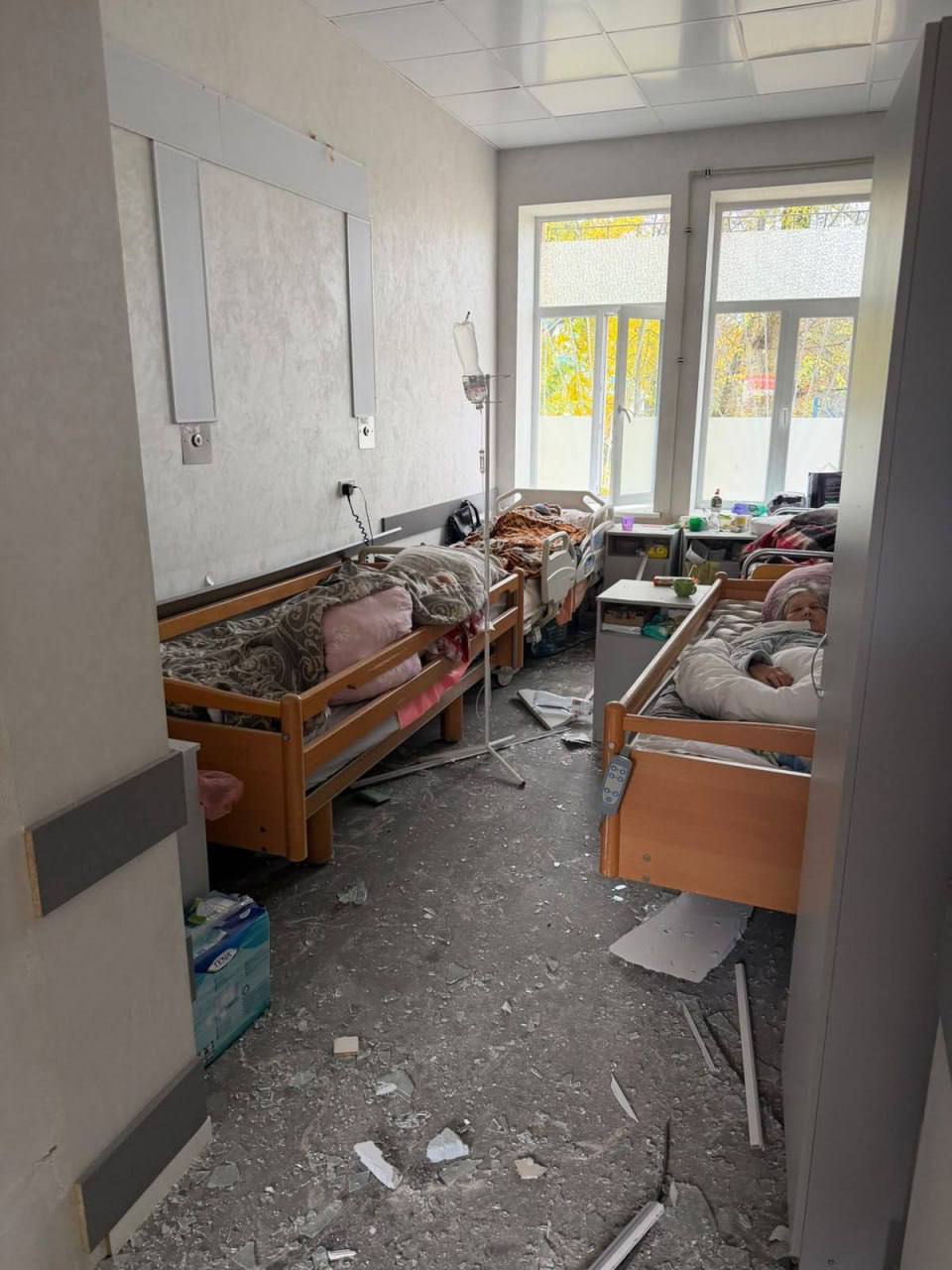
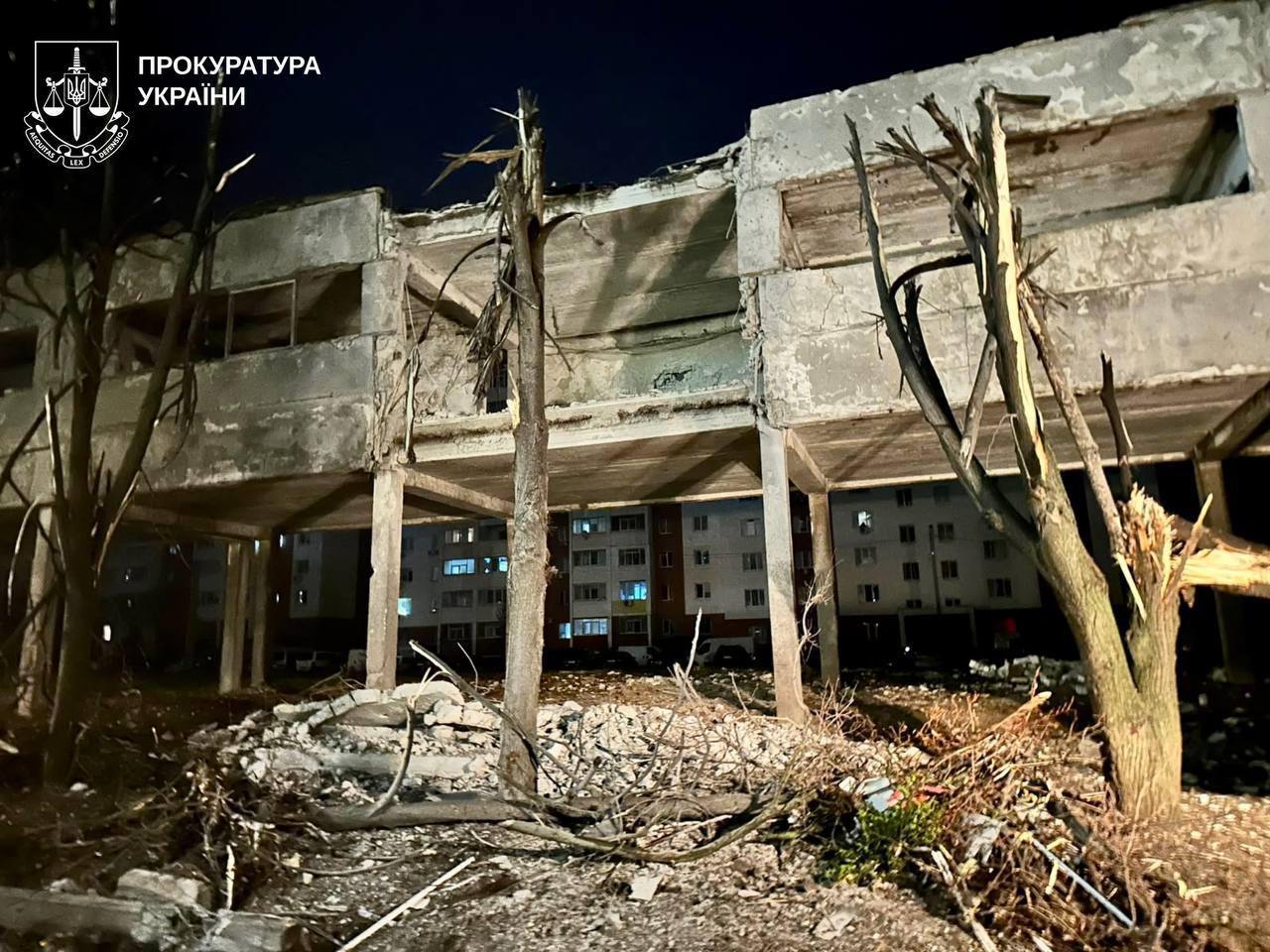
Through the night I heard explosions — one shook the room. I was already awake. Ron, who normally wakes at the faintest noise, slept through the entire thing. It turned out to be a strike on a hospital a few kilometres away. (News story HERE)
The Clinic for Those Who Fled
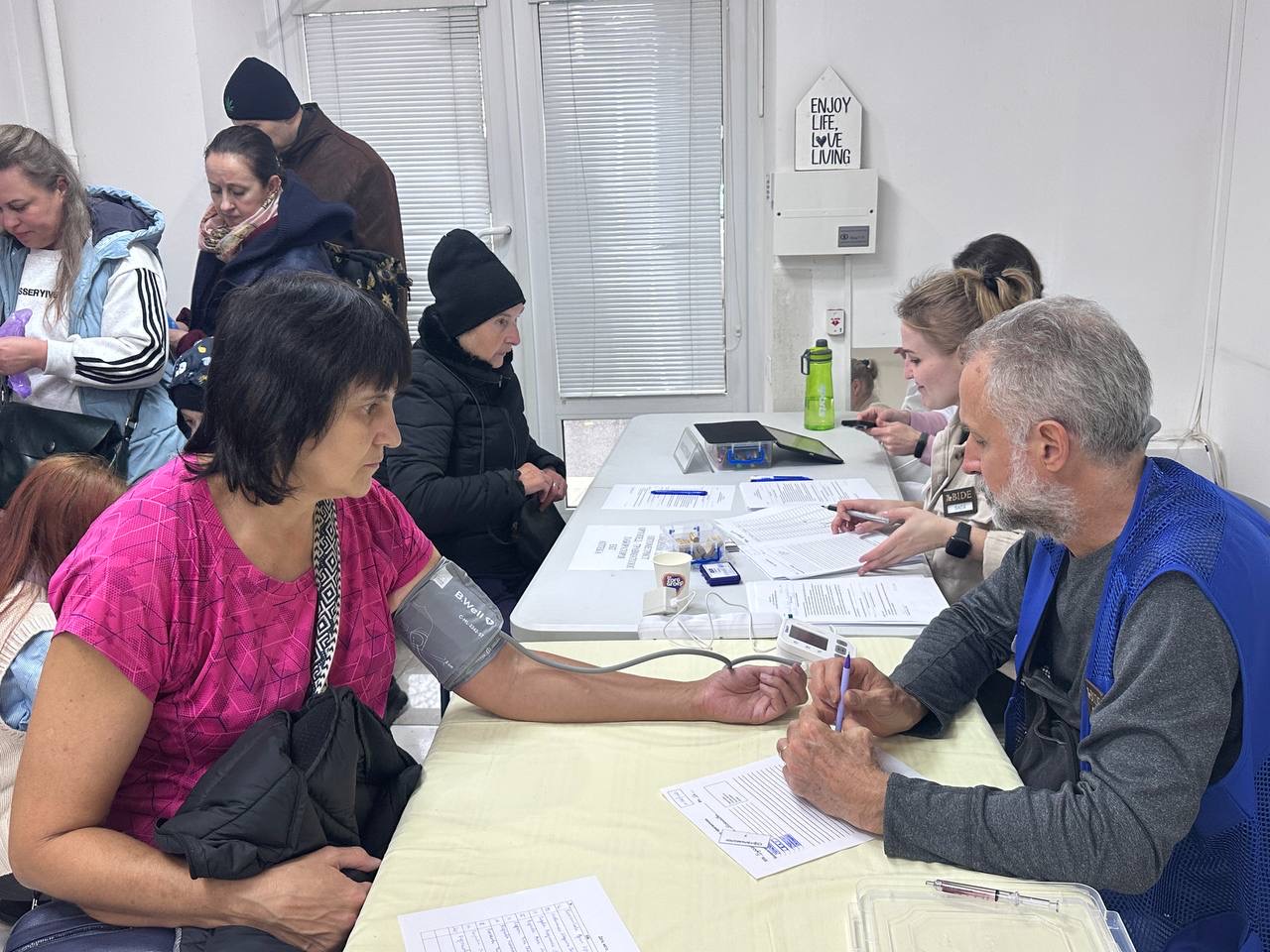
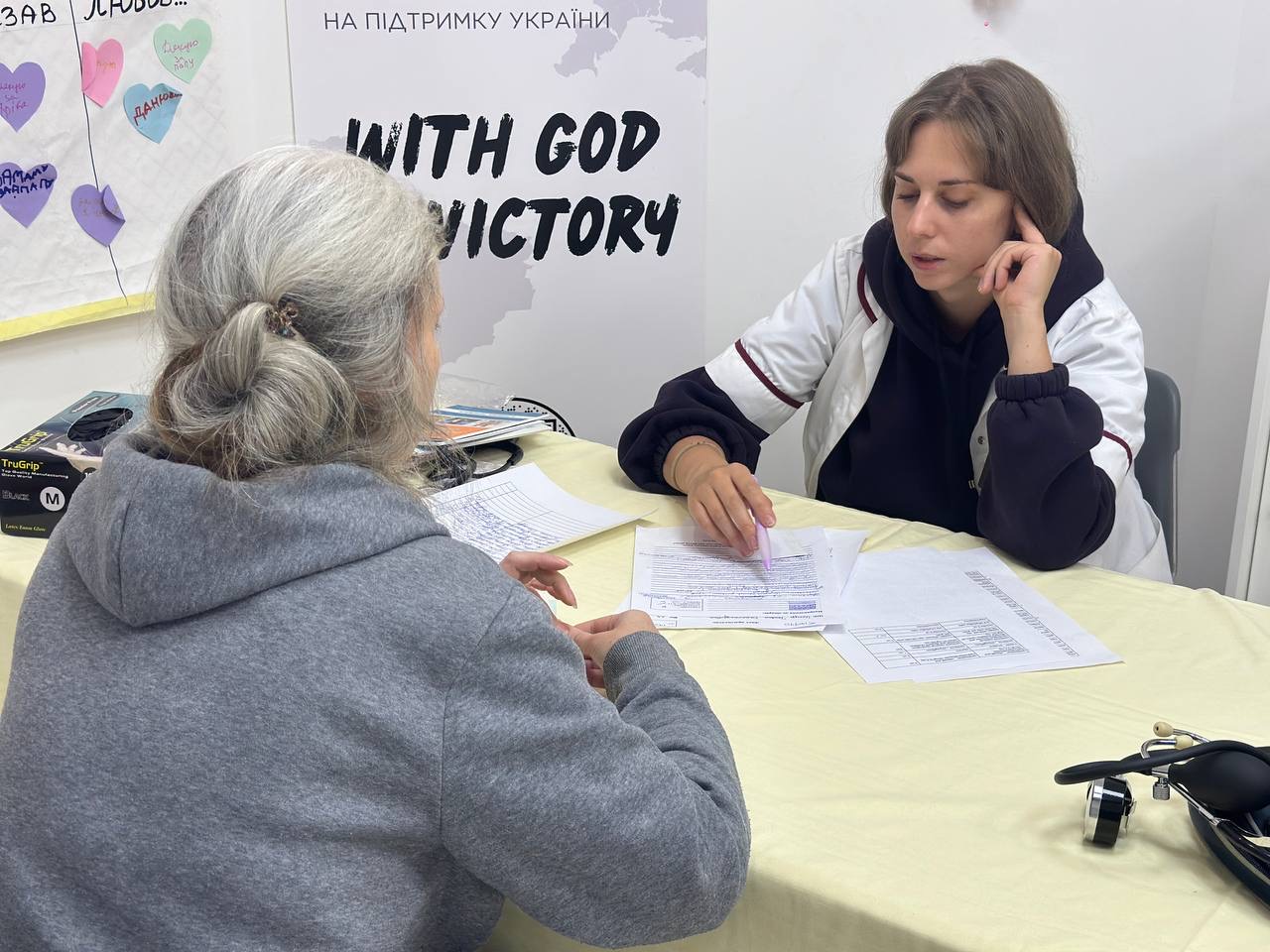
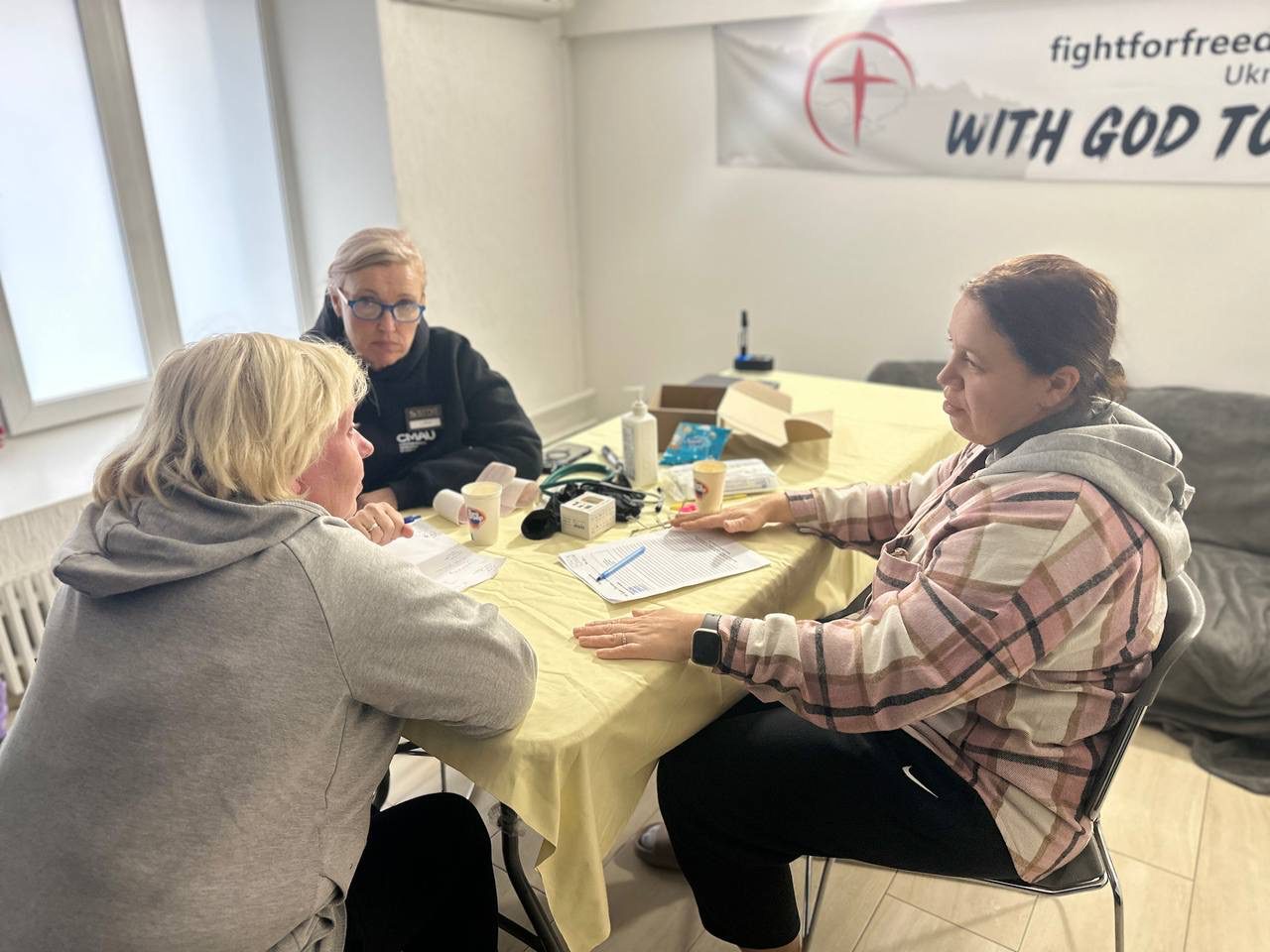
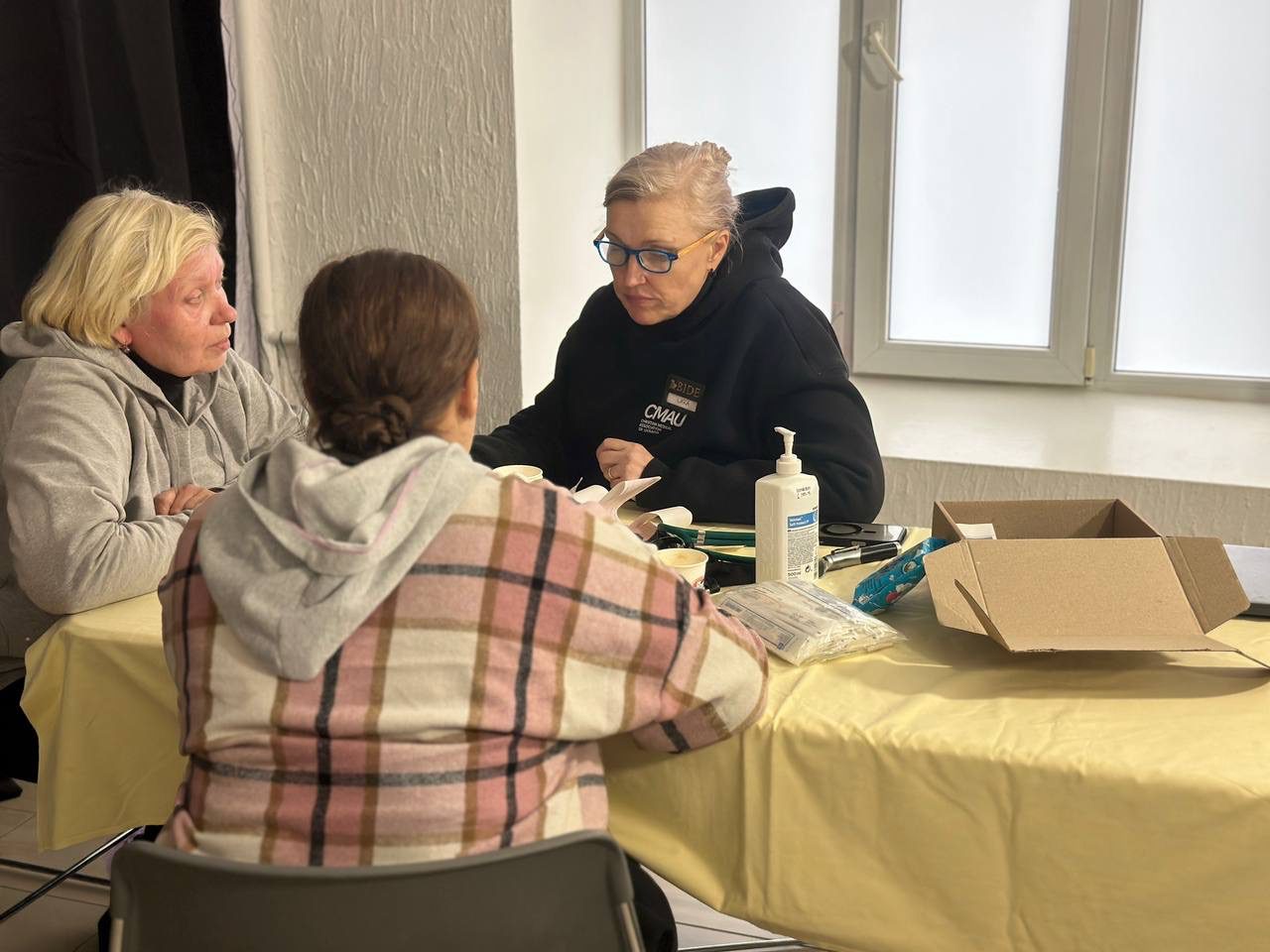
The next day’s clinic was run with an NGO supporting IDPs and soldiers’ families, alongside a medical team I’d worked with before who also have connections with CMA. Its exact location is kept deliberately quiet, to limit the chance of it becoming a target.
Most of the patients had only just escaped Kramatorsk and towns like it. Many hadn’t registered with a doctor yet, so couldn’t access care. Many were staying wherever they could find space, with few doctors nearby and little money for medicines or tests. Some had seen a doctor but didn’t understand what they’d been told, and simply wanted someone to talk to — refugees in an unfamiliar town, unsure where to turn. We were able to connect a lot of them with the NGO, sort out their questions, start treatments, hand out medicines.
Partway through one consultation, an unannounced missile strike went off a few kilometres away. The patient, the translator, and I looked at each other for exactly one second, and then kept talking.
So many of the stories were hard to carry. A mother and her adult son had fled Kramatorsk after being sent a video of their own house being destroyed — most of that town is gone now, flattened under gliding bombs. She was gripped by anxiety, with the kind of stress that shows up in the body. He’d always struggled with anxiety and depression, even before the war, since he was a child he nervously told me as he felt more comfortable to open up – but losing the house, the job, the money, and sleeping through nightly explosions had pushed him somewhere much darker. He cried, and then felt ashamed of crying, and I had to tell him that was more than okay. We started him on medication, talked through some strategies, and connected him with services — but it stayed with me, hearing a young man describe his hopelessness and a future with no home to return to.
A woman my own age was caring for her elderly parents entirely alone — the rest of her family had fled or been killed — her body breaking down from lifting people with no help. Almost everyone we saw that day carried some mix of stress, anxiety, fear, or depression, and nearly all of them apologised for it, as if not being ‘strong enough’ to withstand constant explosions and no sleep was some personal failing rather than an entirely reasonable human response.
As the clinic wound down, someone asked Ron, again, why he’d come to Ukraine. Maybe that’s a post for another day. We stayed for a lovely dinner with the team — and when they asked us to join them, I did what any well-mannered Australian would do and asked, ‘are you sure you have enough?’ The whole table burst out laughing. In Ukraine, guests never go hungry, even if the hosts go without later. It was, apparently, a very funny thing to ask.
A Reunion With Dr Diana
That clinic also gave me a lovely surprise: I was reunited with a friend I’ve mentioned before, Dr Diana — another beautiful Ukrainian doctor who has given up a great deal to care for others. Between her own family, her patients, volunteer clinics like this one, and the refugees and IDPs she and her family support in their own home, I’m not sure when the woman sleeps. Her father built their local church by hand, and these days the family hosts refugees there too, feeding them, helping them find jobs, doing whatever it takes to get people back on their feet.
We sat and talked after the clinic wound down, and she looked at me and asked, “do you feel more safe here than in Australia?” I was sure I’d misheard her. What a strange question. Her English wasn’t quite perfect, but as she explained further, it clicked. It’s something I’ve heard often: when you’re outside Ukraine, whether as a Ukrainian or a supporter, you tend to follow every strike, every alert, every rise and fall across the whole country, far more closely than you ever do from inside it. Here, you simply couldn’t function if you tried to carry all of that at once. So you don’t. You cope with the dangers right in front of you and let the rest go, mostly unwatched. Which means, oddly enough, the people furthest from the danger can end up carrying the heaviest mental load of it. More on that another time.
A Hotel With a New Name
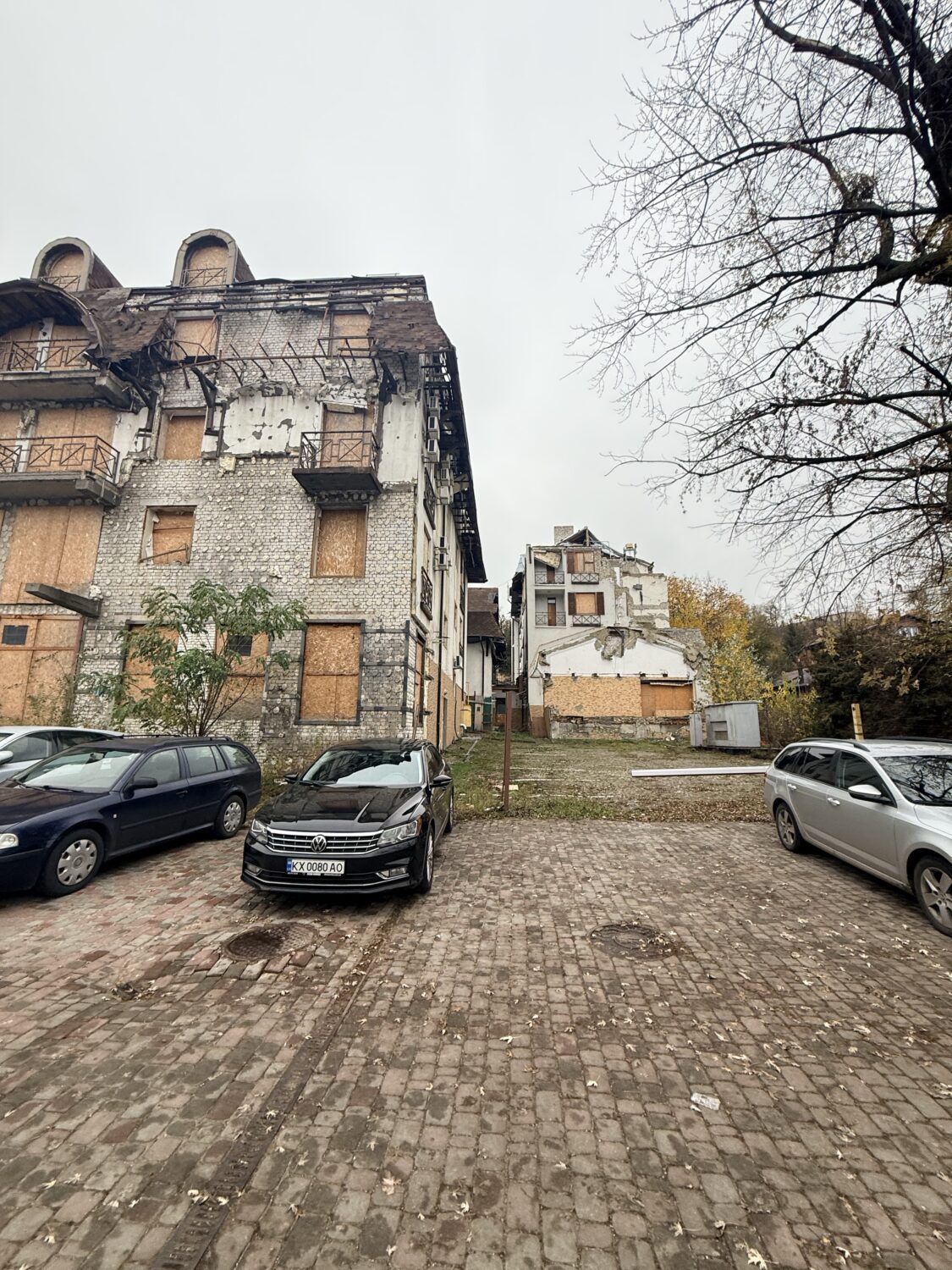
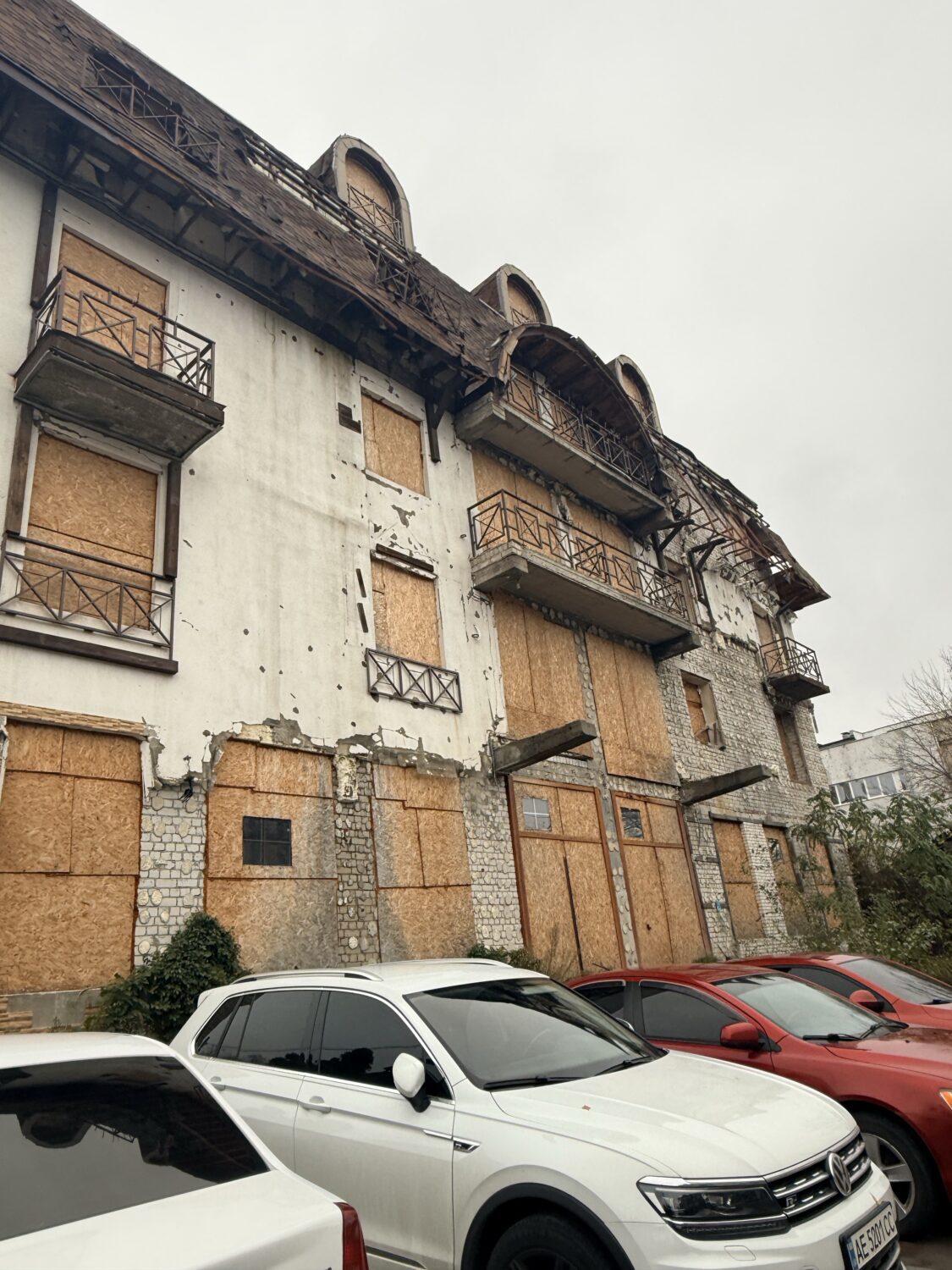
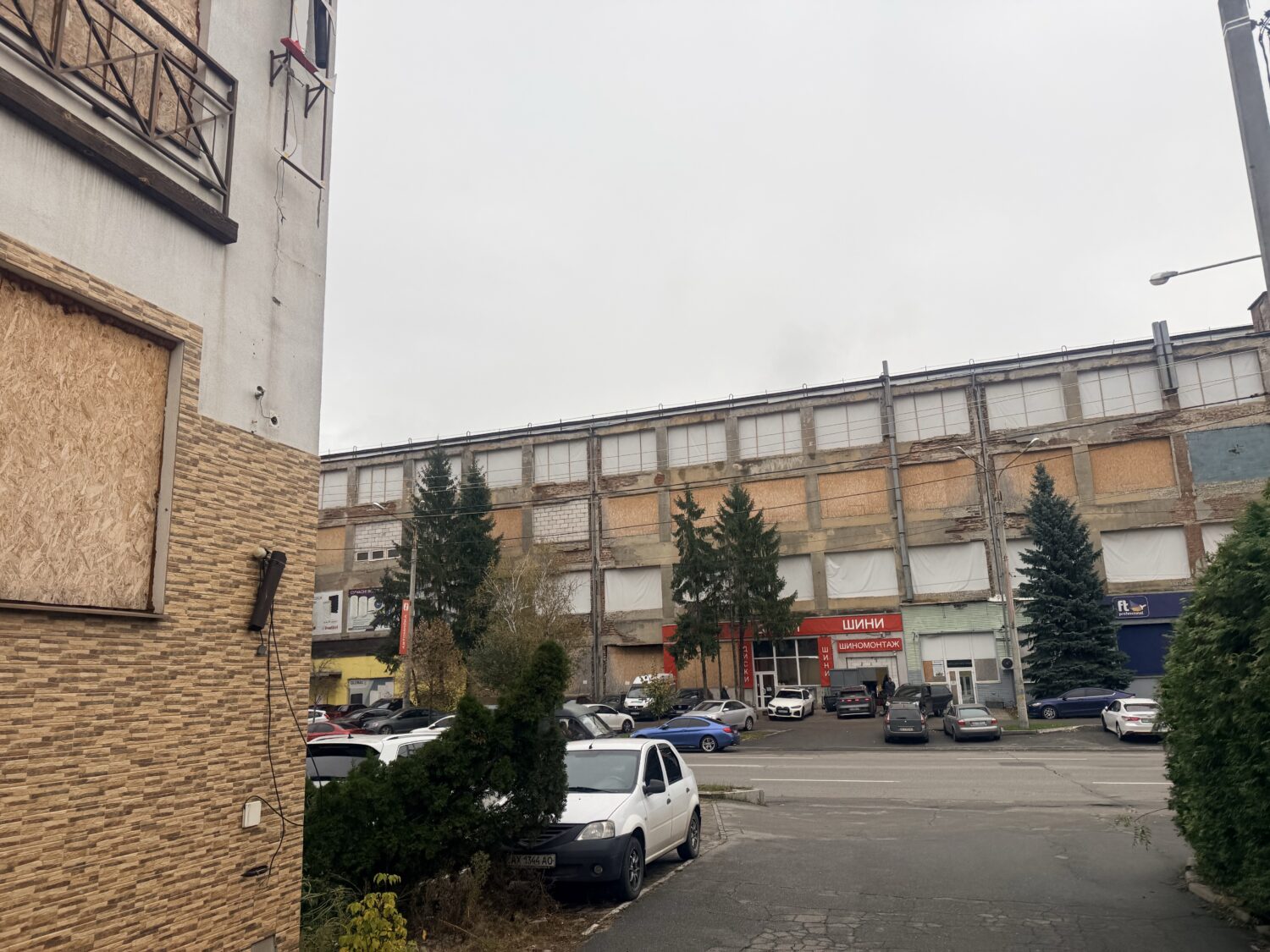
We found our next hotel again with no navigation — air alerts have a way of doing that. It had changed its name from what was on the building, from something like ‘Grand Hotel’ to ‘mini hotel,’ (not full real names for security reasons) which the host cheerfully explained meant no reception, no restaurant, just basic rooms. In the morning as we walked out onto the street in the daylight -we understood why: the front half of the building, reception and restaurant included, had been taken out by a Shahed drone. They’d simply kept running with whatever rooms were left. Typical Ukrainian pragmatism, with a dry joke folded in. Now called a ‘mini’ hotel.
When the Grid Comes Under Fire
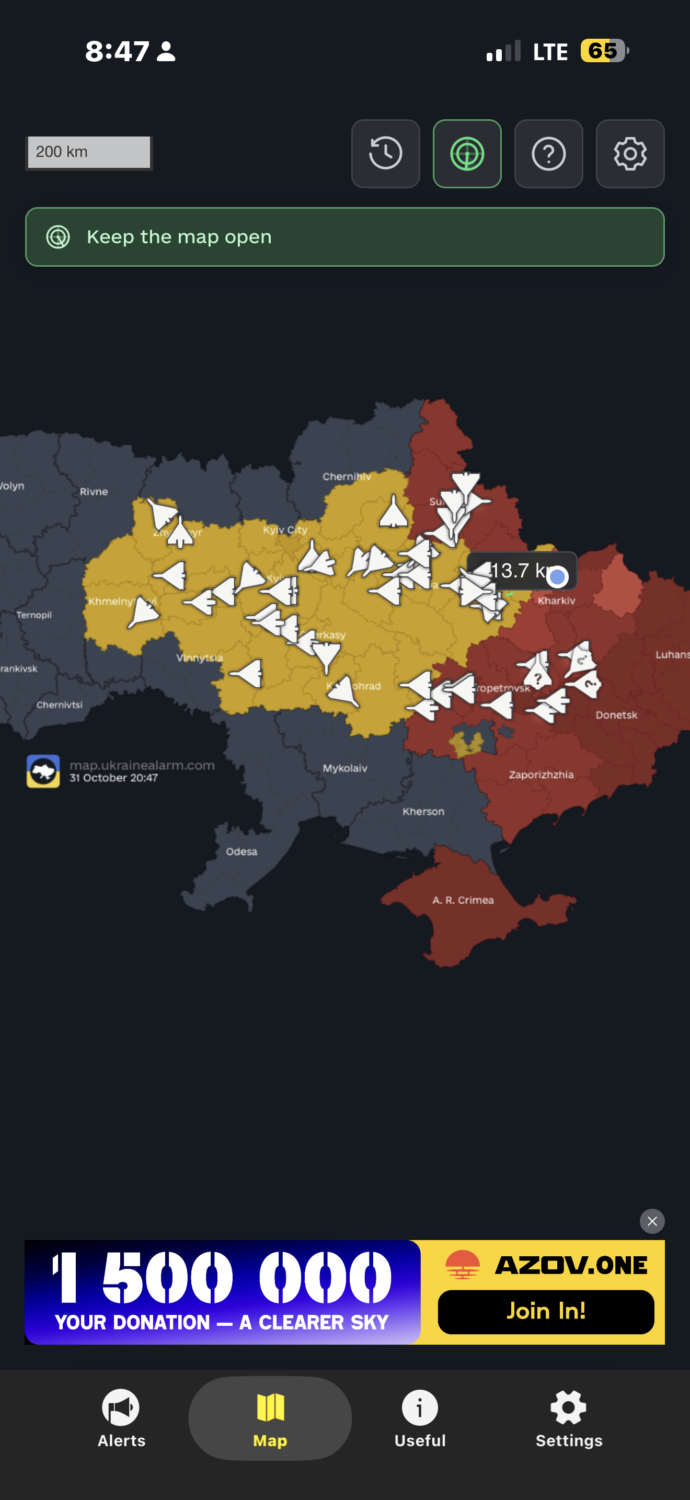
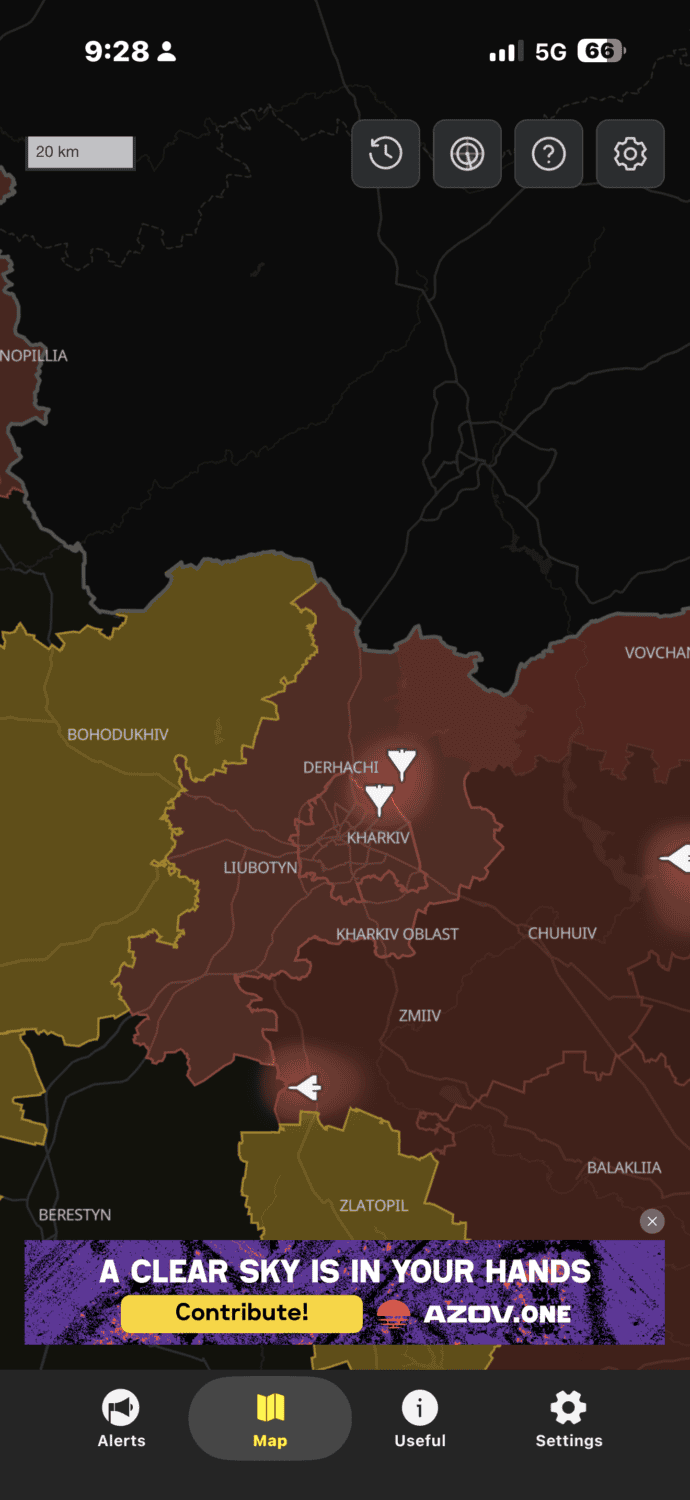
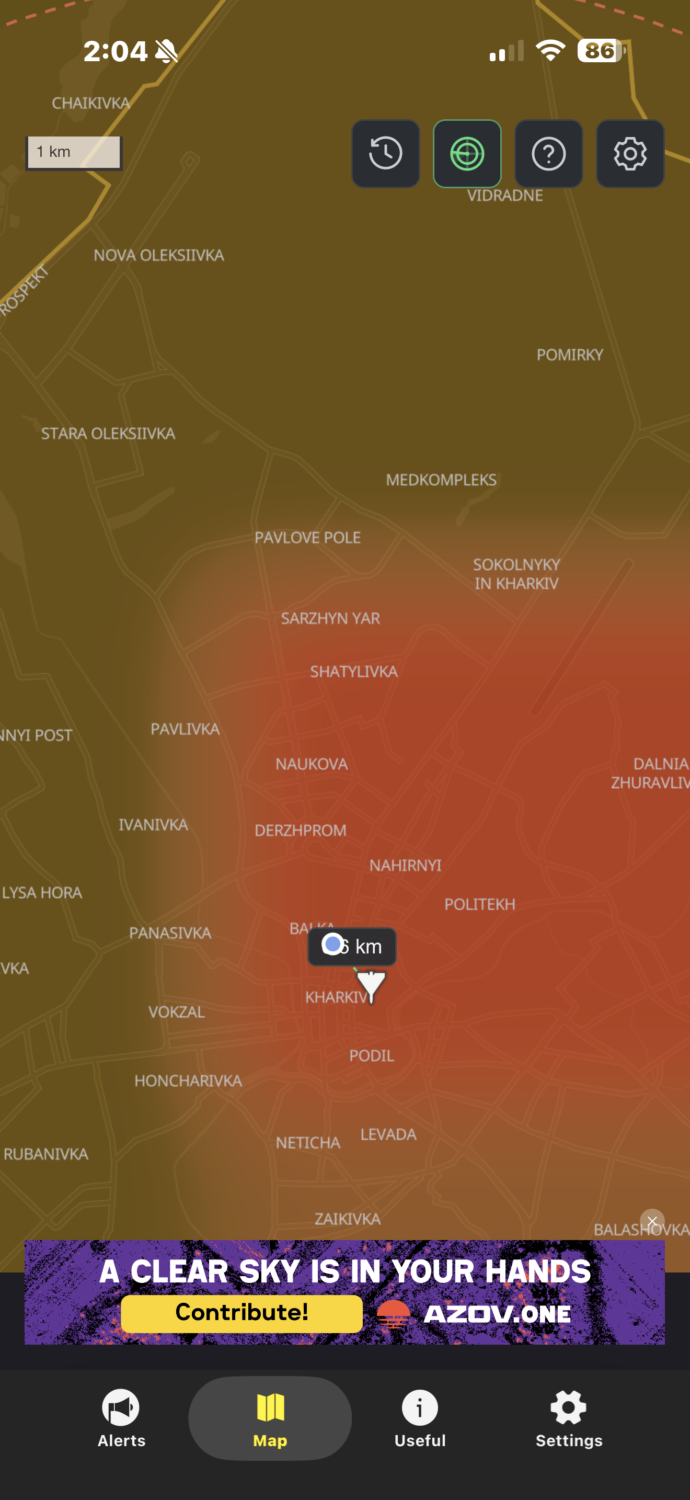
That night the air alert map looked unusually busy — 40 to 50 aerial targets over Ukraine at any one time, peaking at 133 in a single hour the next morning. Russia is overwhelming Ukrainian air defences through sheer numbers.
Energy infrastructure took a heavy hit that day, with hundreds of Shaheds swarming the power grid.
‘Heating’ was officially switched on in Kharkiv that same day —Thankfully as there was a heater in our room but there was no power to run it. We sat rugged up in every layer we owned until the central heating started working. The grid briefly returned, just long enough for a shower which was electric. Most major Ukrainian cities run on central heating, piped hot water shared across buildings — and those heating stations are, quite disgustingly, now a deliberate target as winter closes in.
Fake Nuclear Attacks
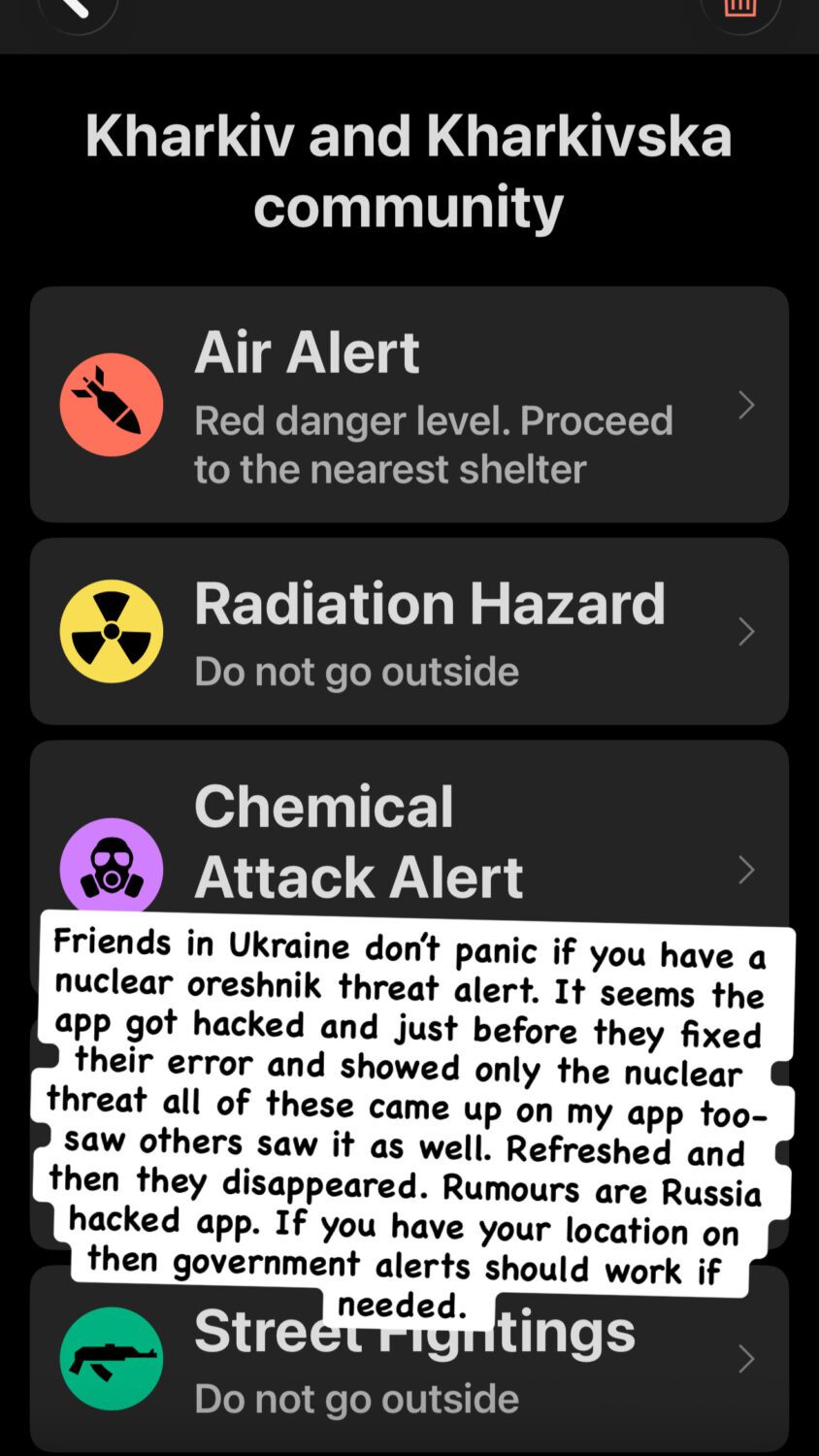
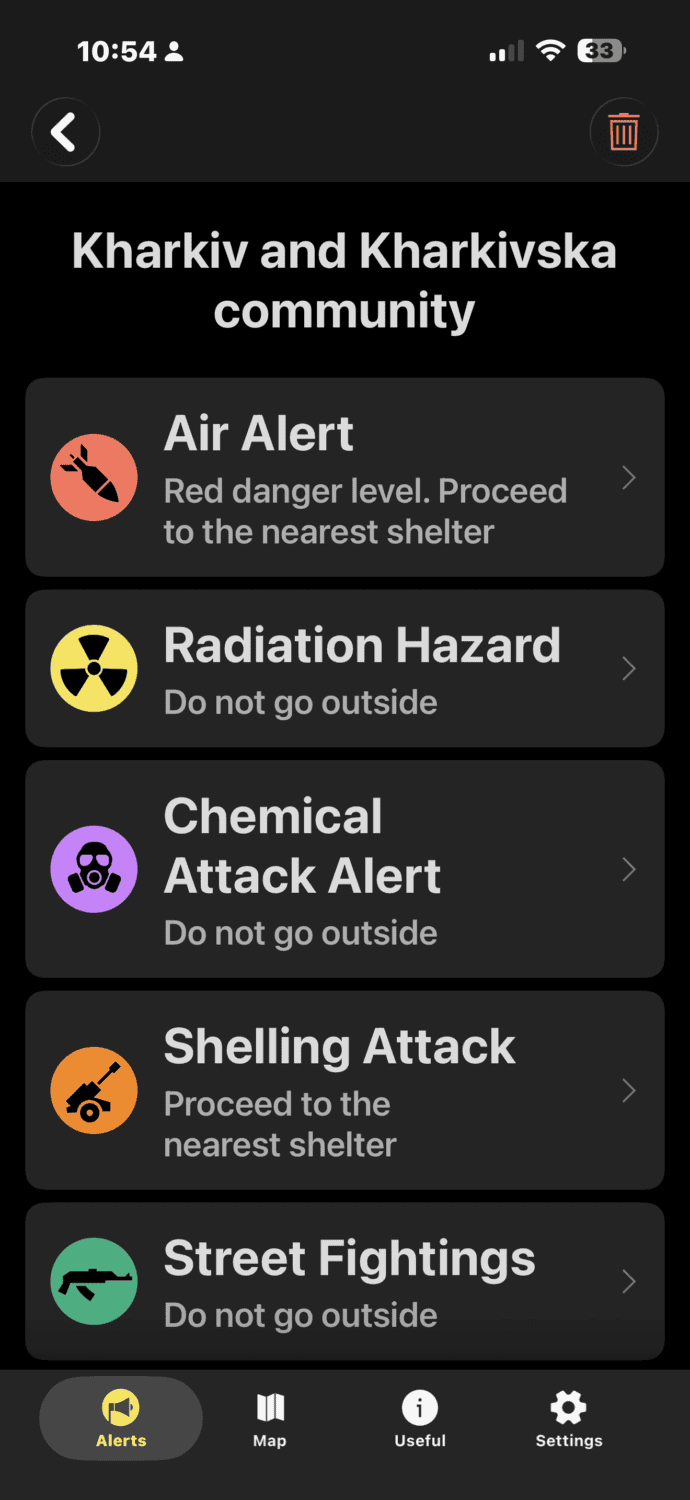
I was looking at my phone one night and suddenly all the alerts went off on the air alert app.
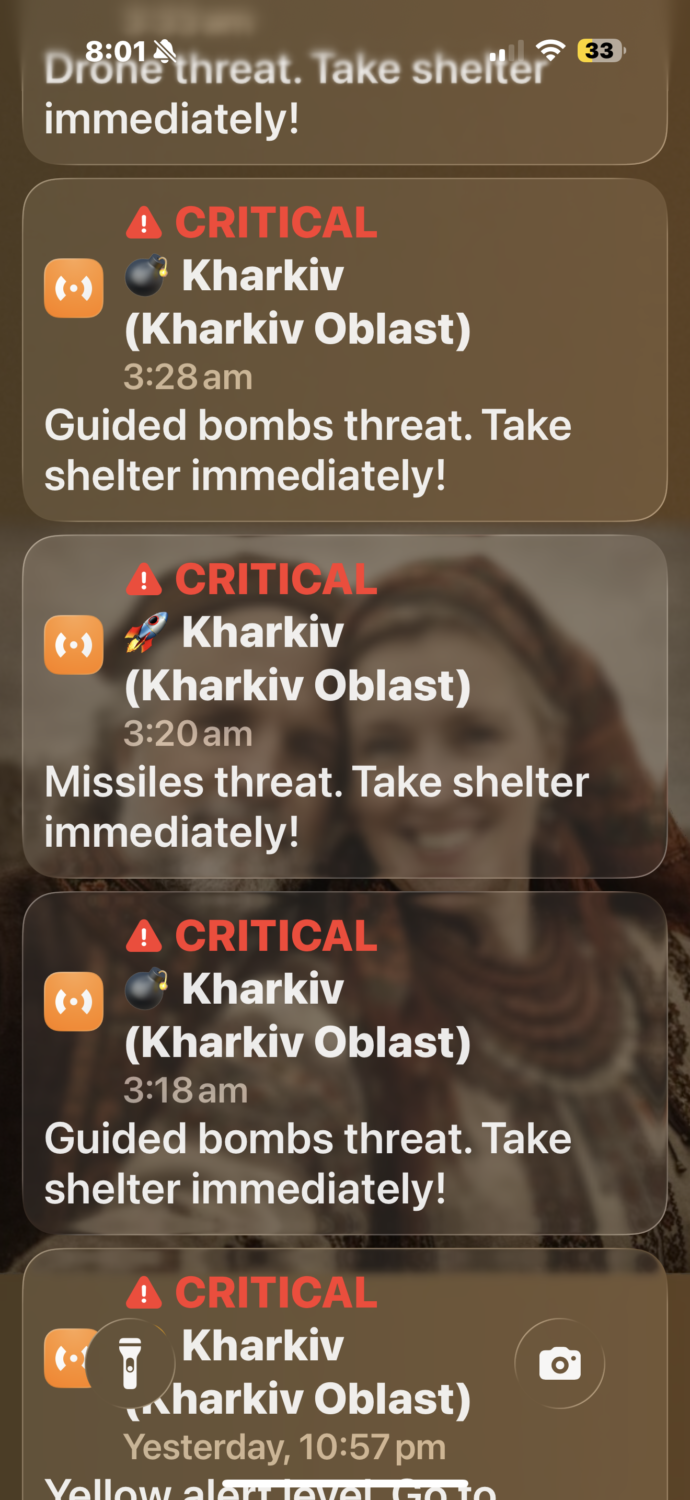
I mean ALL the alerts – chemical threat, nuclear attack, radiation hazard and bizarrely ‘street fighting’. The fact that all went off at once was immediately suspicious. But they quickly disappeared leaving only the nuclear attack alert along with a message in russian to join a particular telegram channel. Of course it was immediately suspicious and within minutes messages appeared on twitter to say it was a russian backed hack of the air alert system. Obviously designed to strike terror into the hearts of Ukrainians and cause a panic. But thankfully their amateurish start lighting up every alert and sending a message in russian had most people immediately aware it had been hacked.
Kharkiv Hero City
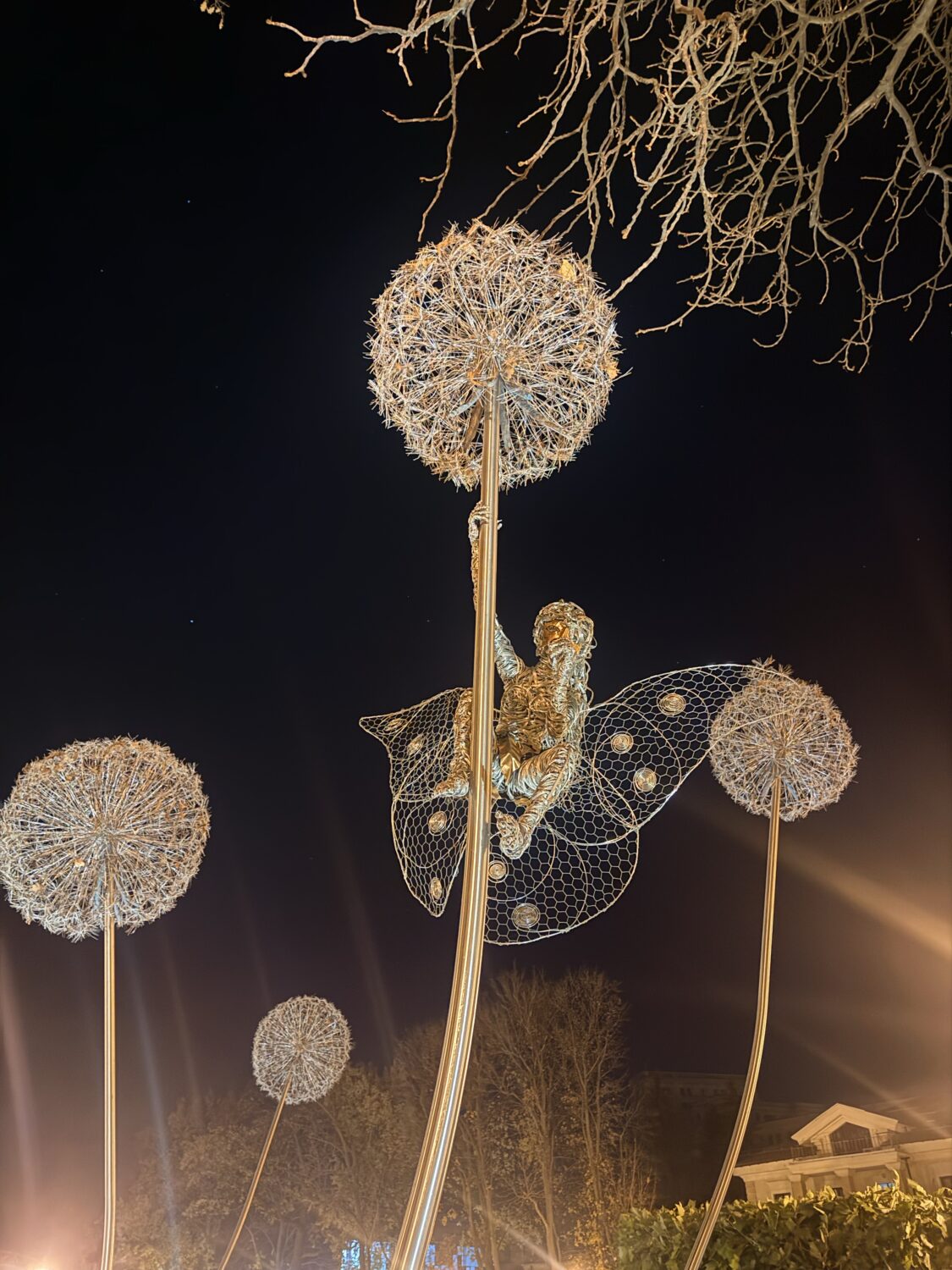
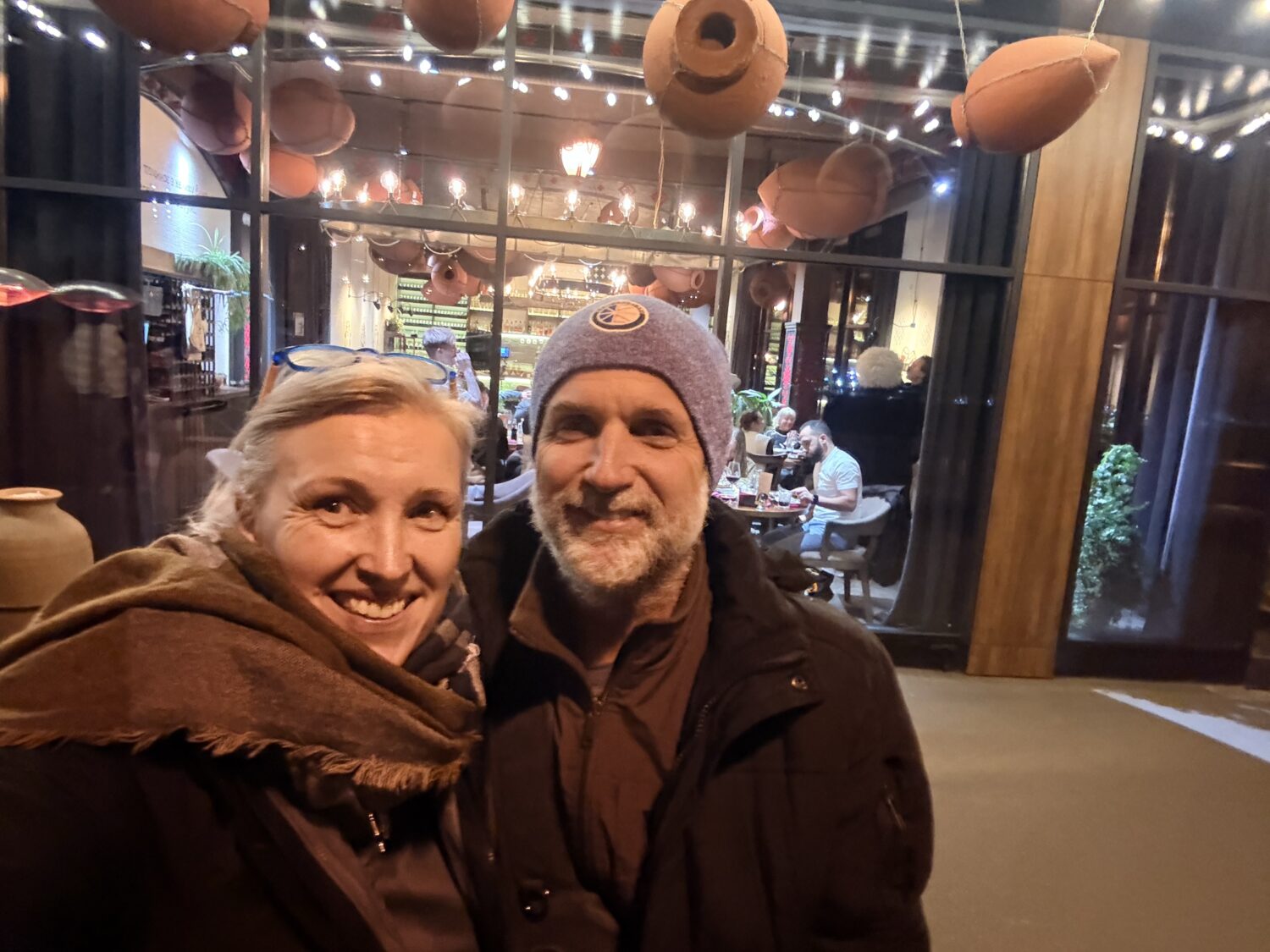
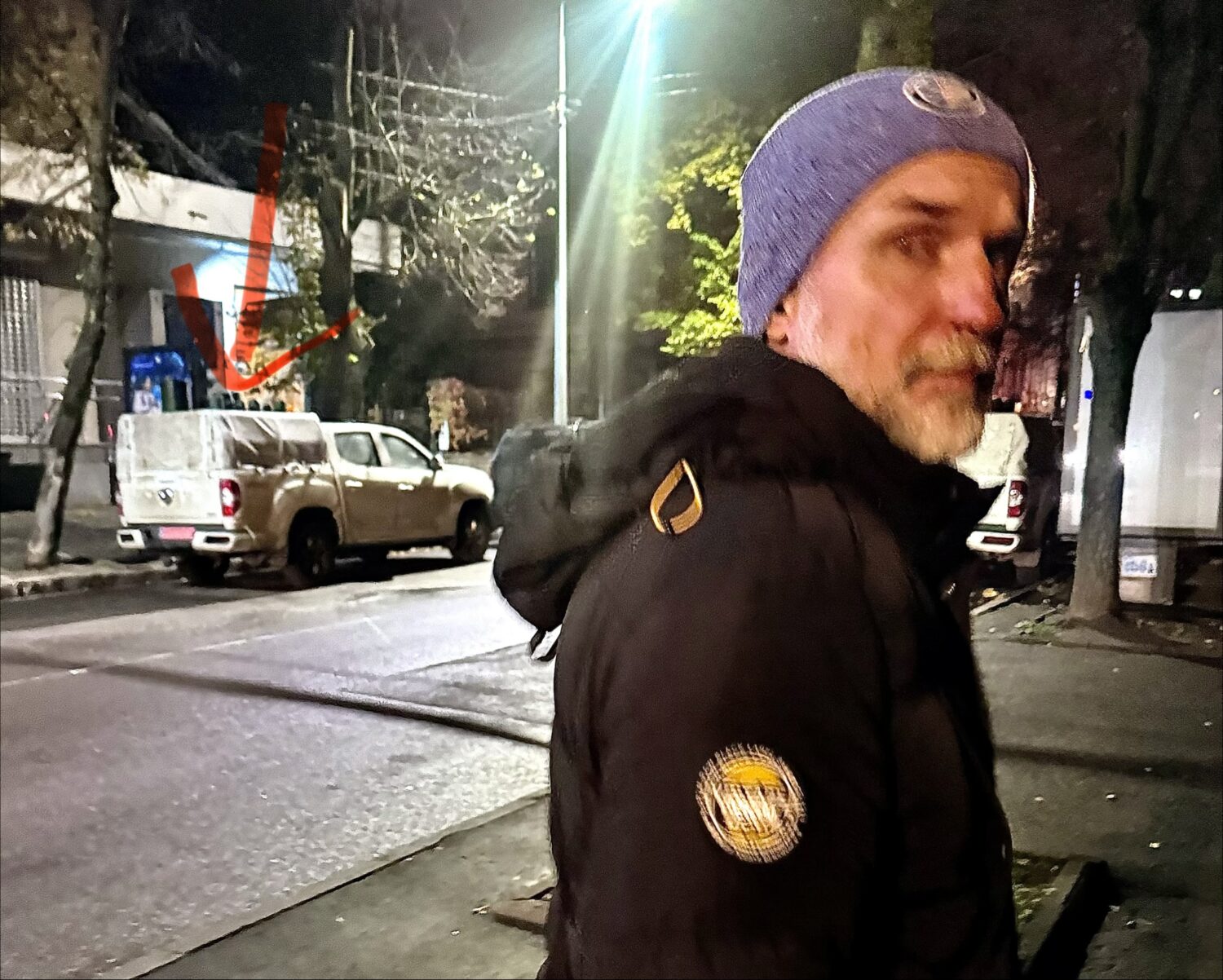
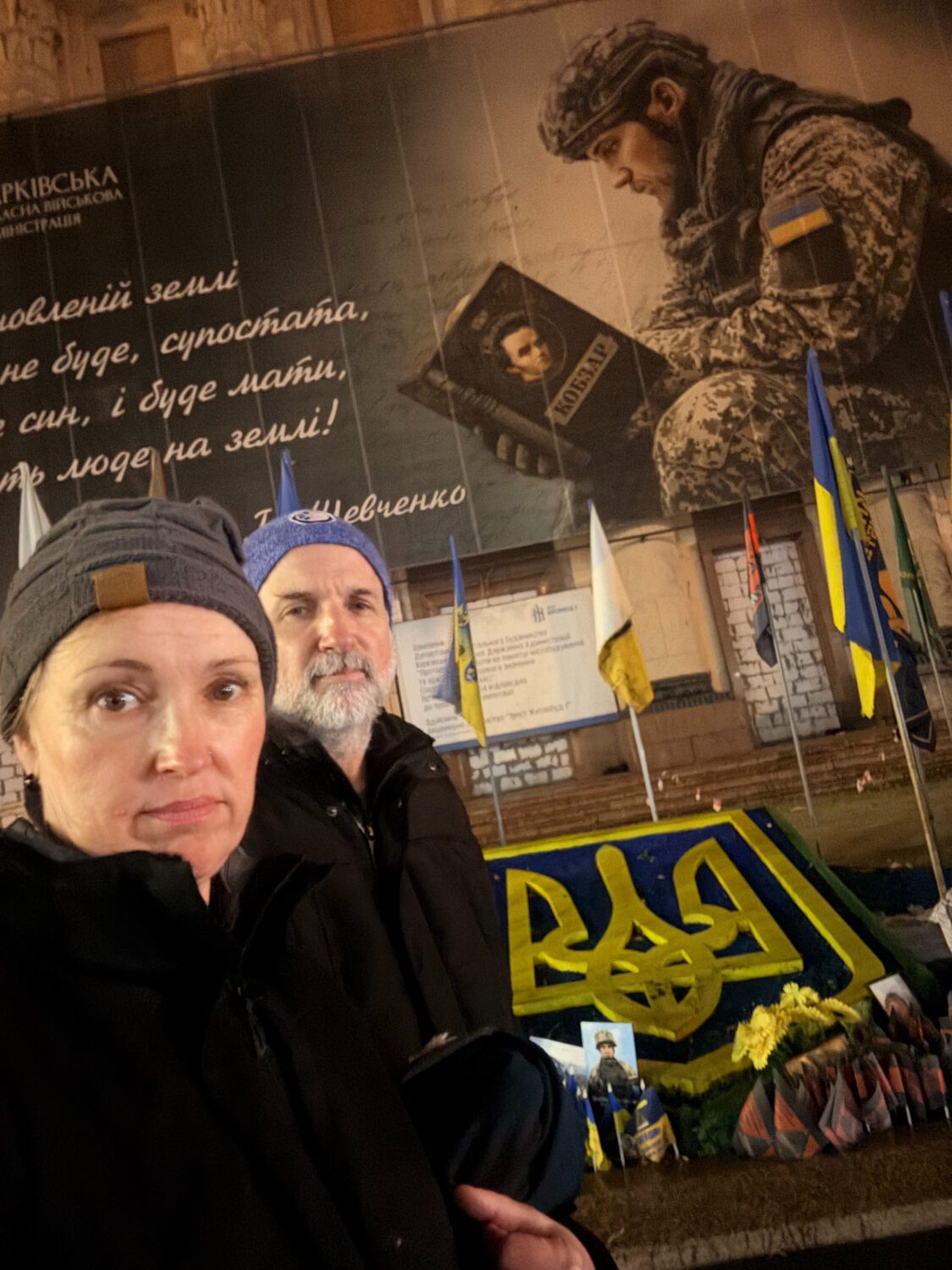
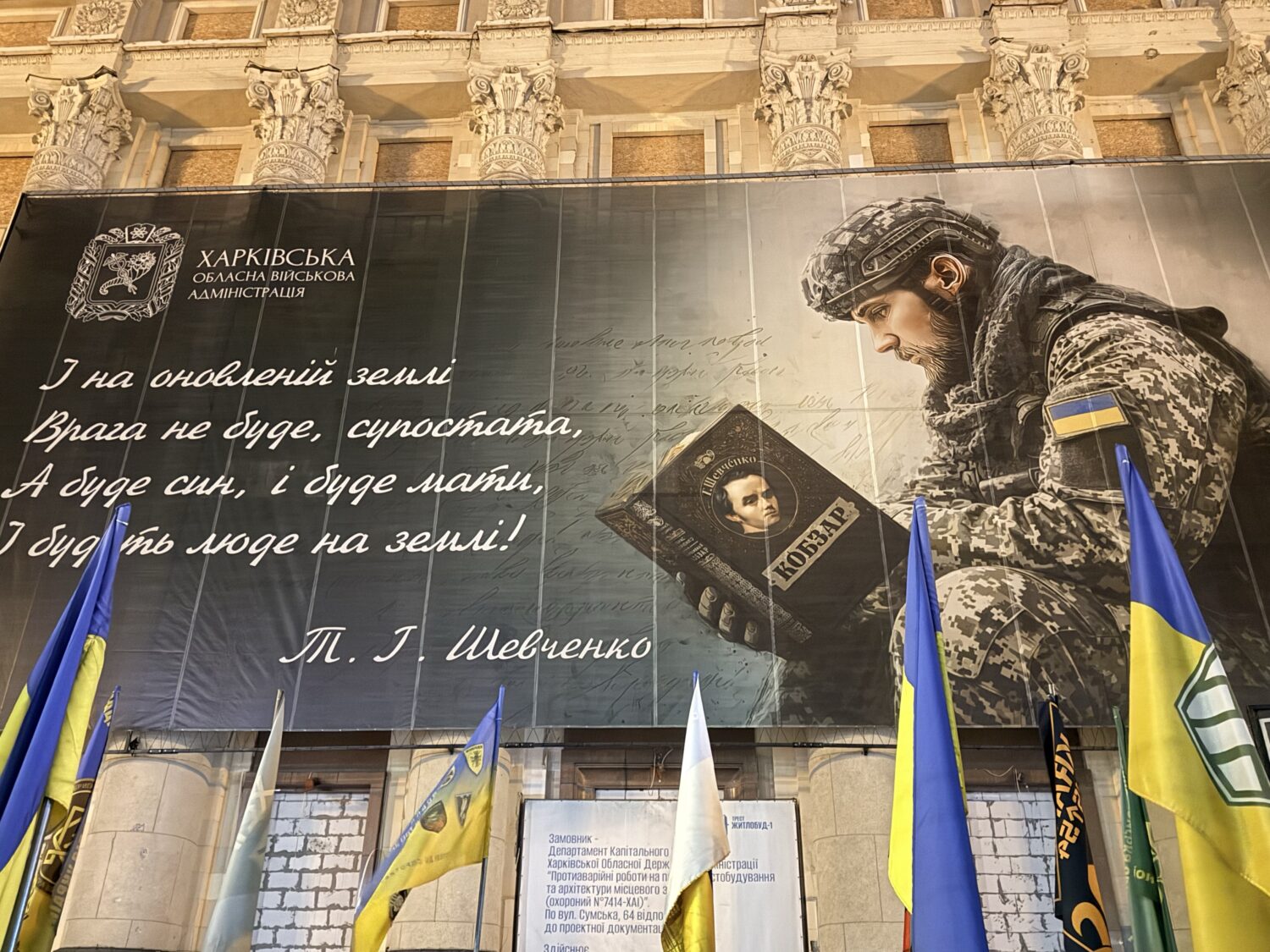
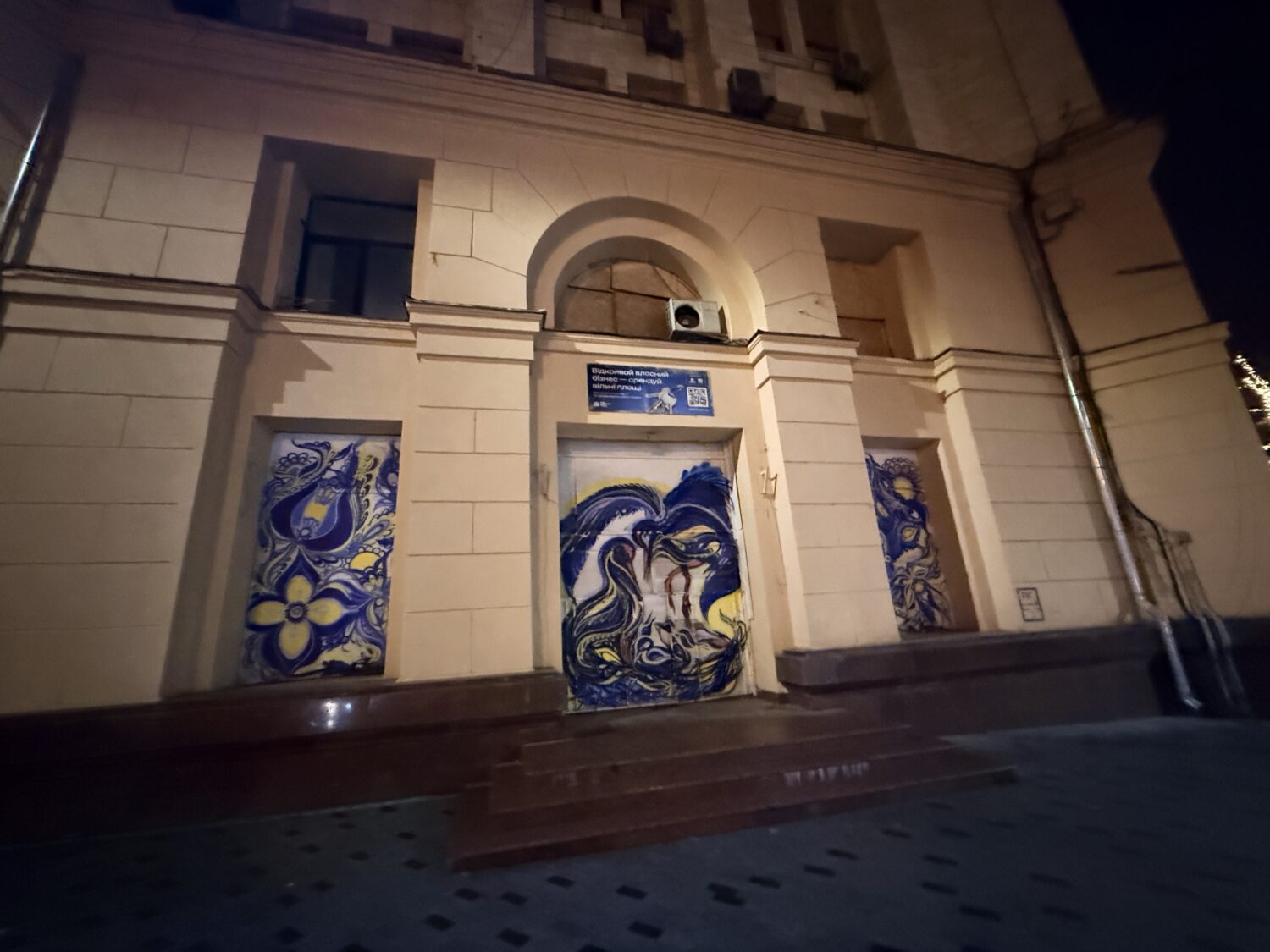
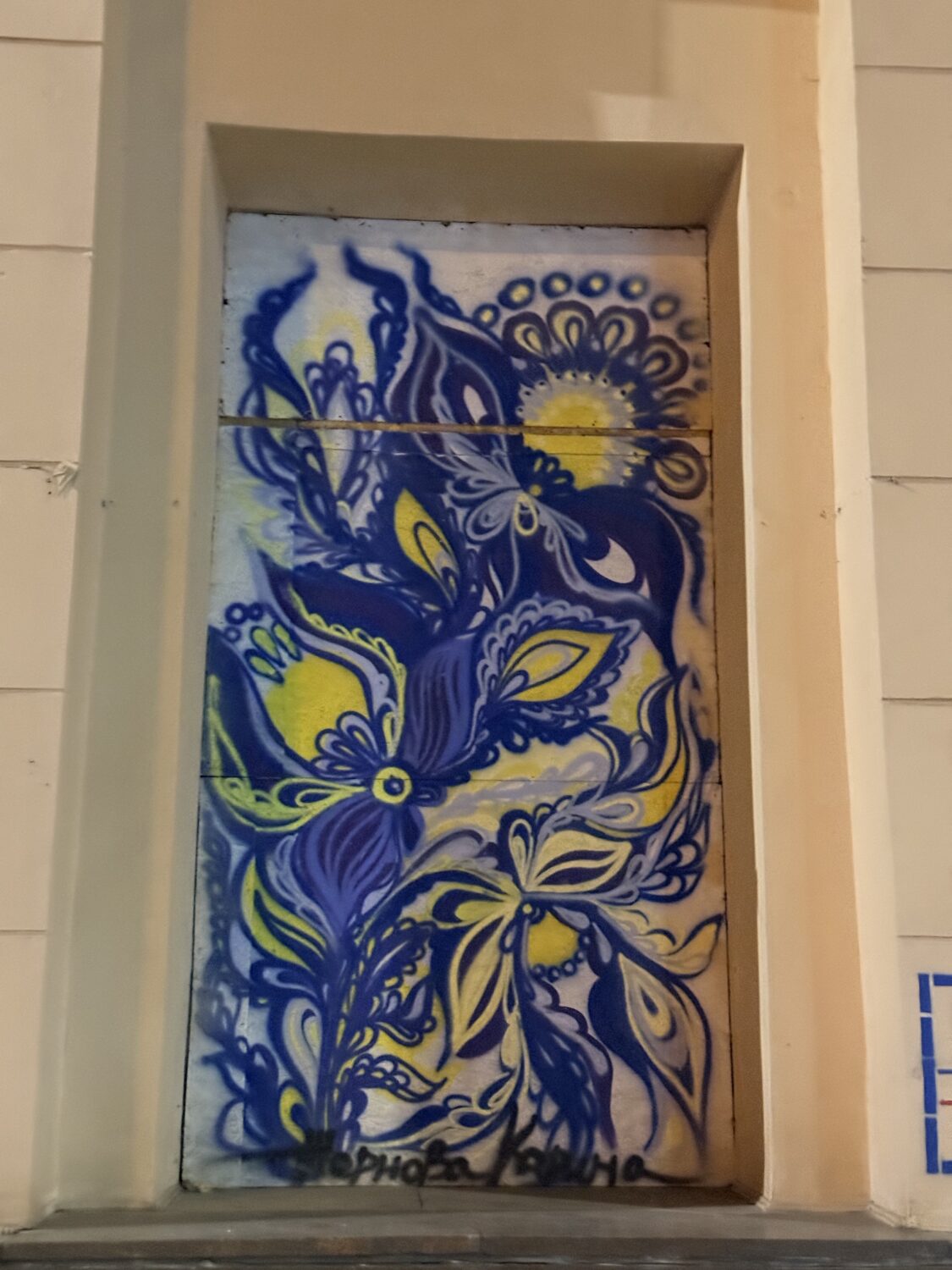
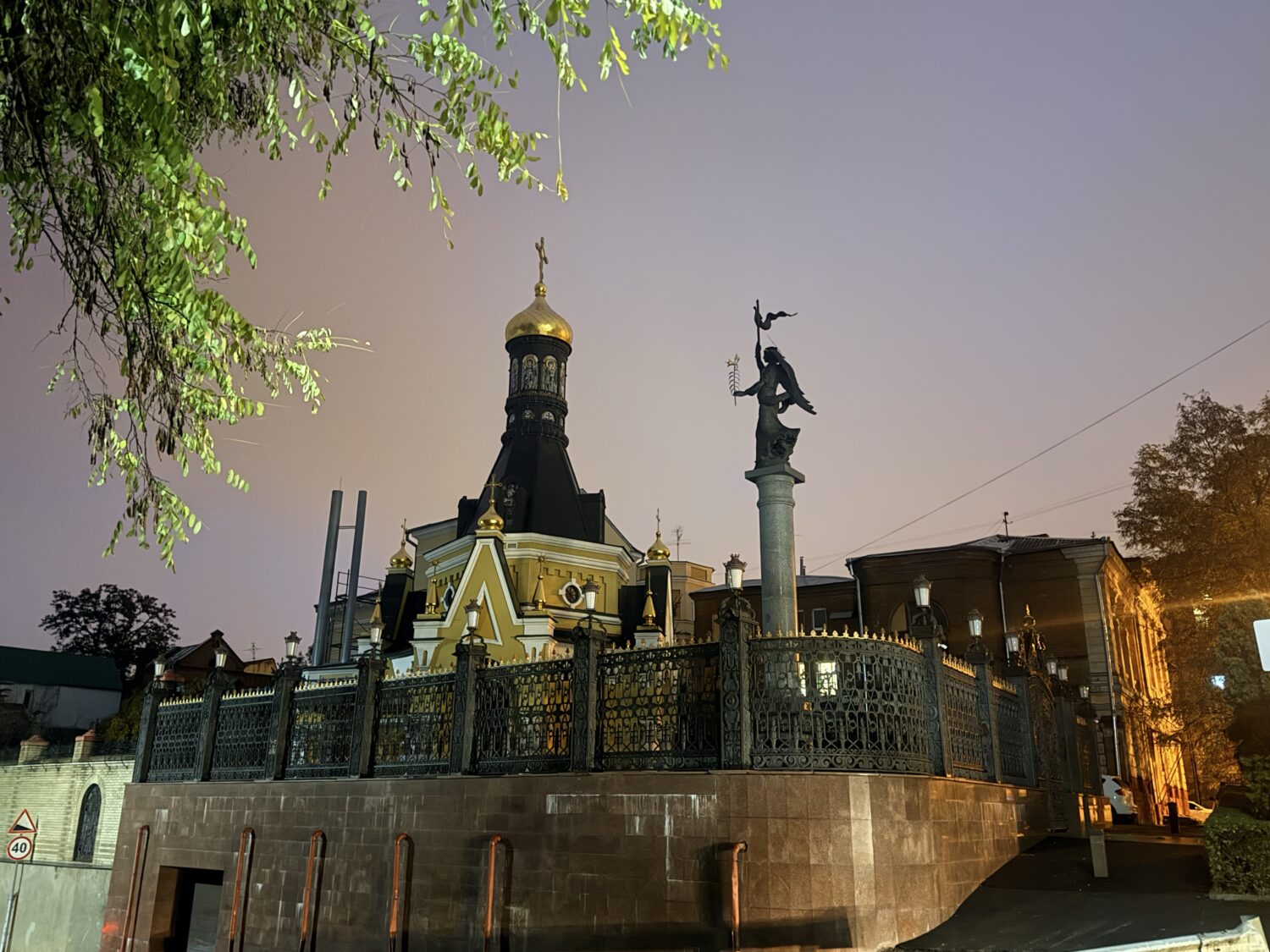
We had a little bit of time to kill in Kharkiv. And as bizarre as it may seem and actually sounds when I say it loud – we enjoyed having a bit of a look around the beautiful city of Kharkiv, despite the constant air raid alerts and discussing our actions if we heard a shahed coming. Kharkiv fought off the full scale invasion and pushed the russians out of their city in the early days of the full scale invasion and is now referred to as a Hero City. And with many monuments and posters around the city celebrating or commemorating this. And on boards put up to replace the many windows blown out by drones and bombs were beautiful works of art, or patriotic declarations. There is something about the spirit of this city.
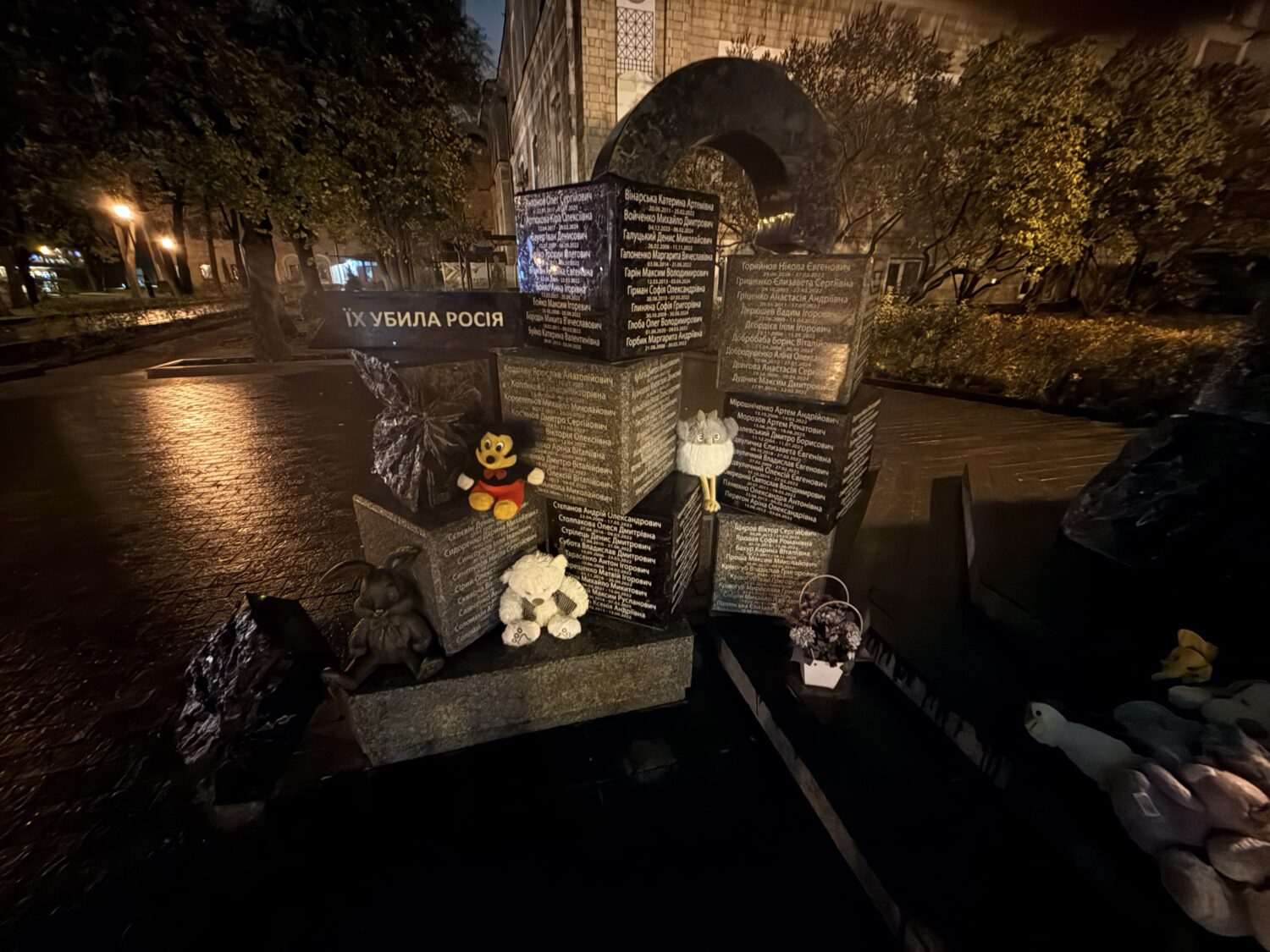
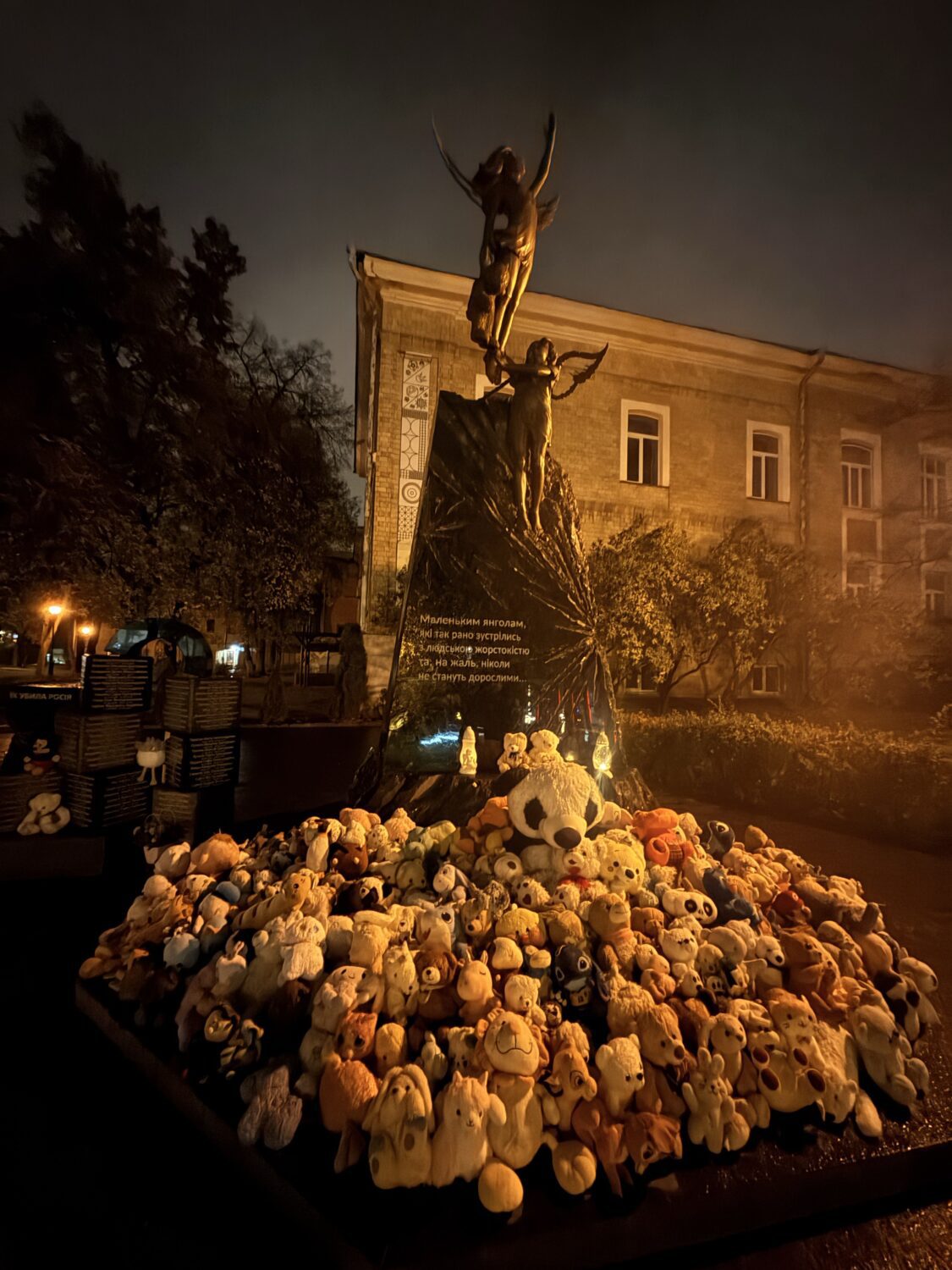
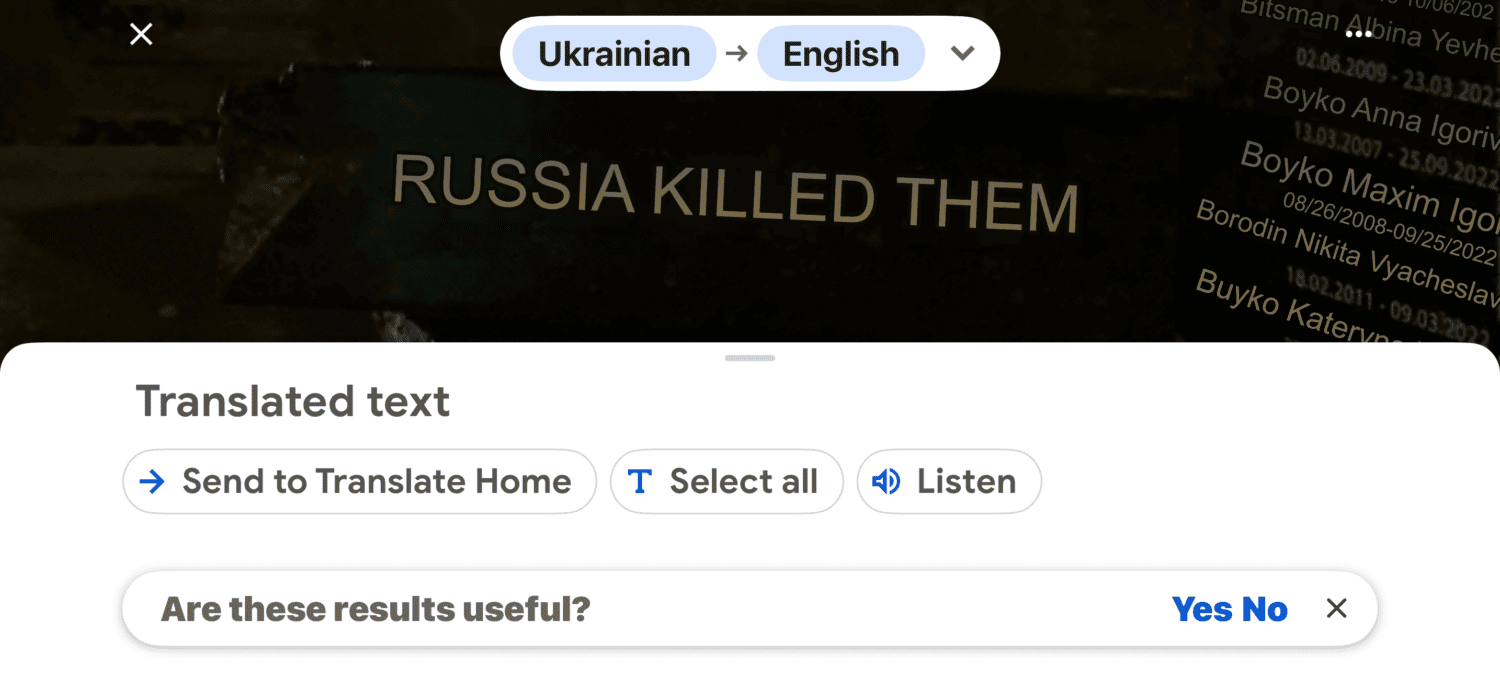
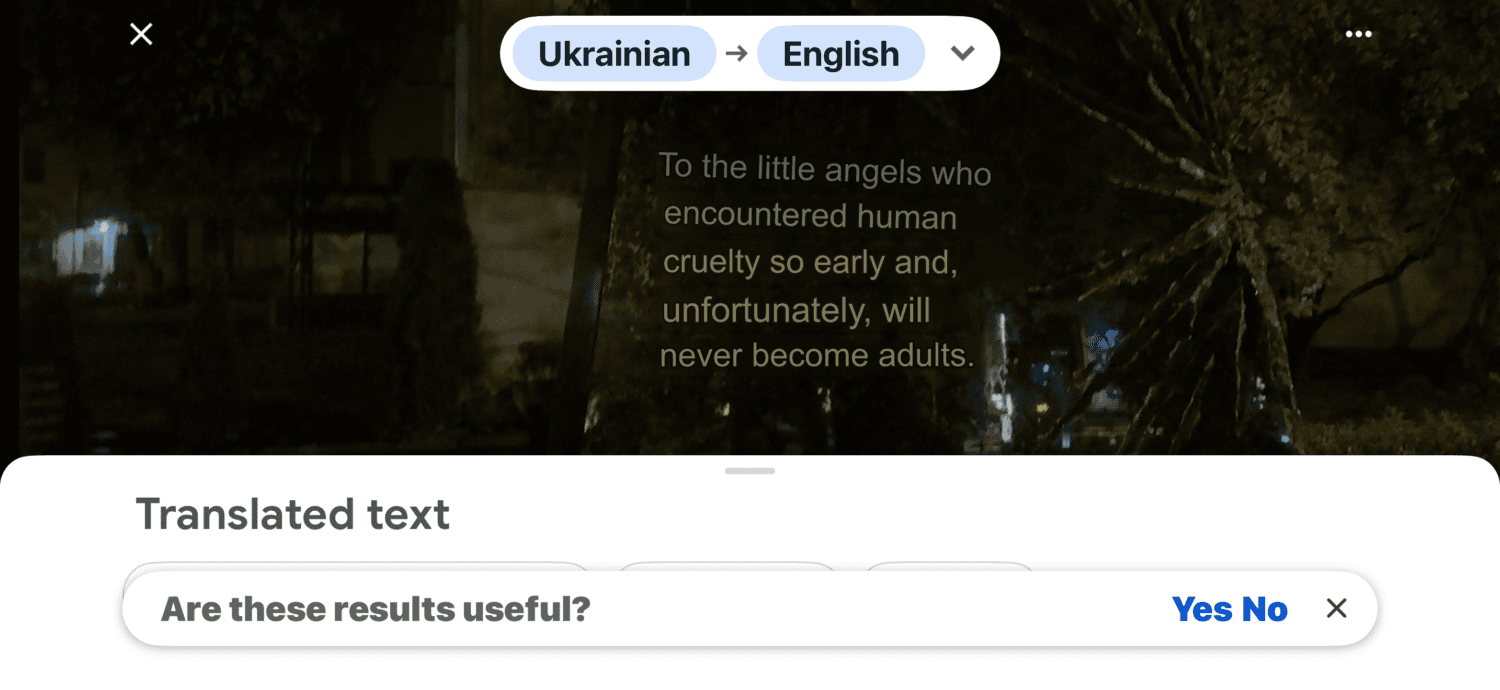
More sobering was a monument to Ukrainian children killed in this war and tragically the number continues to climb.
The Battleground for Hearts and Minds
Found out today a conference I’m due to speak at next month has had to move from Kyiv to Lviv — the hall it was booked into was destroyed by a missile, and Kyiv is no longer considered safe for a gathering that size.
On a call with an Estonian friend, we talked about Russian propaganda creeping even into countries that should know better. He told me about an older man he knows who once picked up a Kalashnikov to help guard Estonia’s TV tower when the Soviet Union collapsed — defending, in effect, his country’s freedom from Russia trying to retain control.. That same man is now being swayed by stories painting Zelensky as some kind of war-crazed maniac. My friend is genuinely worried by how many people are starting to say we should stop supporting Ukraine. But there was good news too: since he started sharing our firsthand reports with his church, people there have become more willing to support Ukraine, realising some of what they’d believed about this war simply wasn’t true.
More and more people are saying this is the biggest battleground of all right now — the one for hearts and minds, where too many of us don’t even realise which side we’re really on.
Villages in the Dark
Russia hit Kharkiv’s heating stations again overnight. Ours was still working, but I thought about everyone now waiting on repairs as the cold sets in properly.
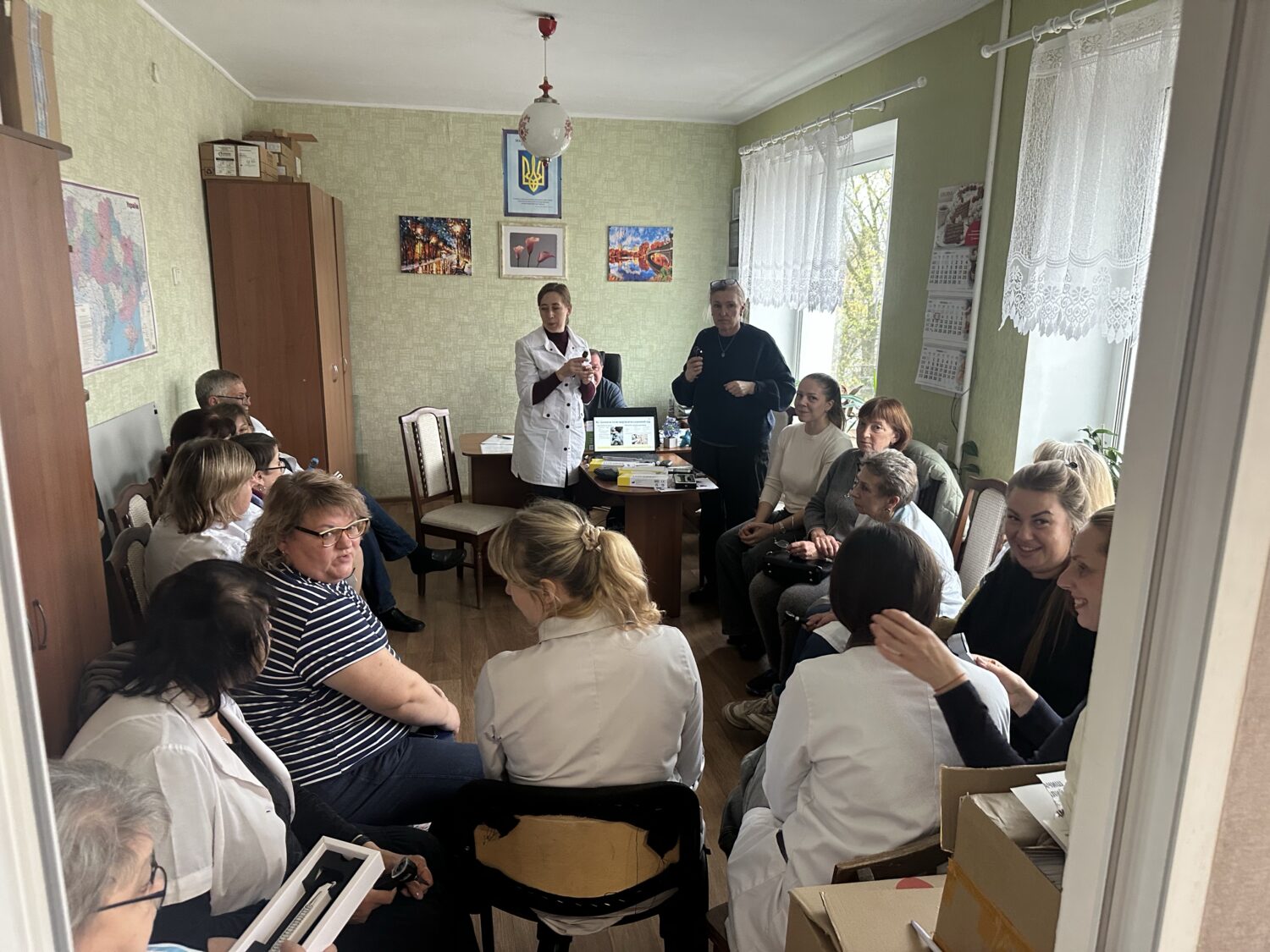
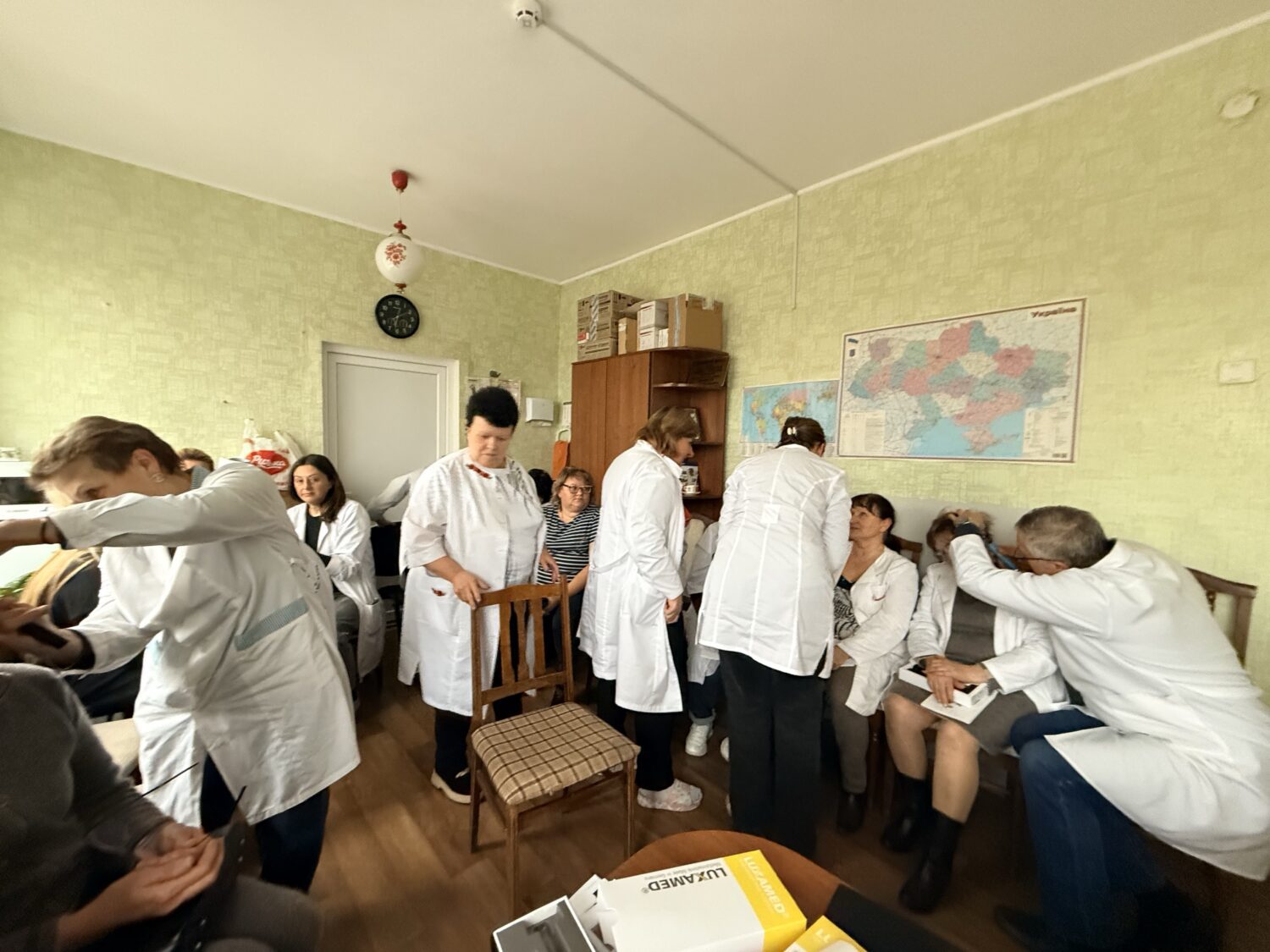
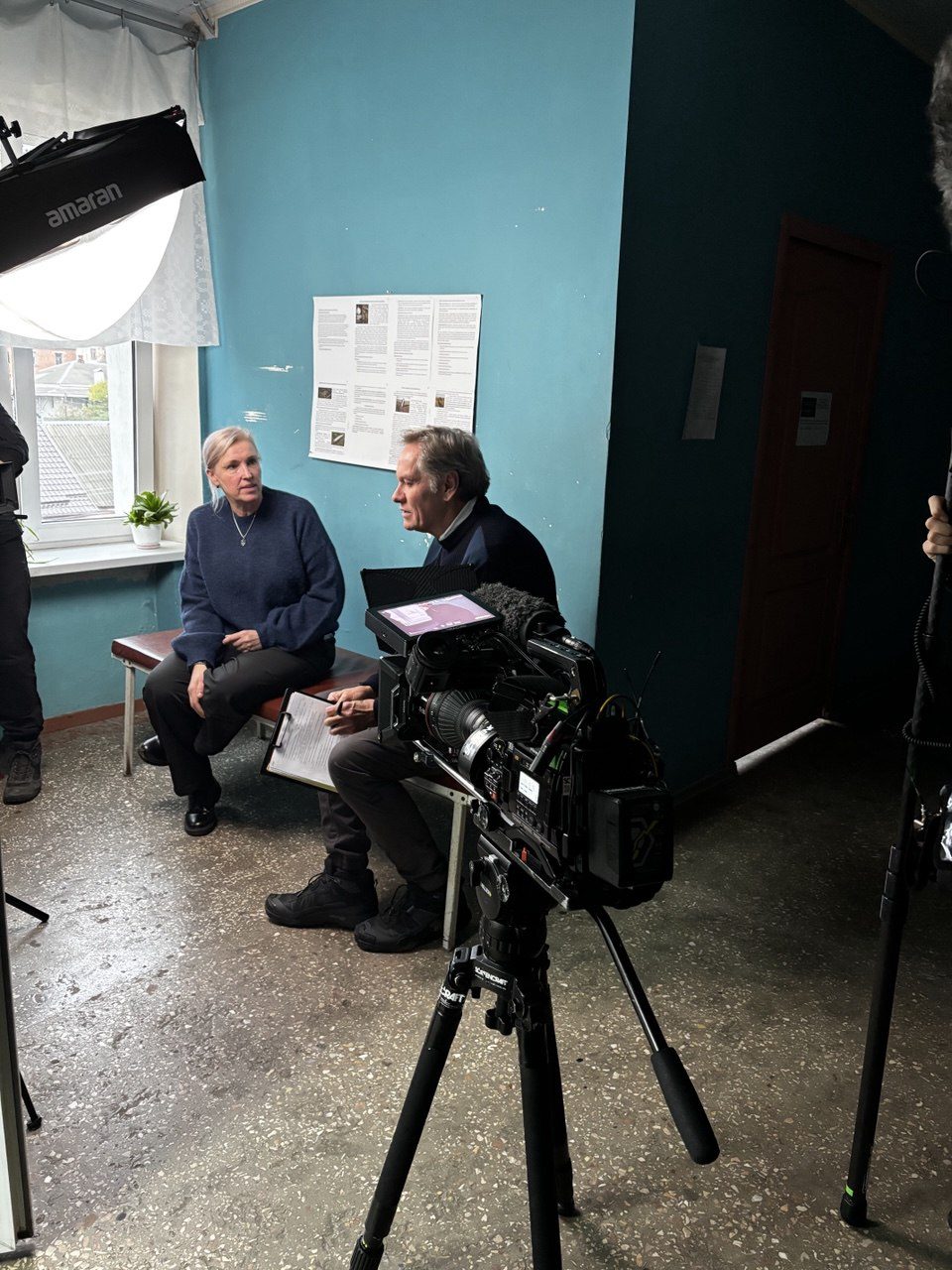
We spent the day teaching doctors at a hospital about 15km from the Russian border, in a town that works under drone nets every single day. The room was packed — they’d requested this exact topic on our last visit two weeks earlier. We also met an Australian film crew gathering footage for a documentary due out in December — more on that another time, except to say we were glad we’d brought our power station, since neither the hospital nor the crew had electricity that day.
We had a lovely, late lunch with a medical couple from the town who are fast becoming dear friends. They face hardships I can barely imagine, yet they keep turning up to work all week and volunteering most weekends besides. Being even a small part of their team is humbling, and more motivating than almost anything else I can point to.
With strikes intensifying, we put some distance between ourselves and Kharkiv and found a hotel further down the road. Village after village, town after town, sat in total darkness as the attacks on energy infrastructure really started to bite — hours of driving through pitch-black towns and highways. Putin may think this breaks Ukrainians. It won’t. It will simply make them more determined to outlast him. The hotel we were going to was the only building in the whole town with a generator, and so the only one with any light at all. A very tough winter is coming for Ukraine.
How You Can Help
None of what we do out here happens without the people who make it possible from home — the fuel for the drive, the medicines handed out in a clinic that doesn’t officially exist on a map, the power station that keeps the hospital equipment running for one more day. OPT runs entirely on volunteers, so when you give, it goes to the work itself, not to overheads, and if you’d like your gift directed somewhere specific, just let us know and we’ll make sure it gets there.
Consider partnering in this work HERE