A Week at Base (and a Summons)
The past couple of weeks have been spent working through everything at our Lviv base and training hub. There has been a lot to clean up, and a lot of bureaucracy to wade through, and the bureaucracy has been the harder of the two. There has also been a huge amount of physical work to do as well as planning and preparation.
One real highlight: Ron connected with a man at church who has started turning old Tesla car batteries into backup systems for houses. His set-ups can run a home for days when the power goes out. Along with everything else we have put in place, this means the house will be a place of real resilience this winter, and one we can use to help people in some special ways. Ron, an electrician and linesman, had been researching a lot of this before we came, so he was able to help with the project. Already, Ukrainian colleagues working in very difficult circumstances have asked whether they might come for a break in winter. Nothing fancy. Just somewhere warm, where they don’t have to worry quite as much about being bombed.
Another highlight was finding that a lot of the scrap metal left behind at the house could be repurposed by volunteers here in Lviv who turn metal into equipment to be used for demining or protecting evacuation vehicles and ambulances for military. We spent half a day pulling all of that out for the guys to pickup.
Our volunteers Helena and Jen ran a workshop that we organised for the CMA Ukraine team on teamwork, leadership and burnout prevention, topics the team had specifically asked for and areas both women have a great deal of professional experience in. Helena comes to Lviv every year to volunteer with various organisations and reached out to offer her support. Jen reached out to volunteer and is also visiting family here. The team really appreciated it.
Unfortunately I didn’t get to stay for all of it. Partway through I got a frantic message from Ron: immigration were demanding we appear immediately to prove we actually live at the house, or be denied residency. So I dropped everything and we headed to a different immigration office, which looked like the set of a bad Soviet movie. Thankfully, the man inside was all friendliness, as though it were the most routine matter in the world, and he asked us to sign a form. We are still not sure how signing a form proved we live in the house. We were just relieved to get out of there.
Road Trip Prep, Ukrainian Style
On Friday 18 September we set off for Korosten to run mobile clinics with the Elohim Charitable Foundation team, one of CMA’s mobile clinic teams. We reset the location on our air alert app and were straight away getting drone alerts.
Life here is all about contrasts. You pack your picnic, and you also pack your tourniquets and practise with your non-medical husband until you’re sure he knows how to apply one. You pack your whistle necklace, which is so that rescuers can find you if you’re ever caught in rubble after an attack. You weigh up whether to take a jerry can, because there are reports of petrol stations being hit closer to where you’re heading.
Please don’t be alarmed reading this. The chance of us ever needing any of it is very small. It’s simply part of being prepared, a bit like everyone should learn CPR even though the chance of ever using it is pretty slim. You forget how abnormal this is until you write it down.
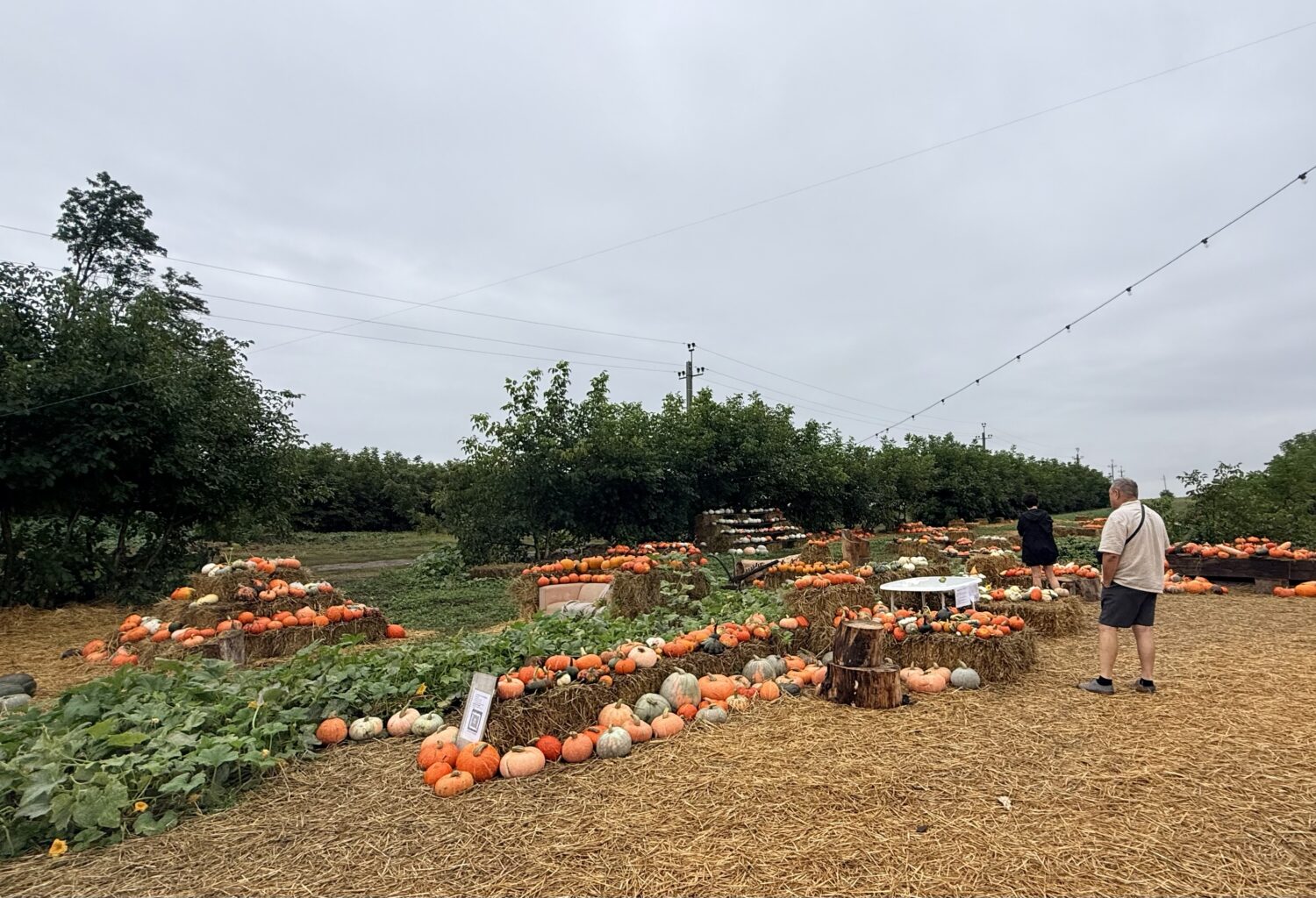
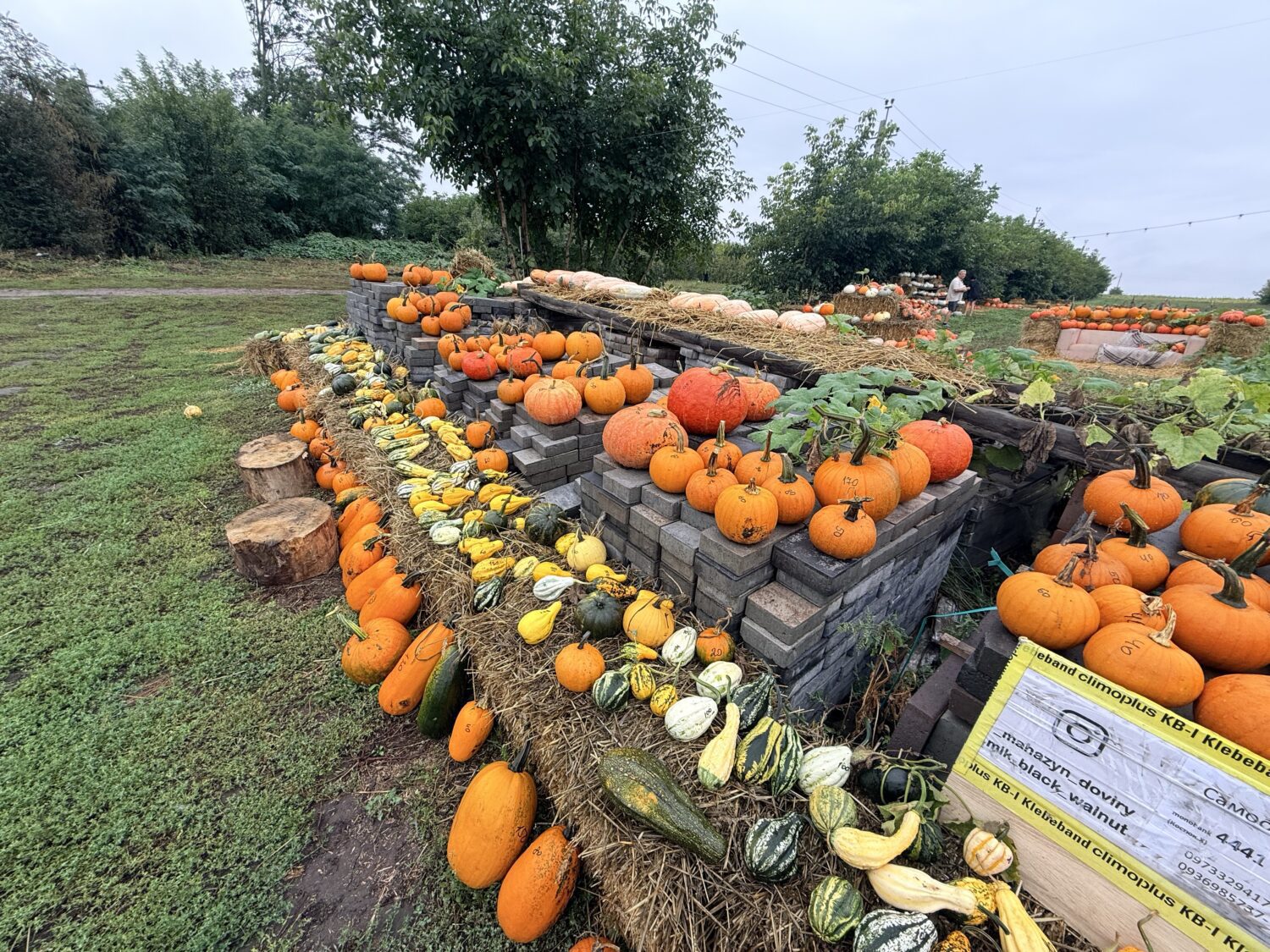
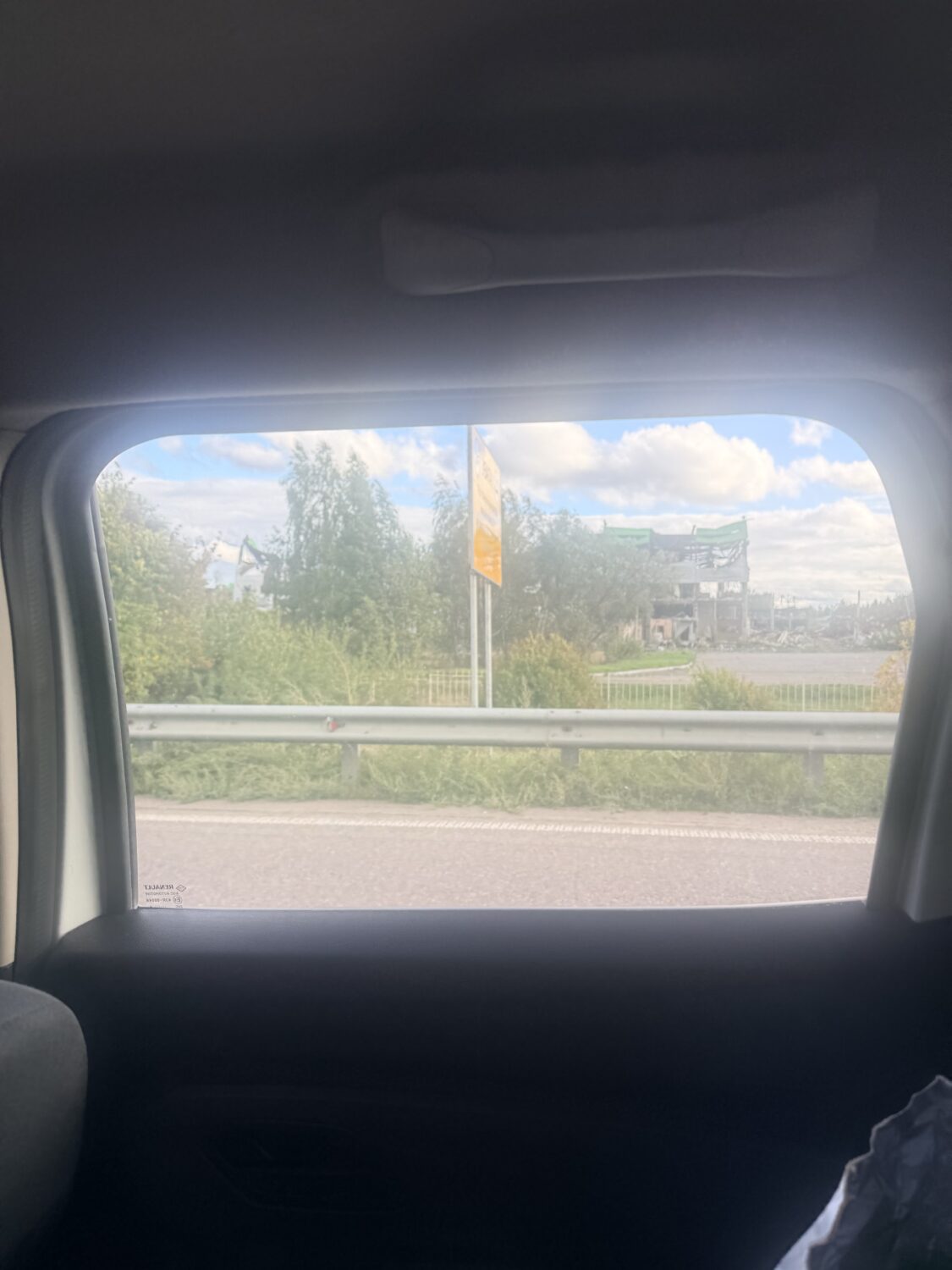
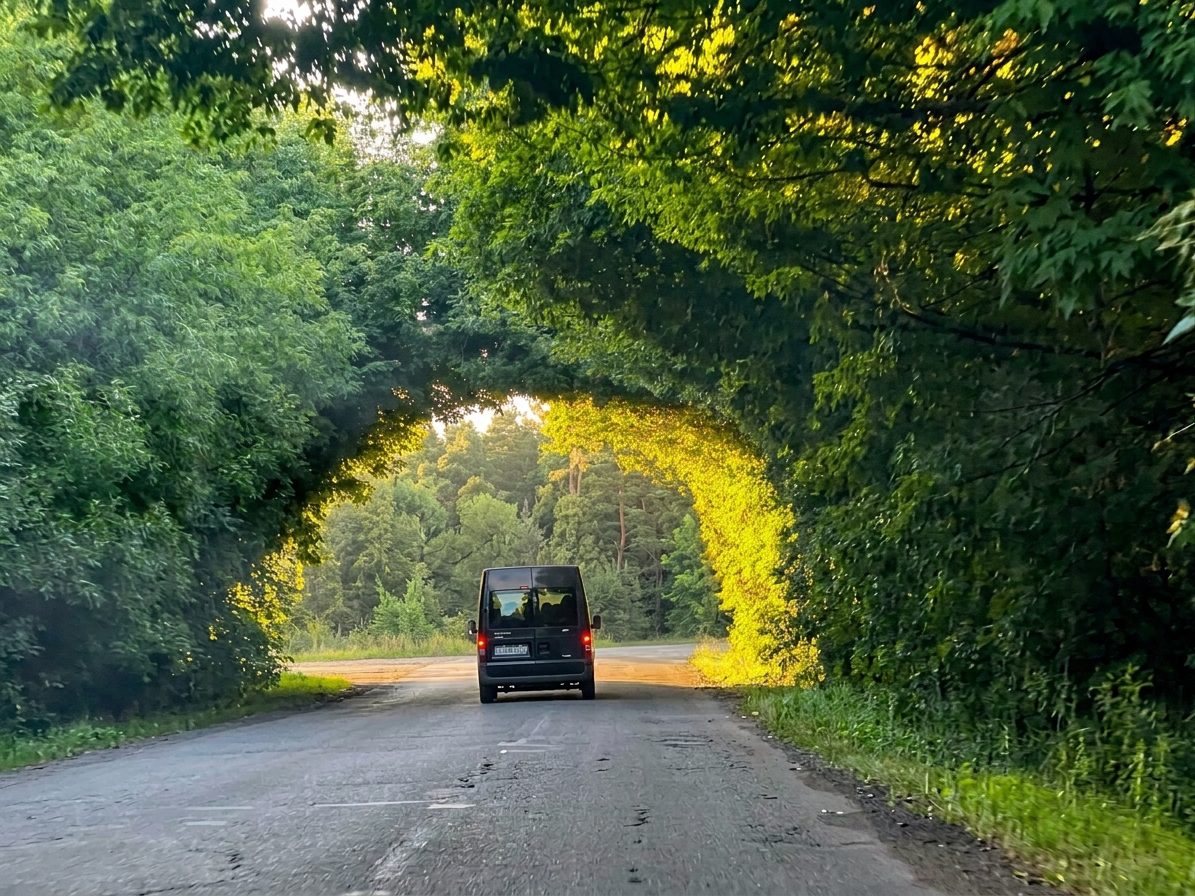
And then you forget all about it, because the drive is beautiful: forests, pretty villages, locals selling vegetables and honey from stalls in their front yards. We stopped at a roadside pumpkin display with more varieties of pumpkin and squash than I knew existed. I’m a gardener. I thought I knew pumpkins. I did not.
While we headed north, Australian volunteer Jen Locke travelled to Mukachevo with CMA manager Regina to deliver her training on trauma-informed care and resilience to hospital staff. We later heard it was very well received, and she was able to run it for two large groups of staff.



Korosten: Tired, ‘Broken’, and Still Showing Up
I love working with this team. They are one of the CMA mobile clinic teams, but they also run their own charity based in a church in Korosten, and they are a real light in their community. The church is a hub of constant activity: distributing aid and meals, running programs for internally displaced people, people with disabilities and orphans, military chaplaincy, mobile clinics and more.
Things have become increasingly difficult in their area. The day before we arrived, Shahed drones hit a business in the centre of town and two people were killed, one of them a mother of three.
We arrived in time for me to run a mini workshop on teamwork, leadership and planning for their volunteer team of about twenty people: mobile clinic staff, chaplains and others. It was lovely to see so many faces I knew from previous trips, and there were plenty of hugs. At check-in, one after another said how tired they were. Some said they felt tired and broken. Little wonder. Feeling tired on a Friday night is normal, but where most people would be looking forward to a weekend off, this group was preparing to leave at 6.30 the next morning to run a volunteer mobile clinic. Despite that, they were an attentive, interactive audience, and many said afterwards how timely and useful the session was.
One participant had been at the recent retreat. She pulled out her notebook to show me all the notes she’d taken from my talks and told me how much they had helped her. That was very humbling, and very encouraging.
We tried hard not to put anyone to any trouble. They would not take no for an answer on dinner. They had also turned the upstairs of the church into a lovely little apartment for us and left fruit, tea and snacks in our room. So thoughtful and kind.
They apologised (!) for all the people walking around and through the building. It turned out these were refugees from the Kherson and Donetsk regions who had lost everything and were now living in the church.
A Clinic Where Every Patient Was Grieving
On Saturday we drove two and a half hours out of town to a new clinic location: an old church in a building that had been shifted from Switzerland years ago, complete with toilet signs still in German. For the last few years the pastor, his wife and a chaplain have been turning it into a centre for the people they have served for many years, and it is becoming a lovely place of refuge and care. For today, it was our clinic. We set up our stations inside and the dental van set up outside.
Every patient we saw had lost a family member in this invasion.
An 82-year-old grandmother had lost two sons and a daughter-in-law. She is now raising three grandchildren, aged 14, 12 and 8. “I have to be a mama and a papa for them,” she told me. She was lively and very switched on, but had severe arthritis in her knees and needed help with pain management and exercises. She also needed some hugs. People waiting outside told us later how much those had meant to her.
Another woman had lost her grandson and was struggling to hold herself together.
Another had severe anxiety and told me she felt ashamed that she had been “born weak like this” and had to stay away from bad news, which is not easy to do in Ukraine right now. My translator was also a Ukrainian chaplain, and together we were able to offer her comfort, reassure her that crying is not weakness, and connect her with people in the church who would let her talk without shame.
Another woman had several quite serious medical issues that needed sorting, but was reluctant to make the time. She is a soldier in air defence, protecting civilians from strikes, and she feels that responsibility keenly.
Partway through, one of the older Ukrainian doctors stuck his head around the corner of my cubicle and said, “You’ll have nothing left to talk about with your husband tonight.” He couldn’t quite understand why I was talking so much with the patients. (For the record, Ron and I still found plenty to talk about.)
At the end, the pastor’s wife came to thank us for the care we’d shown. All of these patients, she explained, came from the groups they run for people who have lost loved ones in the war. There are around 200 fallen from this area alone. She said she was surprised to see some of them coming out of our room laughing and smiling. I suggested they were probably laughing at the crazy Australian doctor lying on the floor demonstrating exercises.
Then she asked, wide-eyed: “How is it that you are like a three-in-one: a physical therapist, a doctor and a psychologist?”
It gave me the chance to explain how different our system is in Australia, where general practice involves high-level training in whole-person care, especially rural generalist training. The staff in the room said that in Ukraine, a family doctor can be more like an administrator who simply refers people on to specialists. There are many wonderful Ukrainians working hard to change this, and it is part of what I hope to contribute to through education and support while we’re here.
Quiet Heroes Without Headlines
This couple are one of so many groups of Ukrainians quietly serving without banner headlines or promotion. And they didn’t just jump in because there’s a war. Many years ago their son was left disabled after a bus accident, and they set up support for people with disabilities. In 2014 they began helping people affected by Russia’s first invasion. Now they are serving through the full-scale invasion.
Their son had a best friend who always protected him at school from discrimination. The two were very close. That friend was killed in this war, and his death prompted them to start the support group for the families and friends of the fallen, the same group our patients came from.
Meanwhile, Ron had been helping with set-up and taking every patient’s blood pressure as they came in. Towards the end he had time to talk with Maksym, the chaplain who had organised the clinic and has been getting the centre ready. Maksym has leased space to set up a rehabilitation centre for soldiers and is doing a great deal to support people in the area. When Ron mentioned that we had bought a house in Ukraine, Maksym was completely taken aback. “So you have hope for our country?” he said. “That means a lot.”
It meant a lot to us too. We had wondered whether our house might carry that meaning for some Ukrainians, and hoped it would. It was good to hear it. The church then fed us a lovely lunch.
On the long drive back, we talked for hours with the woman who had translated for me. It turned out she wears many hats. She and her husband are chaplains who travel regularly to frontline areas to encourage soldiers and deliver aid and food, returning to the same places and building real relationships. Many of those places are now out of reach. That’s not so much because the front has moved (in many places Ukraine is pushing forward), but because the “kill zones” or “grey zones” keep widening as drone ranges increase and Russia throws everything it has as far behind the lines as it can. So they do what they still can, including helping the many wounded soldiers and their families now back in the rear.
She told us about finding people living in the basements of their destroyed homes, who refused to leave. The chaplains brought them food and supplies, and then garden tools and seeds, so they could re-establish themselves and provide for themselves again.
She is also a deputy mayor. If I understood correctly, it’s a voluntary role. She never saw herself as a politician, she said, but believes it was God’s plan, because it lets her serve and help more people and have influence from within local government.
Sirens During the Sermon
On Sunday we were served another wonderful breakfast by a woman who serves everyone with love and smiles, while her own brother and son are at the front.
We joined the church service. They asked us to share a little about ourselves, then prayed for us and thanked us for being there. A woman stood up to tell the congregation that her husband had been killed that week, but that the church had surrounded her with so much love and support she didn’t know how she would be getting through without them.
The pastor spoke about the Shahed attack that had killed two people in town. Then the air raid sirens went off mid-service, and he didn’t even flinch. Hardly anyone moved. I noticed Yulia, sitting beside me, check her phone, and her young daughter quietly slip out.
The alerts kept going all day, and all night. Life would be impossible if people ran to a shelter for every one, because they are now so frequent. There is no rest from the sirens in Korosten.
Between services and sirens, the church building never stops: programs running, refugees living and helping, people coming for aid or just for someone to talk to. What inspired me most was seeing refugees who weren’t only receiving help but had jumped in to join the teams helping others.
We walked through Korosten’s famous park, full of monuments and history. Korosten was once the capital of the Drevlians, a Slavic tribe that predates Kyivan Rus, with some suggesting they go back as far as the sixth century. It’s genuinely beautiful, with ducks, granite outcrops, a river and forest. Drone alerts and sirens went off the whole time we were there, and people carried on with their day.


Views Through a Window
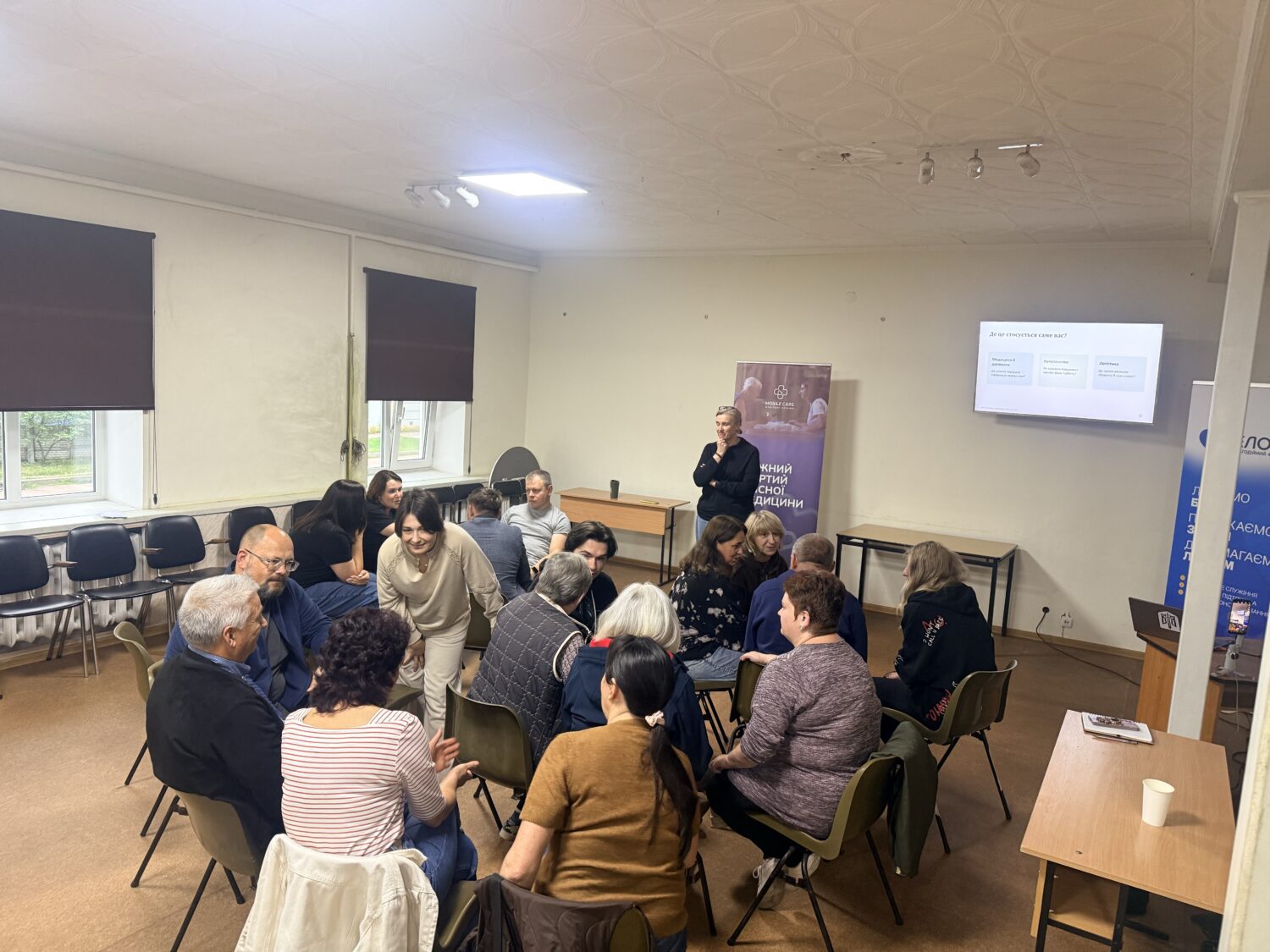
That afternoon I was invited to join a group the church runs for the families of fallen and missing soldiers. The children come too and are taken off for fun activities. The women were of all ages: wives, sisters and mothers. There were games, tea and snacks, and some art therapy. Then came an exercise with a table of cards, each showing a different view through a window. Everyone chose the one that represented what they saw for their future and explained why.
That’s when the tears started.
One woman chose a card showing a house. She has been displaced from her destroyed village for three years, but she still dreams of, and believes in, going home to it.
Another chose a windowsill with flowers on it. That was how she imagined her mother would decorate the window when her brother, missing for two years, comes home.
One woman had a tiny chihuahua with her. Her son bought him two months before the full-scale invasion, then went to war. He was killed a few months ago. She doesn’t let the dog out of her sight now.
By the time they asked me to share something with them, I was quite emotional, and it wasn’t easy. The alerts kept going off throughout.
Gifts We Don’t Deserve
We recorded some videos and interviews with Pastors Yura and Anatolii and with Yulia to share with donors. Then they embarrassed us all over again with their thanks. Anatolii gave a lovely speech about our shared values and mission and being like family, and told the story of a displaced person whose faith in humanity had been bolstered simply by learning that Australians were here. They gave us each a beautiful traditional vyshyvanka shirt.
Pastor Yura then produced an Australian flag for us to sign with a message. We are still puzzled as to where he found an Australian flag in Korosten. (Update: we later found out he bought it in a thrift store! Love to know the story of how it got there!?)
We do so little, and Ukrainians keep thanking us and giving us gifts. It’s humbling to the point of embarrassment.


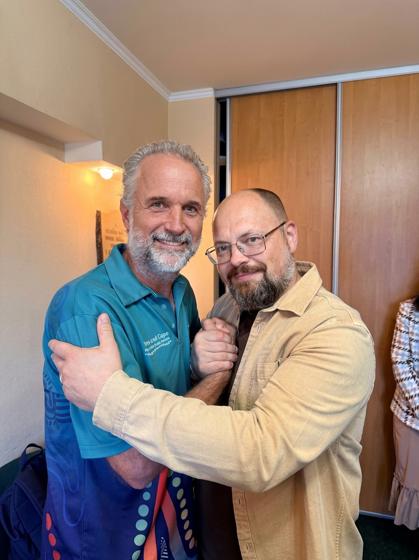


Ron also visited Yulia’s mother’s village and her 110-year-old house while I was with the women’s group, and had long, heavy conversations with Yulia: about how she feels toward Russians, the frontline and the outlook for the war, the first days of the invasion, and village life. She spoke about resilience, and about the time a missile exploded above houses in Korosten and damaged around 100 homes, and how quickly the community came together to clean up, start a food program and begin rebuilding. It was incredible to hear.
Before we left, the church kitchen fed us once more, and the team gave us valuable feedback on international medical clinics that we can use in our planning.
Back to Lviv (and Back to Bureaucracy)
On Monday we left Korosten with Yulia’s daughter Anya, who came with us to Lviv for medical appointments. On the way we collected Jen from Rivne and dropped her in Klevan for her next talk, which sadly hadn’t been well organised. We got home quite late.
Tuesday was back to reality: another in-person visit to the power company to sign up for our utilities (well, one part of them, anyway), a quick delivery of the handbag Anya had left in our car, and a trip to the military hospital to collect equipment for our upcoming Kyiv clinic.
How You Can Help
The people in this post are not in the headlines. They are grandmothers raising grandchildren, chaplains planting seeds with people living in basements, volunteers who describe themselves as broken and then turn up at 6.30am anyway. Supporting them is what OPT exists to do.
If you’d like to stand with them, please consider donating at https://www.passingthrough.net/donating, or becoming one of our 200 Heroes for Ukraine at https://www.passingthrough.net/200-heroes-for-ukraine/. Every contribution helps keep mobile clinics on the road, training delivered, and our Lviv base ready to offer a warm, safe place to rest this winter.
A note on where your money goes: neither Ron nor I draws a salary from OPT. I’m doing some remote work on the side, and we’ve sold belongings and rent out part of our home to cover our own costs here. That means what you give goes to the work itself, and if you’d like your gift directed to something specific, such as the mobile clinics or the winter retreat house, just tell us and that’s where it will go. We respect your wishes about YOUR dollars.
To follow along, subscribe to the blog at https://www.passingthrough.net/subscribe-to-blog-posts, or find us on social media at the links at bottom of the page.
Thank you for walking alongside us.
Lara & Ron
2 comments