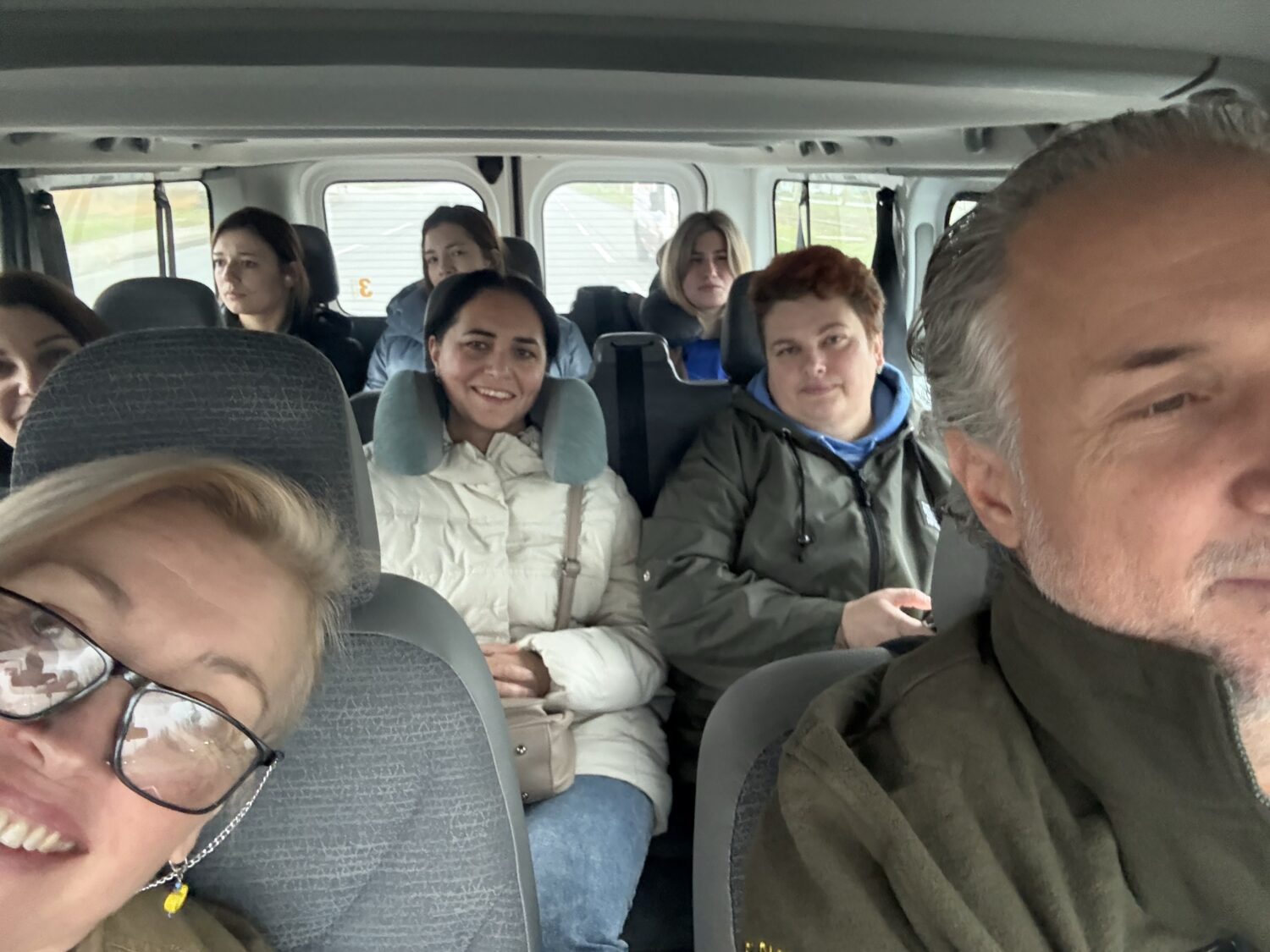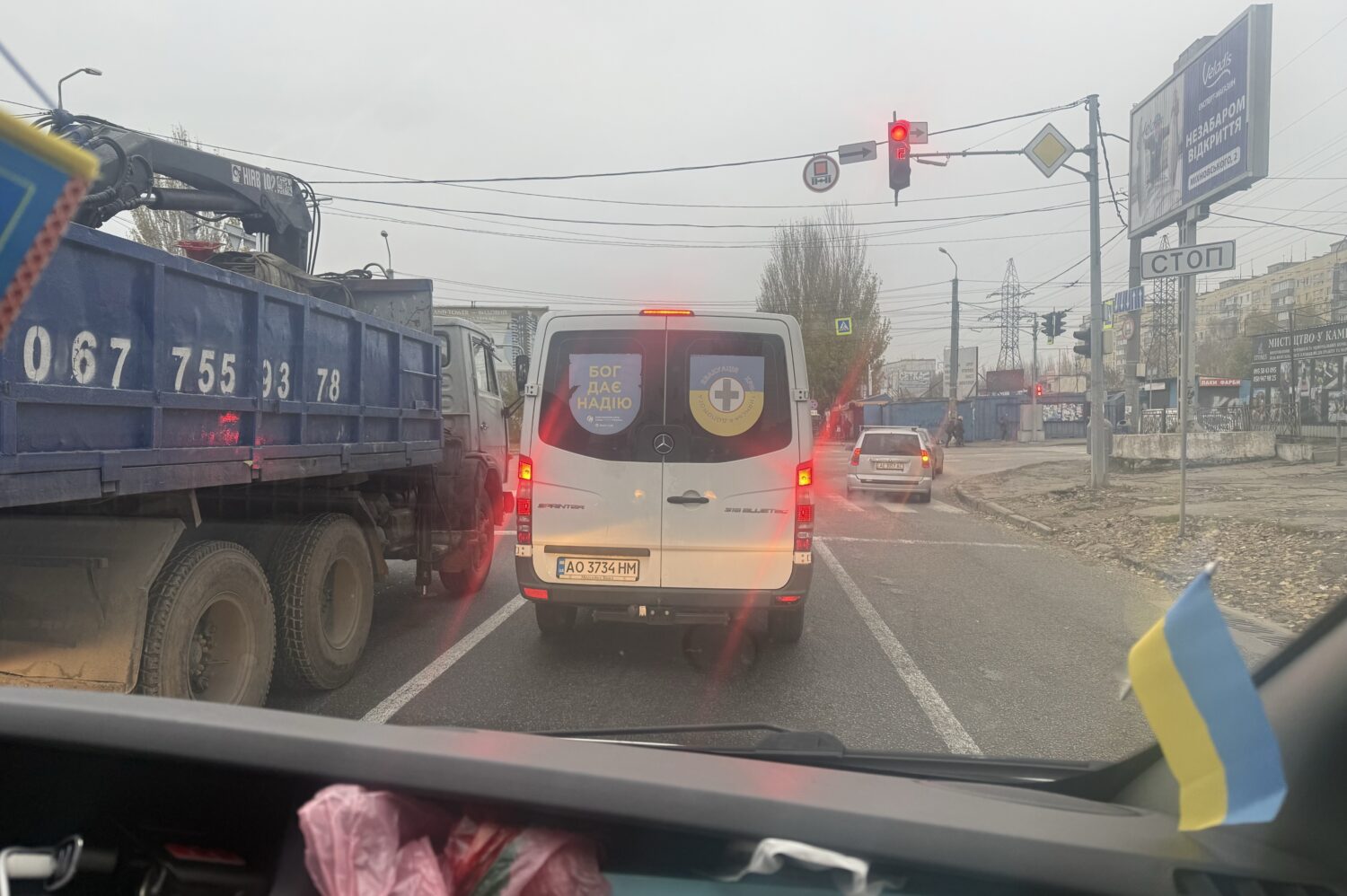
Seven of us packed into the van for the long drive to Dnipro—about 6-7 hours solid. We were taking the volunteer Korosten mobile clinic team to the Dnipro region for mobile clinics. We could really see the value in having a decent size vehicle with such a big team.
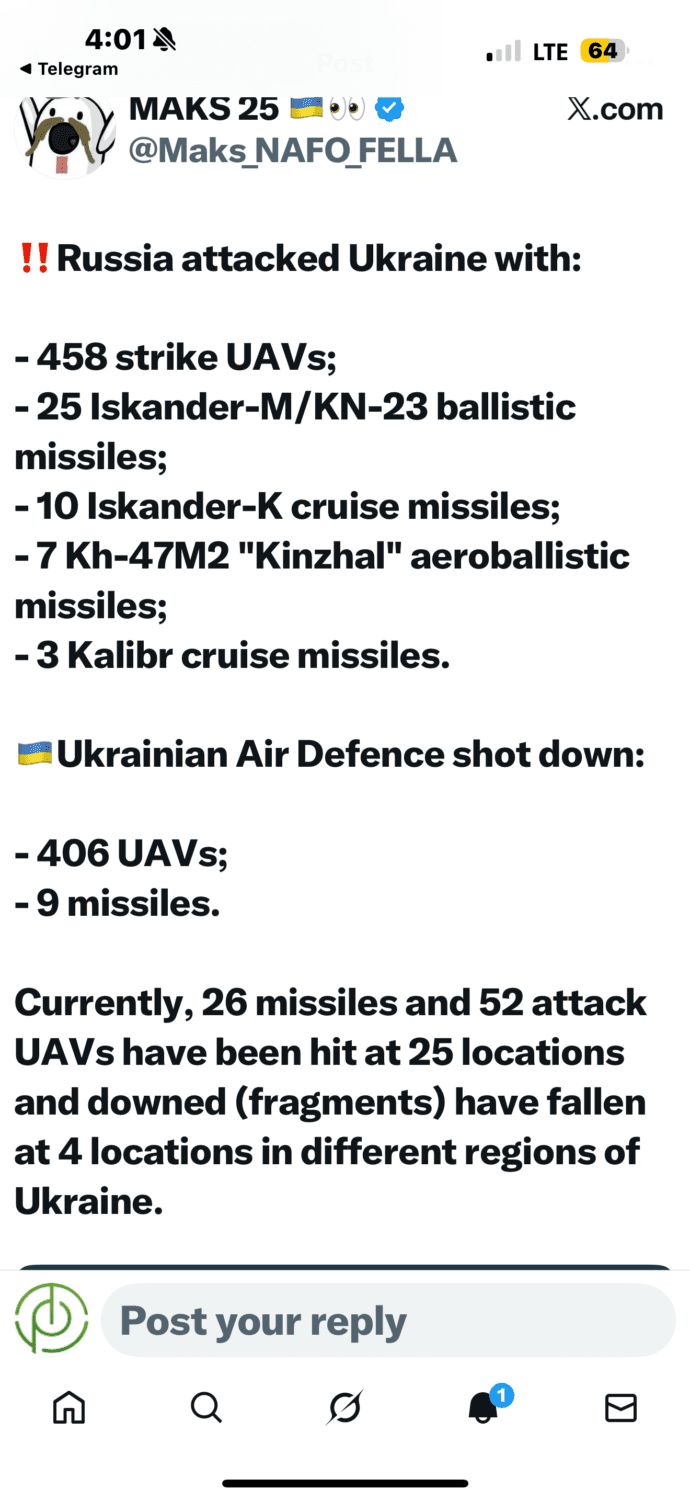
We picked up Alina—a young medical student helping CMA—in Bucha. Thirty minutes after we left, I got a notification that a Shahed drone hit Bucha. Nobody seemed to want to know – not the last time we would notice this.
As we got closer to Dnipropetrovsk, the military presence intensified. Trucks loaded with tanks. Vehicles covered in drone cages or equipped with drone jammers. After driving through beautiful forest, it was a typical snap back to reality: we’re in a country at war. Our route took us past a bombed school on the outskirts of Dnipro.
The ladies were determined to see Dnipro city centre and look at a shopping centre before dinner—it was their first time in the city. Ron warned we should get moving before any air raid alerts scrambled the GPS.
Sure enough.
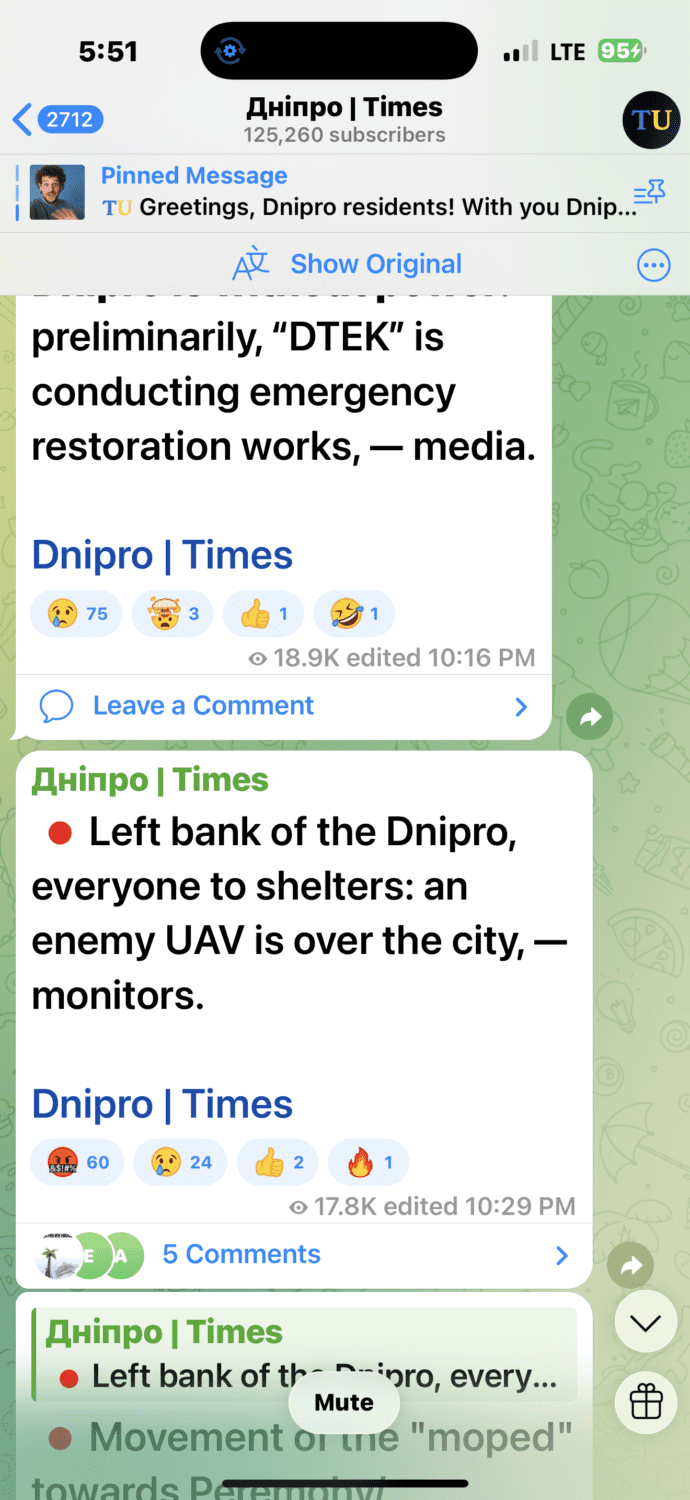
As we approached the city, Google Maps went haywire. Shaheds were hitting Dnipro. The ladies kept chatting as if nothing was happening. Maybe pretending was their coping mechanism. I understood that.
We drove in circles through spaghetti piles of roads with busy traffic, GPS completely scrambled. Alerts kept pinging. It became apparent that Shaheds had hit somewhere in the city—a residential building was struck, six people were injured and hospitalised, while we drove around lost. Kind of surreal.
We thankfully worked our way back just in time for dinner. The city centre tour would have to wait.
Welcome to a War Zone
I woke to discover more Shaheds had hit the city overnight on the other side of the river. The train had been stopped for a while due to hits on the track. So grateful to be in a car.
We followed Serhii toward a village for a mobile clinic. He warned us GPS wouldn’t work where we were going—security measures for soldiers rotating through the area. Checkpoints increased. Piles of Czech hedgehogs and concrete blocks lined the roads.
We reached a certain point and just pulled over amongst the fields, waiting for a car to turn up and show us the way into a little village.
The dental van that was supposed to join us had experienced a major mechanical problem. After three years of going straight to the frontlines, it finally gave up. We got sent a video of it on the tow truck. Losing dental services hurt—it’s always in high demand.
Every Patient Had Lost Someone
Every single patient that day had gone through major trauma or lost someone in this war.
My first patient had several brain contusions and extremely severe PTSD. He’d sleep for a couple of hours, then wake up screaming. Terrible tremor. Struggled to talk. Any small noise made him jump. He’d been like this for two years. It broke my heart to watch his distress.
Every patient had lost someone—a husband, a son, a nephew, friends.
One older man had been in the military since 1985. He fought in 2014, suffered a back injury, did extensive rehab and recovered. But now, instead of retiring, he’s fighting again. The heavy body armor brought his back pain roaring back. When he talked about how much he missed his lost brothers in arms, he became very teary.
The South American Battalion
After the clinic, Serhii mentioned we’d help some South American soldiers that he had been helping. A Ukrainian-speaking Canadian woman came out when we arrived—Ron later told me she’d been fighting here for six months.
The soldiers were living in a very basic, cold house. Both men and women. Most had viral illnesses—basically colds—and some had secondary lung infections requiring antibiotics. They only wanted to see the general practitioner – that was me. We used Google Translate for Spanish and Portuguese, so the interpreter wasn’t even needed. Just Ron, Serhii and I went in while the others walked around to a cafe.
Then the team leader mentioned a few had some sensitive health issues but were too embarrassed to talk about it (probably a cultural thing?). I encouraged him to tell them I could speak privately and help. Eventually they opened up. One lady asked for her friend who was too embarrassed to speak to me—he didn’t even have the 100 hryvnia for treatment (about $3 AUD). I gave her the money and told her to buy it.
They were very grateful. A couple asked us to pray for them. Fighters from Brazil, Argentina, Colombia who had joined the Ukrainian army to help a country fighting for justice and freedom.
When Russian Brothers Became Enemies
That day I had two separate conversations with young people in their twenties—both had the same realisation. They and their peers had been dramatically influenced by Russian propaganda over the years. Even after the 2014 invasion, people forgot easily and still considered themselves “brothers” with Russians. Shared media, music, bloggers. They brushed aside or disregarded the fact that Russians had dehumanising slurs for Ukrainians for many decades.
But after 2022, everything changed. Suddenly everyone realised the people they once considered “brothers” didn’t even see them as human—and were intent on destroying them and their identity. Their feelings toward Russia would likely never be the same again.
Ukraine has been undergoing a decolonisation process ever since while simultaneously fighting their colonisers. Fighting to retain their culture, language, literature, music, art. Russian appropriation is no longer tolerated. Across the country, people tell the same stories of destroyed relationships with friends and family in Russia who either don’t accept that Russia is attacking Ukraine or no longer hide their country’s desire to occupy Ukraine and destroy everything Ukrainian—including its inhabitants if necessary.
November 7th: Doctoring in the Dark
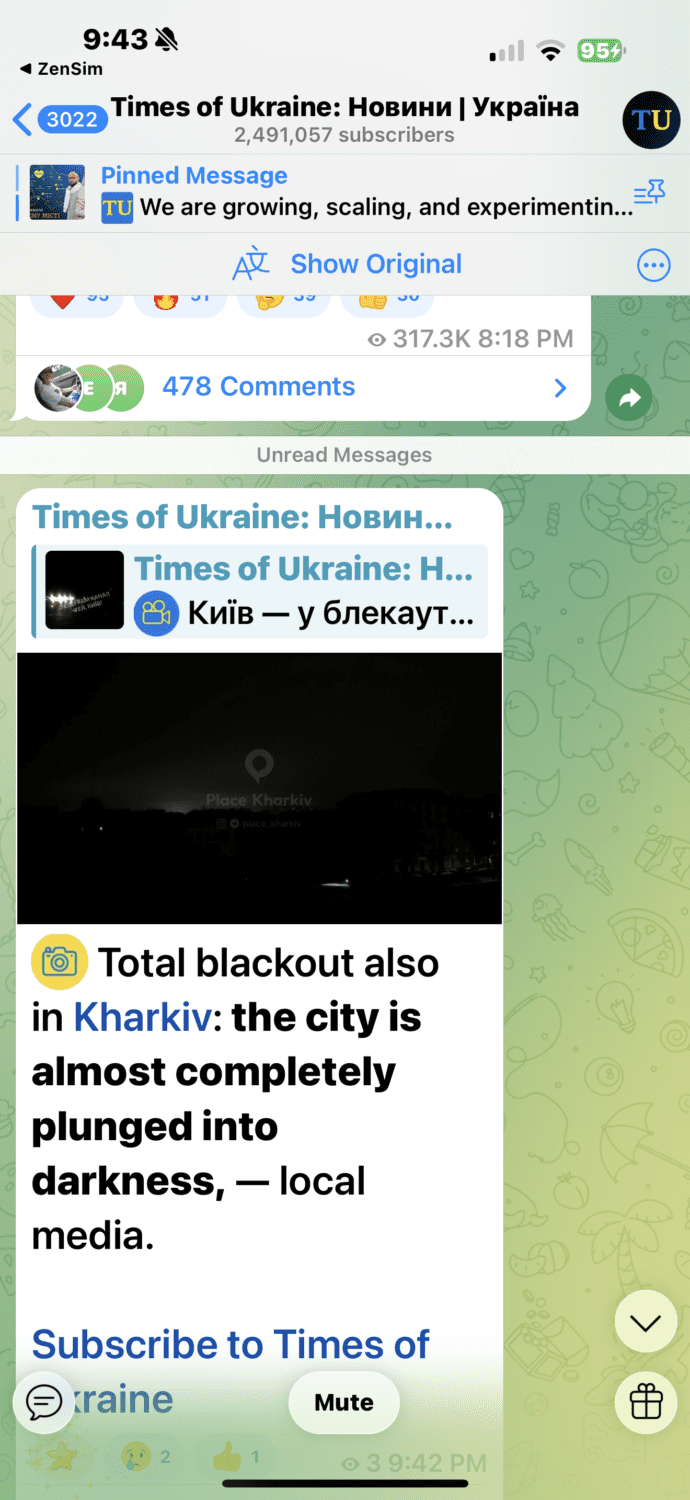
At breakfast Ron asked me to check Telegram—he thought he’d heard explosions in the middle of the night. Turns out he probably heard a missile attack on energy infrastructure across the river that took out power in the city. A couple hours later, a shahed hit a residential building. One killed, many injured including children. Three floors destroyed. (The death toll later rose to four.)
Ballistic missiles and shaheds were still heading across the country, targeting power infrastructure. I saw that two shaheds hit near where we’d been staying in Kyiv.
Our optometrist couldn’t make it—she’d been awake all night in the bomb shelter with her kids. It was really close to her. She later sent video of herself at the rescue site.
Massive attacks across the country hitting energy infrastructure and civilian areas. At breakfast everyone was talking about it—how they’d been woken up, how the building shook. A few guys sleeping on the lower level said they’d been woken by explosions and discussed whether they should come get us from the upper floor.
They seemed shocked I’d managed to sleep through it all. 🤦♀️
Later at dinner, it came out that the frontline chaplaincy team had a coping mechanism for dealing with loud explosions: they’d say “it’s just a door banging.”
Just a door banging. Not missiles. Not shaheds. Not cities being destroyed. Just doors…
Power On and Off—Mostly Off
At the clinic: power flickered on and off, mostly off, thanks to Russian attacks. They made coffee on a gas light.
They got a generator running for a few hours before it packed it in. We used the portable power pack your donations had paid for to run the ophthalmologist’s equipment. Teams keep asking for more of these to help them continue working through constant power outages.
We also had no water – again thanks to Russian attacks. Had to pour water from a bucket to flush the toilet.
I saw many patients who’d lost a son or a husband. Actually, I think every patient had lost someone—some very recently.
One older lady seemed particularly bright and super cheerful. Kept saying everything was good, smiling from ear to ear. I couldnt work out why she came to the doctor – I think it was just to say hi and check out the Australian. Asked about her activity—she said she still goes in the garden. “Putin bombs us but I will go plant some trees!”
Then the facade started crumbling.
Her son had been killed in Russia’s 2014 invasion. She started cupping her hands together: “How can it be that I held my son in my hands but now he is dead? The world doesn’t even know about this genocide…”
She paused. “But I’m one of the lucky ones—I can at least visit my son’s grave. Others don’t even know where theirs is. Don’t even have so much as a bone from their son’s body to bury.”
She later agreed to record her story and her plea to the world to help stop this evil. ( see the video HERE)
So many patients suffering stress, grief, depression, having lost loved ones. It was overwhelming.
Filtering Water from Puddles
A younger man came in about his blood results. We talked about drinking more water. He said he’s on the frontlines—sometimes they run out of water and have to filter water from the puddles. So it’s not that easy.
Oh, and he’d had a concussion a week ago from an explosion. Gets dizzy. He had ten days rest, then goes back to the front.
As he walked out, I reached into my bag and pulled out a camo patch with a red kangaroo. “Thank you,” I said.
He immediately grabbed me and gave me a massive hug…
Even the young man helping in the kitchen had lost his dad.
Hands in the Soil
Many patients talked about how their sanity, their therapy, their joy, their exercise came from gardening. Growing vegetables. Putting their hands in the soil is how they put it.
It made me feel connected—I thought of how that was such a big part of life for my Ukrainian mother and grandfather, and how that had been handed down to me. Even under bombardment, they plant.
Vova
An eight-year-old boy named Vova—his mother brought him to practice his English with me. At first he was very nervous, but once he warmed up and realised we could talk, he kept coming up and tapping my arm to ask me something else. It was so cute.
He started getting a bit mixed up telling me things he loved or liked and ended up saying “I love you too,” which made me smile.
I gave him a badge of Australia with a kangaroo on it. Everyone in the waiting room told him he could show his papa. His dad is at the front.
Hard to think there’s a fair chance this child could end up fatherless.
He gave me a lovely hug when we left.
Massive Blackouts
The news showed massive blackouts in Kyiv, Kharkiv, and Dnipro. Entire cities without power, many without water and central heating too. All as a result of massive Russian attacks designed to destroy everything that makes Ukraine habitable—designed to make the population suffer and want to give in.
They clearly don’t understand Ukrainians.
The team went for one last walk to local markets for some last-minute shopping, but conversation was difficult due to the loud roar of generators keeping the shops going. No power in the city.
Why They Stay
The next morning, a young woman from CMA gave me a hug. She wanted to say again how much it meant to have people like us who give her hope and inspiration to stay in Ukraine. Sometimes she gets despondent when young friends leave the country, and say to her – Ukraine will be a hard life for ten years or more—why stay when you can have a better life abroad?
I told her how it was us who felt inspired and uplifted by people like her and these teams working so selflessly under extreme conditions. Ukraine is an amazing country to be proud of, with such great potential to be an example to the world. We’re proud of people like her who stay to help build the future.
As we left the church that morning, we saw a large group of elderly refugees waiting outside a door for it to open—presumably to receive humanitarian aid.
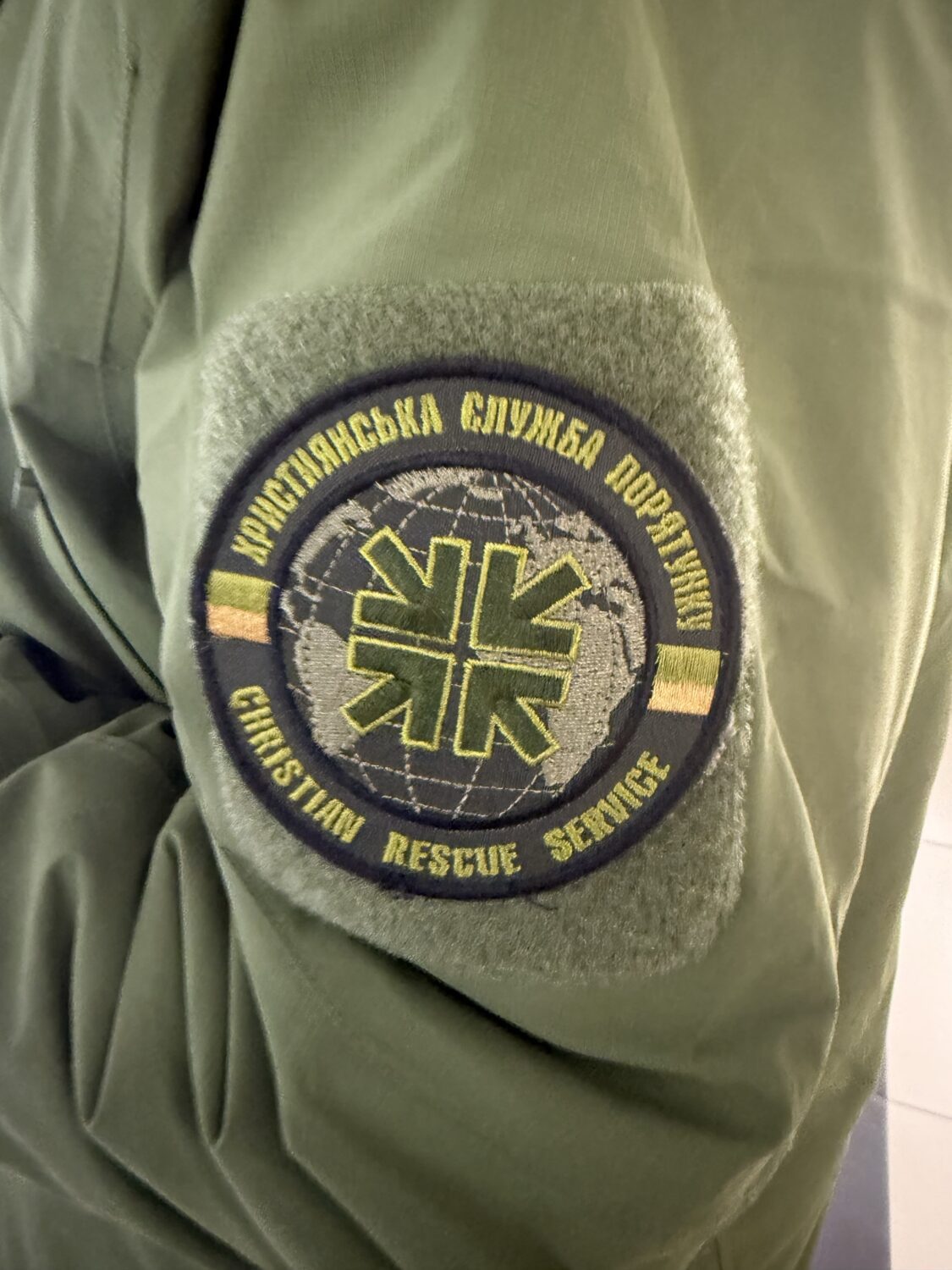
This church NGO does amazing work. Their building often overflows with refugees they themselves rescue and evacuate from frontline villages at risk to their own lives. They provide food, counselling, help with accommodation, children’s programs. Pastor Serhii was constantly organising, on his phone, answering calls—super busy.
On the seven-hour drive back to Korosten with the team, the ladies chatted the entire way. After days of clinics and sleepless nights with bombing, they still had unstoppable energy.
Your Support Makes the Difference
The portable power packs you’ve funded keep medical equipment running when the grid fails. The mobile clinic van gets teams into villages that would otherwise have no care. Your donations mean fuel for the mobile clinic van, delivering care and medicines to those in need.
This work continues because you make it possible.
Support our next mission at Empowering Health Heroes in Ukraine
or HERE for donating with less fees.