Frontline Medicine: Where GPS Says Peru and Hope Persists
Ron, Regina and I followed Dr Mykola through the darkened streets of Bohodukhiv, north of Kharkiv, pulling up to a building with no lights or signs. One of those classic ‘we’re in a bad movie’ moments—until the door opened and we discovered it was actually a hotel. Not exactly a booming hospitality market this close to the Russian border, but surprisingly comfortable.
Looking up the road, we could just make out Czech hedgehogs and a boom gate silhouetted against the night sky. That road headed north toward Sumy and active combat zones. The geography alone told the story: we were on the very edge.
Throughout the night, air raid alerts cycled relentlessly on and off. At intervals, we heard the rat-a-tat-tat of air defence systems engaging their targets overhead, each burst carrying the weight of what it meant if they missed.
When Technology Meets War
The plan seemed straightforward: mobile clinic, translator pickup, get to work. Except Ron had to drive solo to Kharkiv—an hour away under normal circumstances, completely dependent on Google Maps. Here’s what happens to navigation technology in an active war zone: air raid alerts scramble GPS signals. Your maps collapse, stop working entirely, or confidently inform you that you’re actually in Lima, Peru.
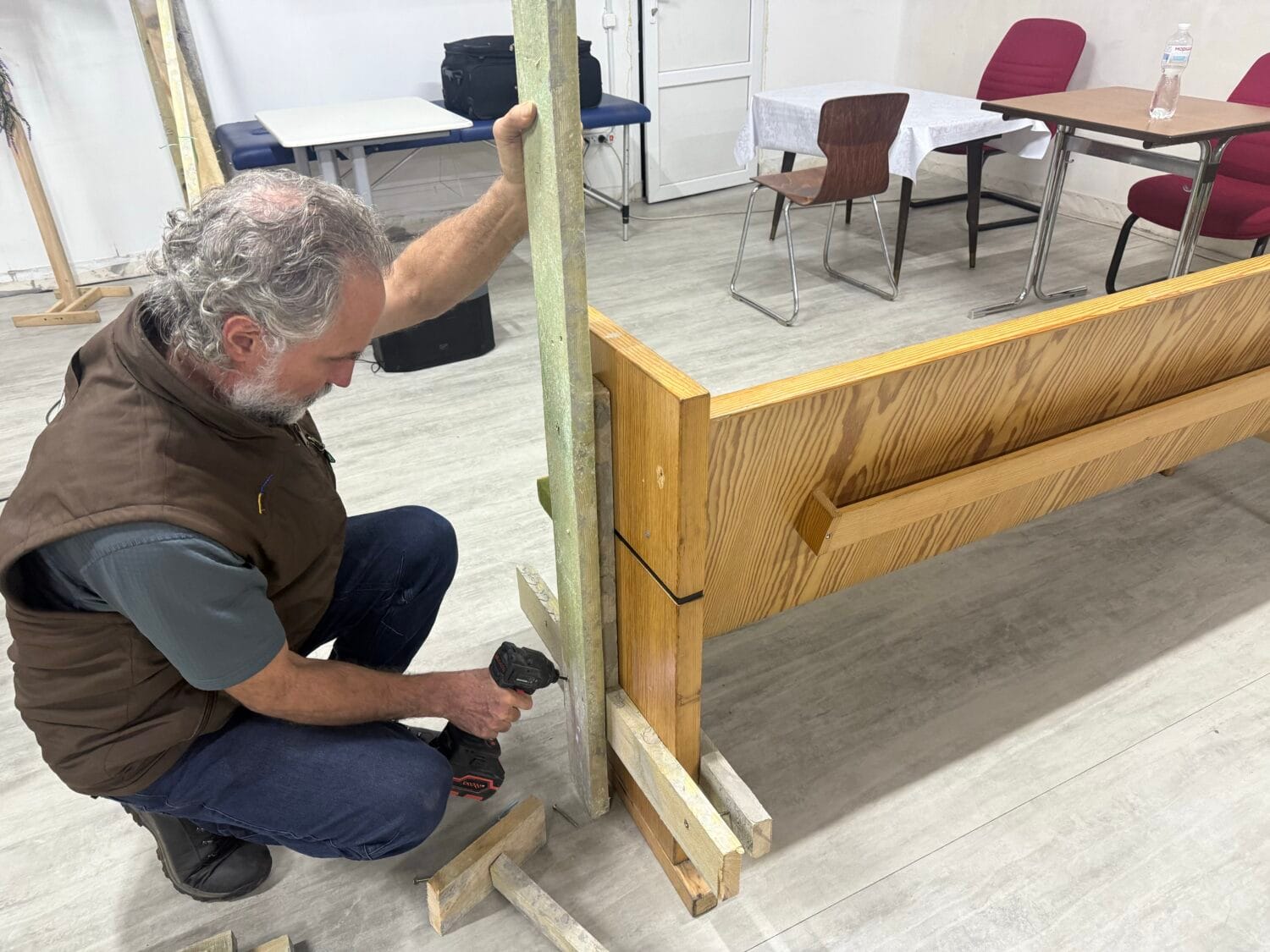
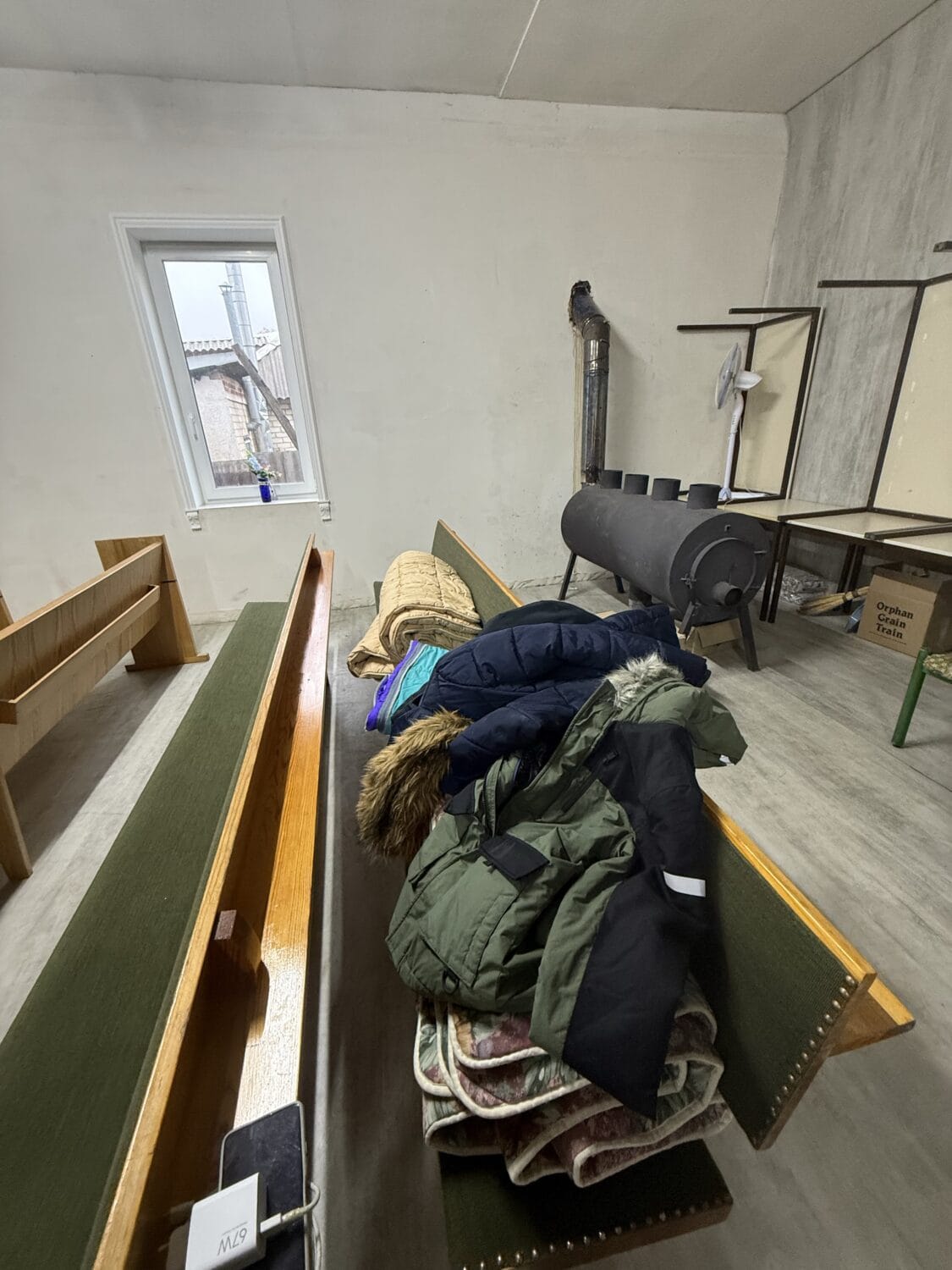
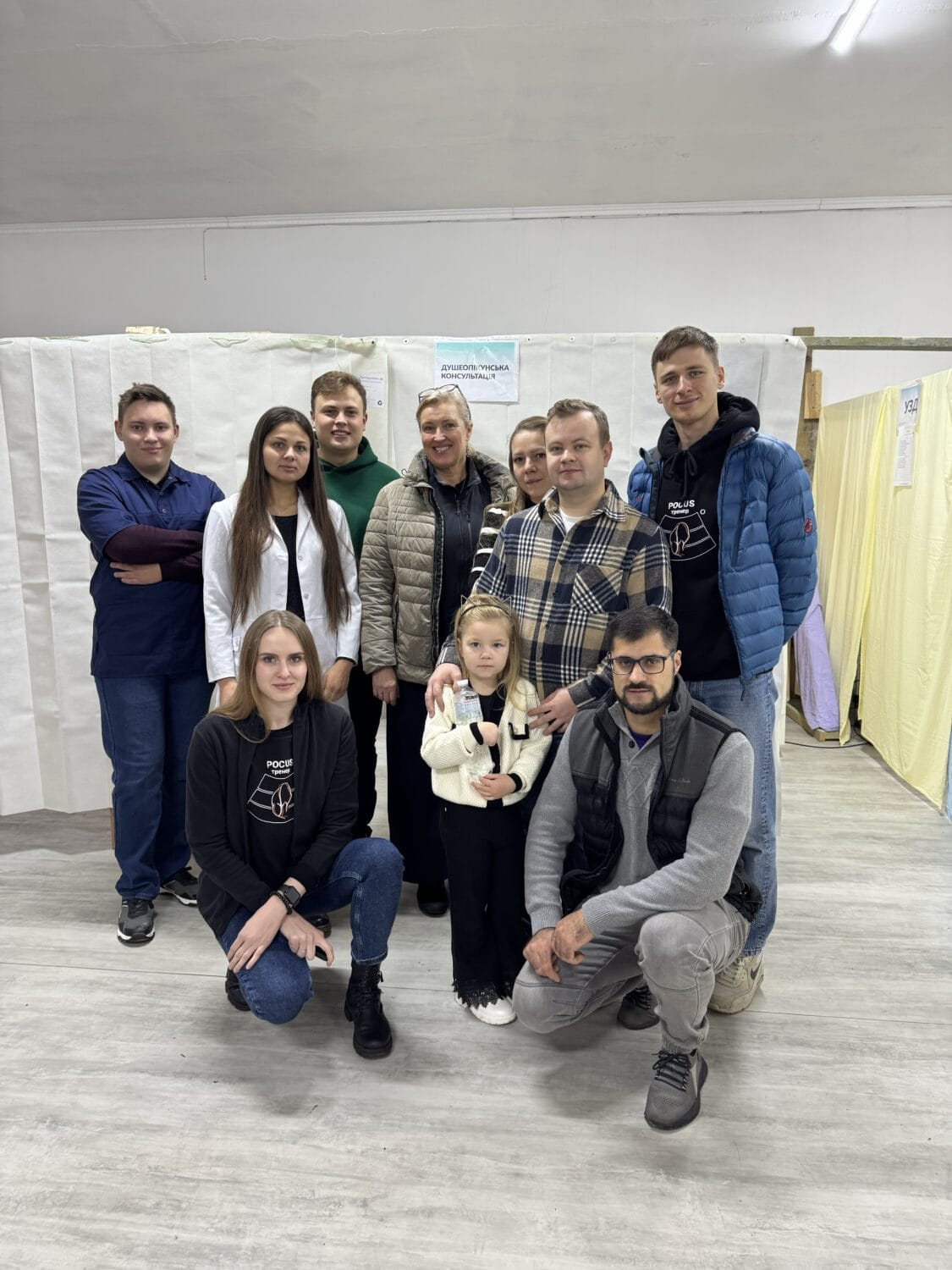
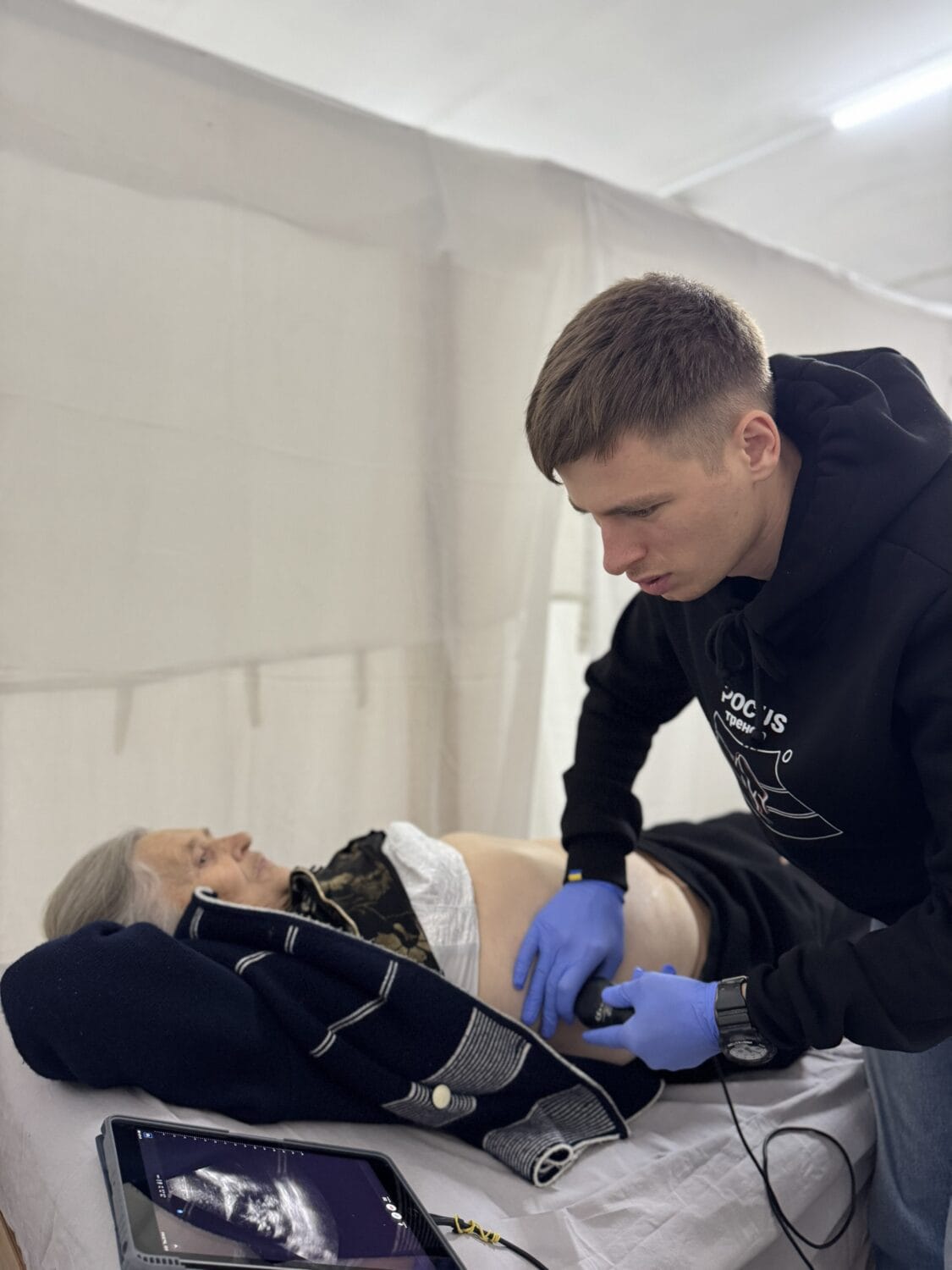
Two hours and countless phone calls later, Ron finally connected with our translator. Meanwhile, back in the village, volunteers had transformed the local church into a makeshift medical facility—wooden cubicles painstakingly drilled together, folding tables arranged into examination spaces. Someone had invested hours of labor creating these temporary structures. I kept thinking: we desperately need to raise funds for lightweight, portable medical screens that don’t require this level of construction.
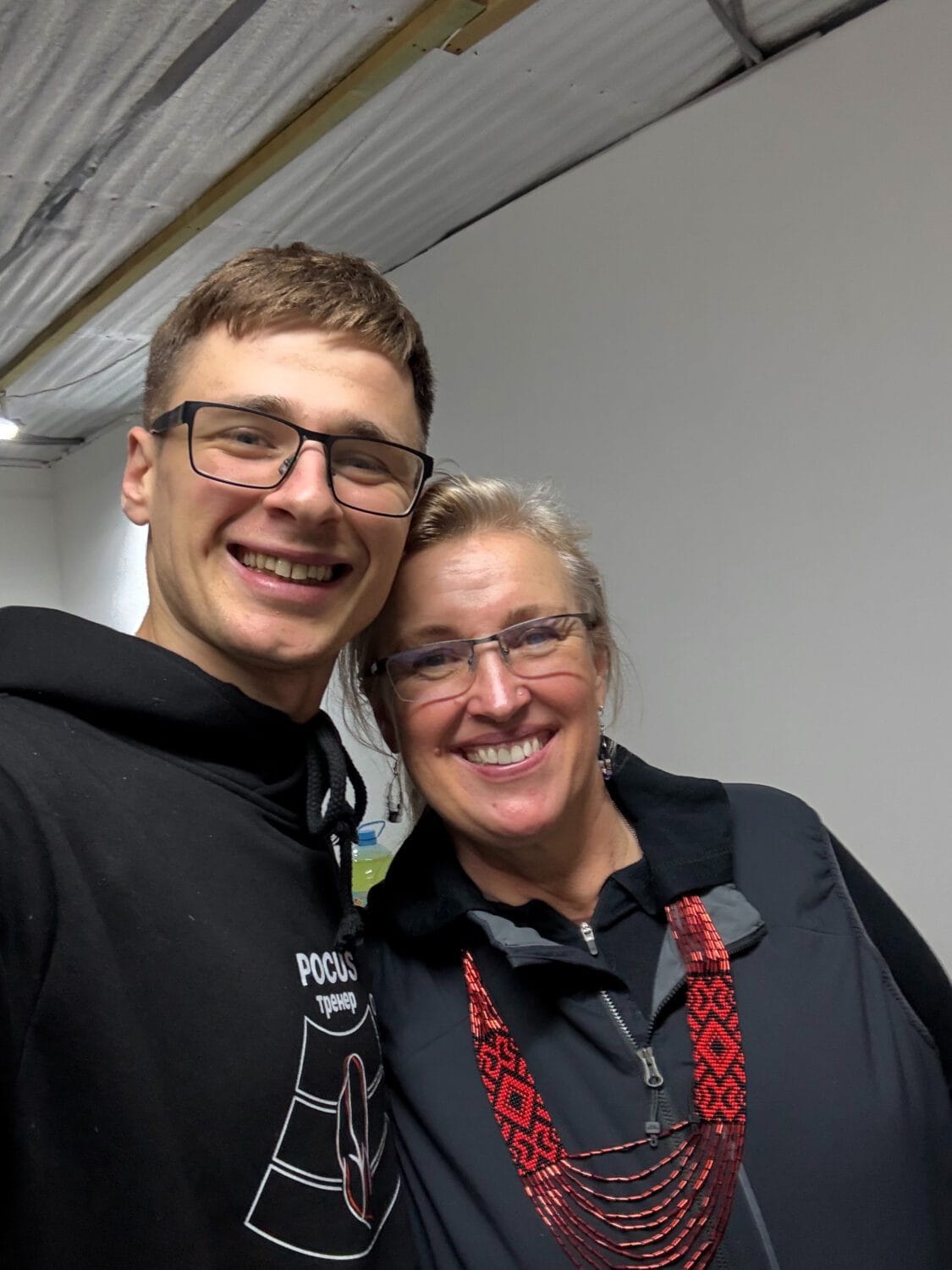
Our medical student translator arrived bearing the most generous gifts: an intricately beaded traditional necklace for me, and an air defence shell casing for Ron. Only in Ukraine would ammunition remnants become tokens of friendship.
Refugees Seeking Refuge in a War Zone
The full day of patients revealed a paradox that still haunts me: even in this area under constant attack near the Russian border, many people were actually refugees from even more dangerous places like Kherson. They had fled somewhere so catastrophic that a town with perpetual air raid alerts felt safer by comparison.
The church hosting our clinic had become far more than a medical venue—it was a lifeline providing accommodation, food, clothing, and evacuations for thousands. The pastor told us that at one point, 7,000 refugees had passed through this small village. I’m fairly certain that exceeded the town’s entire population.
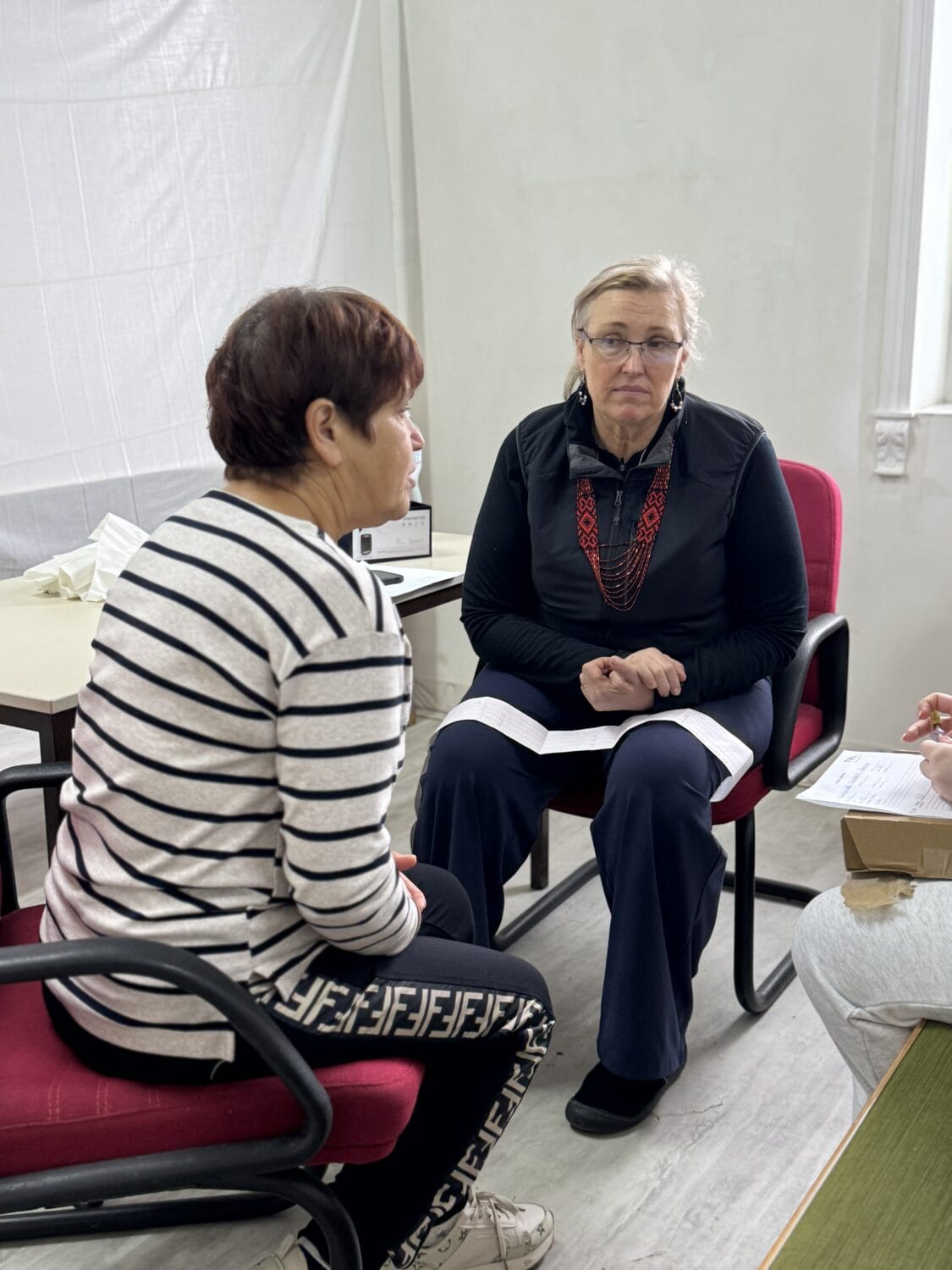
Nearly every patient I saw carried the crushing weight of stress, depression, or anxiety. Most older women had sons or husbands at war. Many had lost loved ones on the frontlines. Nearly everyone struggled to access basic healthcare, caught in the grinding poverty that conflict creates and perpetuates.
The pastor, also a trained counsellor, offered to spend time with patients who simply needed to talk. Nearly every patient I mentioned this to eagerly accepted. There’s a particular kind of trauma that comes from living under constant threat—it embeds itself in the body, the nervous system, the fabric of daily existence.
One woman quietly shared that all three of her sons were fighting. Another, deeply traumatised, described how Russians bombed her house in 2014 in the Donbas. Her baby was killed. A decade later, she’s never truly recovered. How does one recover from such loss?
Meanwhile, the night brought its grim accounting: six killed in Zaporizhzhia including two children. Four more in Kyiv. Two journalists.
My translator showed me footage from when her hospital—a major children’s facility in Kyiv—was hit. The operating room destroyed. She described a shahed landing nearby, the certainty that she was about to die. The video was viscerally confronting. The experience had clearly left deep scars that no amount of time would fully erase.
The Second Day: Patterns of Trauma
Another clinic day in a different village brought more of the same overwhelming cascade of trauma—mothers with sons at war, people too impoverished for healthcare, lives shattered by relentless bomb threats. I conducted a teaching session for the clinic team, sharing what knowledge I could offer in a context where theoretical medicine constantly collides with desperate reality.
One woman’s story particularly stayed with me. Deeply traumatised, she recounted how Russians bombed her house in 2014 in the Donbas. Her baby was killed. She’s carried that loss for a decade now, the grief never quite processed, never quite past.
Dr Mykola later showed Ron a technical training facility that had been bombed in Bohodukhiv. He shared stories of times he felt divinely protected—bombs hitting places he’d just left moments before. There’s a particular kind of survivor’s guilt that comes with repeatedly escaping death by chance.
Packing up the makeshift clinic became an unexpectedly labor-intensive mission. Hours of unscrewing wooden frames, carrying piles of materials, disassembling what had taken so long to construct. With every bolt removed, I thought: we absolutely must raise funds for proper portable medical screens that simply fold out and up.
Eventually we ladies left the men to finish while Oksana treated us to a traditional Ukrainian sauna experience—alternating between intense heat and cold plunges, gathering around a small table with tea, snacks, and conversation. It was surprisingly lovely and restorative, a brief pocket of normalcy carved from relentless abnormality.
When the Sky Explodes
We woke to more air raid sirens cycling through the predawn darkness. Checking my phone revealed they’d been sounding almost continuously through the night. Now there was a threat of an Oreshnik launch*—thankfully unrealized. Still, ballistic missiles had hit Kyiv’s main power plant and more residential buildings. The casualties from other towns were too numerous to catalogue individually, but they accumulated every night into a relentless toll.
(*The Oreshnik is a hypersonic intermediate-range ballistic missile system—essentially among the most sophisticated weapons of destruction currently deployed.)
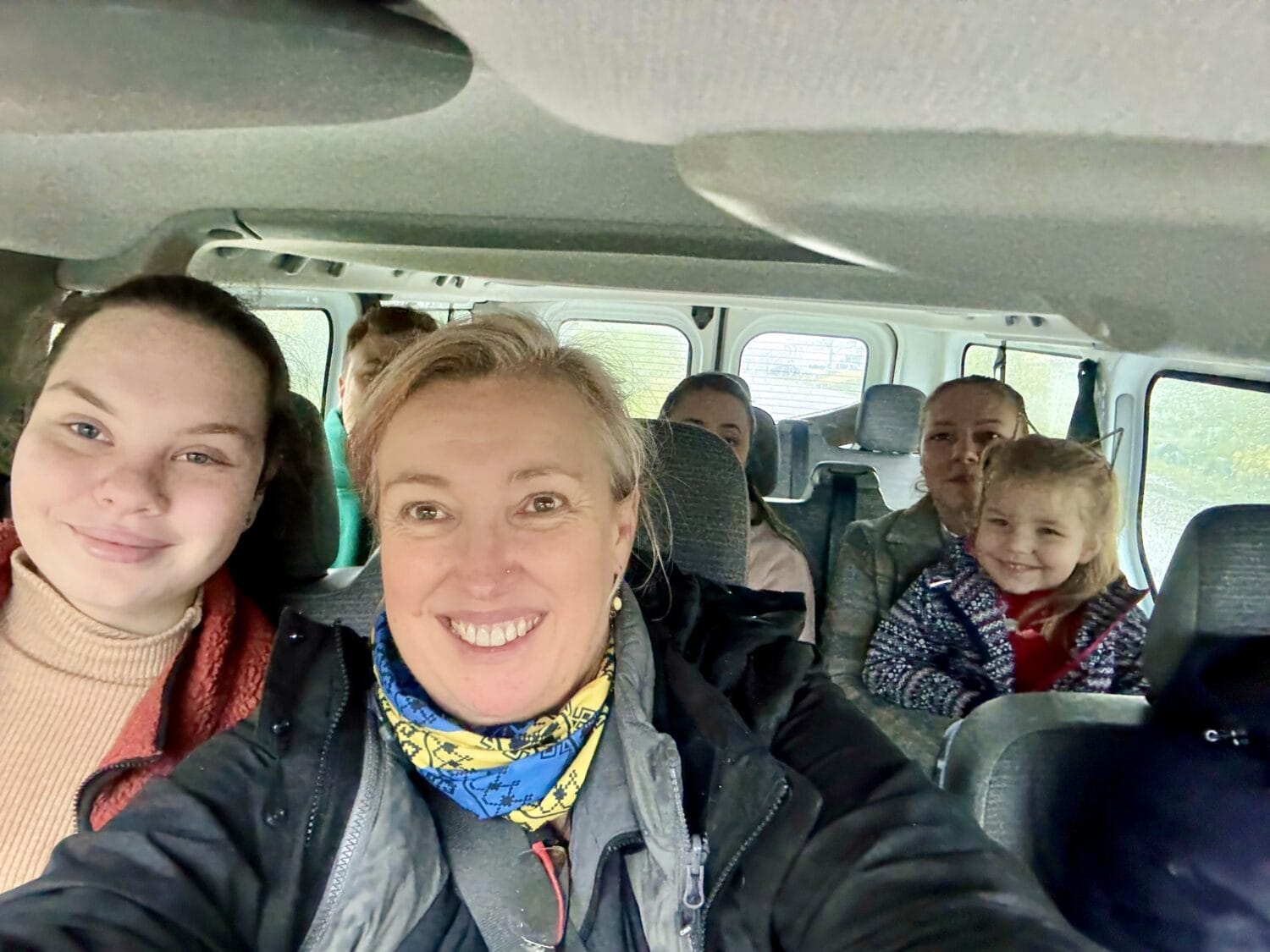
Our translator needed to return to Kharkiv urgently for family reasons, so Ron and I offered to drive her back through three military checkpoints. We joked about how familiar Ron’s face must be to the soldiers by now—he’d been through so many times picking people up or helping out.
Heading back, critical alerts for Bohodukhiv suddenly lit up our phones. We pulled over. Ron heard air defence systems engaging. I started filming, just in case.
Then the sky lit up with a massive explosion.
We’d just witnessed a shahed drone being shot down directly overhead. Seconds later, the concussive boom reached us, shaking the air itself. More shaheds were reportedly incoming over Bohodukhiv, so we decided to wait it out on the roadside in the gathering darkness.
Suddenly, a vehicle emerged from the forest. We froze. Almost certainly military—would we look suspicious just sitting here? It pulled up right beside us. We were too frightened to look, waiting for someone to approach and demand explanation. But they just sat there. Finally, we peeked across: a pickup truck with mounted anti-aircraft guns used to shoot down shaheds. Ron whispered encouragement—”Go guys!”—though they couldn’t hear him. They turned around right in front of us and disappeared back into the darkness.
Suddenly remembering curfew, we hurried back as regular traffic evaporated and military vehicles materialized everywhere—trucks backing across roads, loading equipment, convoys forming. Later, from our hotel window, I watched tanks and armoured vehicles rumble north toward the combat zones.
Back at the hotel, no one had any idea that weapons of destruction had been intercepted overhead. Honestly, most seemed not to want to know. Later it made profound sense—probably not conducive to mental health, contemplating massive explosive devices raining down on your town as your children sleep.
The Mathematics of War
Waking to more overnight alerts, I wondered how many other shaheds had been shot down without us witnessing them, invisible violence prevented in the darkness above sleeping civilians.
This is the machinery behind frontline healthcare: mobile clinics in churches, GPS systems that lose coherence under attack, refugees fleeing to war zones because their original homes have become even more lethal, and air defence systems working overtime while people attempt something resembling normal sleep.
Every patient carries impossible weight. Every night brings new casualties. The trauma is relentless, layered, intergenerational. And yet the work continues—doctors drilling wooden screens together with painstaking care, translators braving constant alerts to ensure communication, pastors counselling the traumatised, medical teams showing up day after day after day.
Your donations don’t just fund medical supplies. They fund the possibility of dignity, of healing, of hope in places where hope has become the most radical and necessary act of resistance.
The question isn’t whether to help. The question is whether we can bear to look away.