

17-19 October 2025
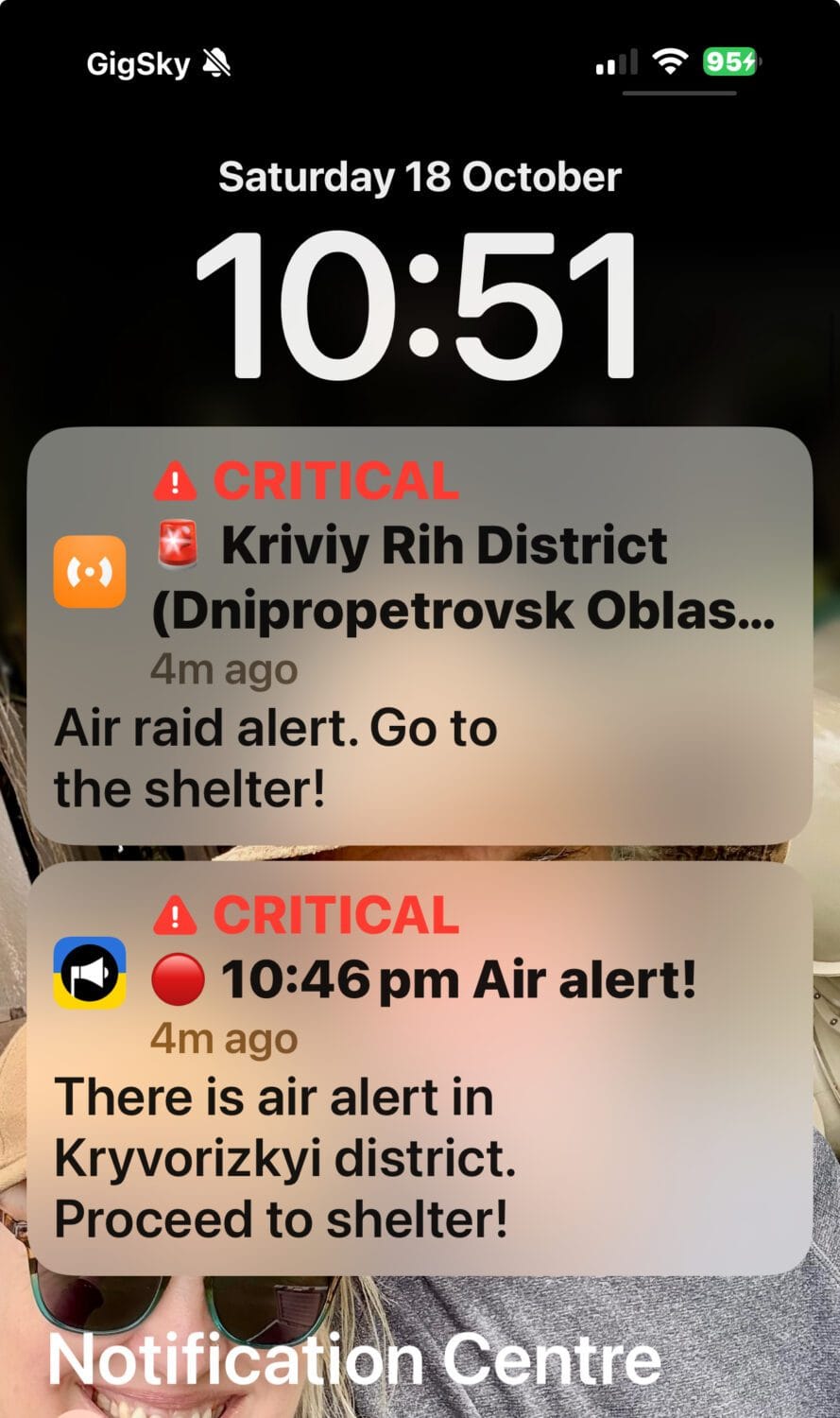
We woke up on the 17th to discover we’d slept through a massive Shahed drone attack on Kryvyi Rih. My phone was full of alerts I’d missed because we’d turned off the overnight notifications – we were in a relatively safe spot and weren’t going to run to a shelter anyway. Ron had been awake and heard the explosions. I, apparently, can sleep through anything.
Lola, one of the church volunteers and our translator, had messaged during the night asking if we’d heard the explosions. I only saw her messages that morning. The power plant had been hit – part of Russia’s ongoing campaign to destroy Ukraine’s power and heating infrastructure before winter. The electricity went out for most of the day, and the flat was absolutely freezing. Not that power helps much anyway, because the heating here runs on a Soviet-era central gas system that normally gets switched on around this time of year. Except it’s been postponed for at least a month because Russia keeps hitting the gas supplies too.
So here we are, not even in winter yet, wandering around the flat in all our jackets and piling blankets on ourselves when we sit down. It’s going to be a long few months for Ukrainians.
Bread, Volleyball, and the Teens Who Wouldn’t Let Us Leave
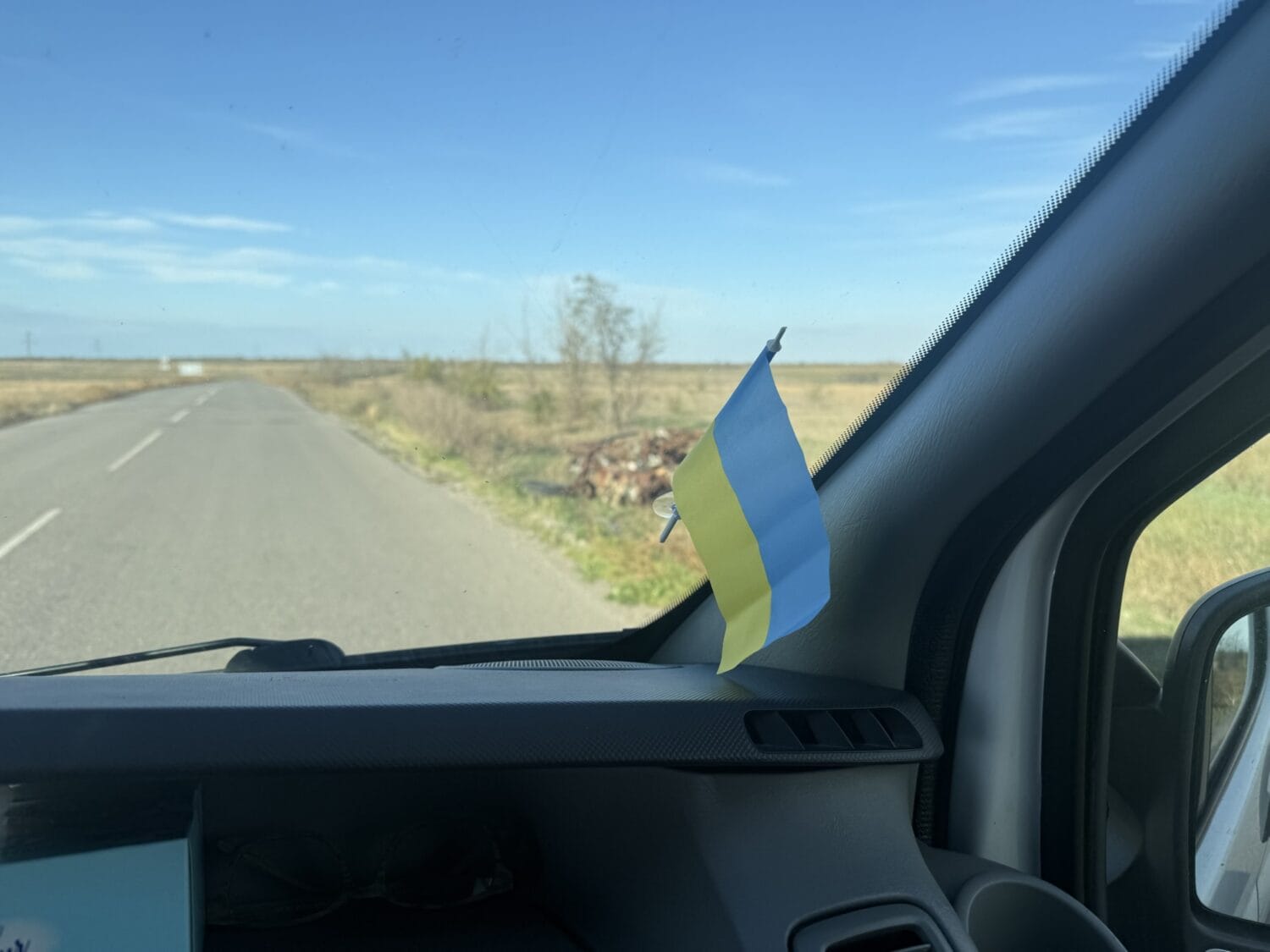
The next day we met up with the church volunteers and collected bread from a local bakery that makes it from donated flour. We were heading out to the de-occupied villages – the ones that had been under Russian occupation and were liberated in 2022, still bearing all the scars.
As we drove, Lola told us about living in a part of town where you could always hear the explosions more loudly when the city was attacked, and how traumatising it had been. She’s grateful that where she lives now, she hears them more rarely. It’s a strange thing to be thankful for – that you only sometimes hear explosions instead of all the time.
The closer we got to the villages, the more evidence of the fighting we saw. Burnt-out cars near checkpoints that had obviously been hit by something. Houses destroyed or damaged. This area had been badly shelled.
When we pulled up in the village, people started appearing. Kids came out, some on bicycles, a few shyly grabbing a ball and heading over to the volleyball net set up on the grass in the village centre. While we waited for things to start, we played volleyball with some of the older kids and teens. The ladies handed out the bread we’d brought, and we donated some items for the kids’ group they run there – pencils, colouring books, textas, and frisbees.
Then something beautiful happened. The locals all joined together to sing songs and pray. As they went around in a circle praying, I realised that nearly every one of them was praying for their men and women on the frontlines, for their army, for peace and for victory. These people knew what it was to be under Russian occupation, and they understood the need for victory and freedom.
We were asked if we wanted to run a group with the older ladies or the teens. Given our experience with Kowanyama youth back home, we thought we’d have a go at the teens. The locals smiled at each other and warned us we’d only keep their attention for 15 minutes.
One hour and 15 minutes later, we were being told to wind it up.
Of course, the novelty of Australians in a remote village probably helped, but we had some really great in-depth discussions with the kids. It was one of those moments that reminds you why you’re doing this work.
The Skipping Rope and the Boys Who Couldn’t Believe It Was Theirs
Later, a couple of little boys were playing out the back. We gave them a skipping rope. They didn’t know how to use it but greatly enjoyed watching Ron demonstrate. When they had a go, they weren’t very coordinated – I found myself wondering if this was because during some of their formative years they’d had limited activity as they hid from bombs. Anyway, they seemed determined to work it out.
When we started to leave, these tiny boys wrapped up the ropes and tried to put them in my handbag. I tried to explain that it was for them to keep – it was like they couldn’t believe it and wanted to be really sure. When they finally accepted it, they said the loveliest thank you. Such polite, gorgeous kids.
Four Varieties of Grapes and a Man Who Didn’t Believe They’d Hurt an Old Man
The team asked me to visit a man and his wife for a medical consultation. They’d given me all his medical tests to review and wanted advice. Thankfully, he’d managed to get to the town and receive good care from a doctor there, so there wasn’t much for me to add, but I did a summary for him.
After our chat, he shared some of his homegrown grapes with us. Ron helped him pick some as he could no longer safely reach them. He was very proud of his four varieties of delicious grapes.
Then he started sharing his story.
When the Russians came, he didn’t try to flee – he didn’t really believe they’d do anything to an old man. But he was wrong. He was beaten and tortured by the Russians. A close relative was tortured to death because of his association with someone who had fought against the Russians in 2014. He showed us his missing teeth that the Russians had knocked out.
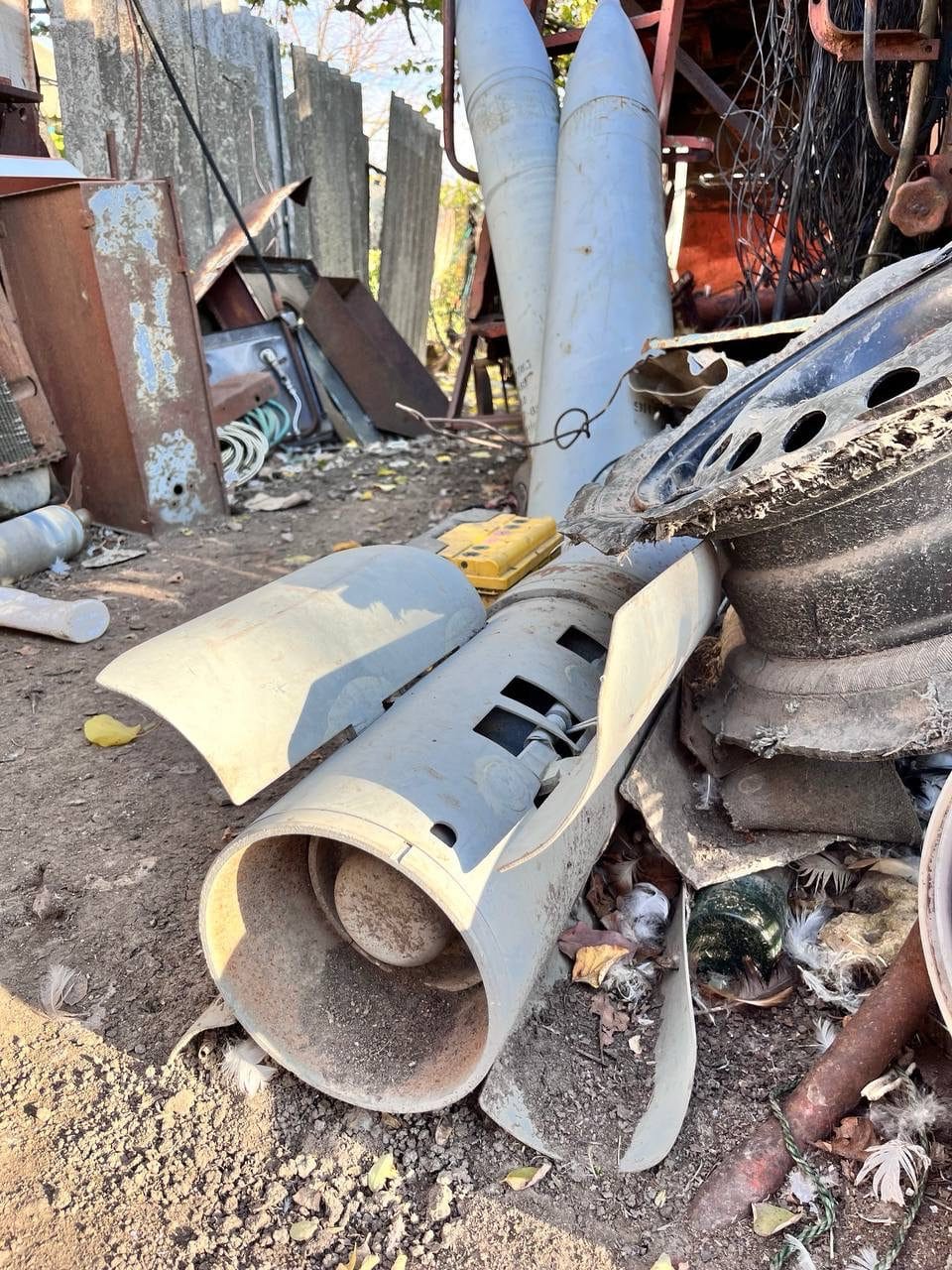
During the occupation, he was unable to get any medicines. His high blood pressure led to a stroke. He now no longer has the strength to work his small farm. He showed us all the rockets that had fallen in his yard, pieces of shrapnel and grenades that had damaged his farm equipment and houses. His fields are full of mines, but anyway, he doesn’t have the strength anymore to work them. The young people have left because the villages were destroyed and there’s no work.
After liberation, he helped the military demine until more professional sappers arrived. Now, he said, reconnaissance drones fly over almost daily. Sometimes there’s still shelling in the village, usually after a reconnaissance drone has been spotted overhead.
I was really hoping it was a mistranslation when he mentioned he’d seen one that morning.
During the occupation, there was no access to medicines or healthcare, and many people were tortured or beaten in this village. “All this stress contributed to my stroke,” he said, “and took away my strength.”
Later, Sveta told us that he’s a very kind man who often helps soldiers and ex-soldiers, letting them stay at his house. Looking into his kind eyes, I believed it completely.
The Checkpoint, the Dam That Isn’t, and Artillery Shells to Avoid
On the way back, we were stopped at a checkpoint. It was pretty intense – the whole thing covered with nets to protect from FPV drones. I wanted to take a photo but quickly learned there are hefty penalties for photographing military sites. For obvious reasons.
Driving through these areas, we saw debris and remnants from the intense fighting when this territory was liberated in 2022. Burnt-out tanks and cars. One vehicle where many lives had been lost had been turned into a memorial.
Lola told us that her husband and Sveta had come through one village soon after the initial liberation in 2022 to help and were shocked when a car in front of them was hit by an artillery shell. In another village, Sveta had gone to help straight after liberation and there were still bodies of Russian soldiers in the streets.
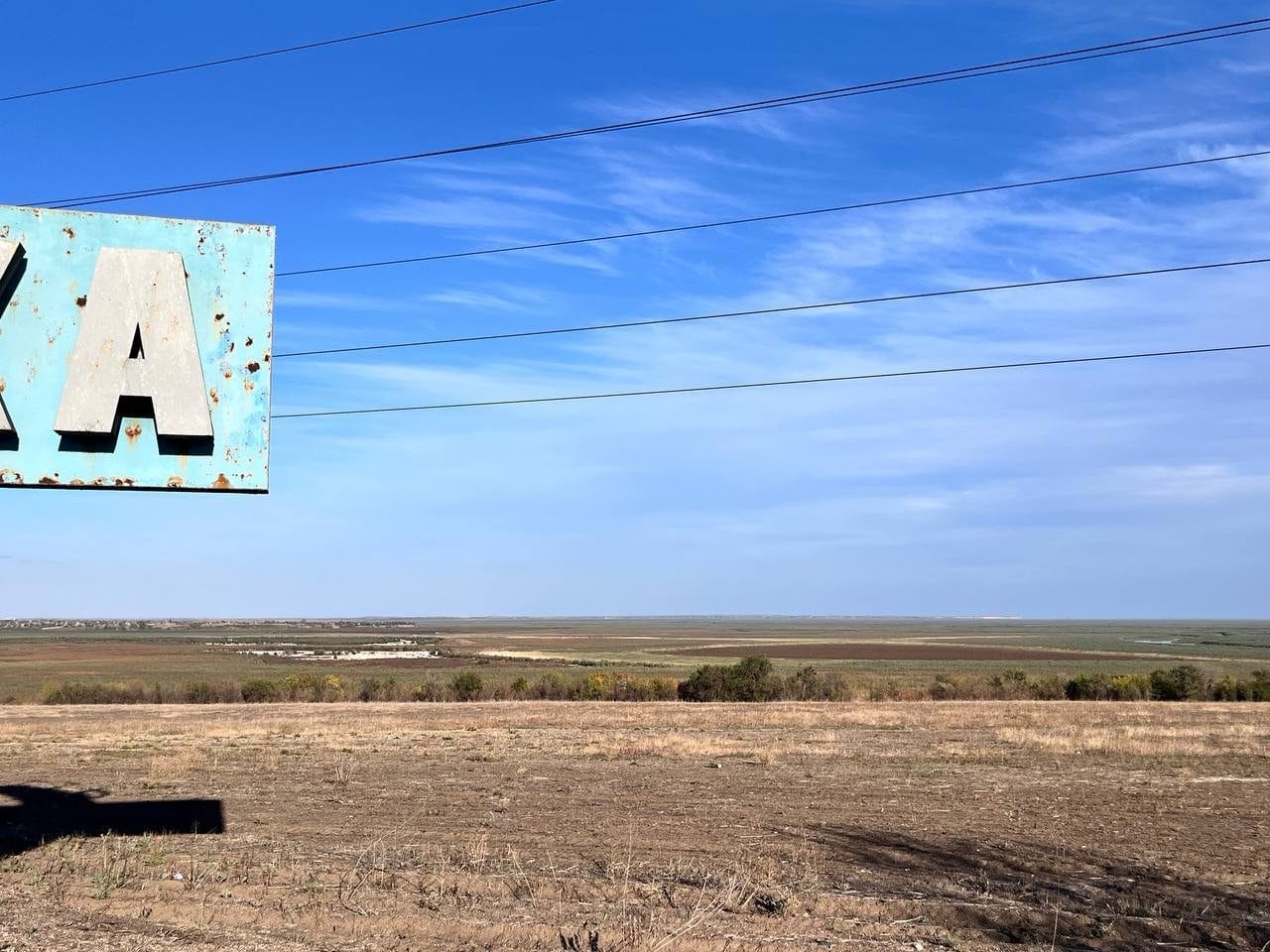
We stopped at a lookout to see where the mighty Kakhovka Dam once stood – 250 kilometers long, providing water for thousands of villages and farmers, irrigation and replenishment for bores. Russia bombed it on June 6, 2023, flooding the area, killing thousands, and depriving entire communities of their water supply. Locals attribute the reduced precipitation in the area since then to the loss of this huge water mass, saying it’s meant failed sunflower crops on top of all the other massive challenges of mines and damaged infrastructure. Some suspect that less evaporation from the huge dam has led to less rain. It’s possible, I guess, though I’m not entirely sure.
As we looked across to the other side of the river where the dam once was, Sveta casually mentioned we shouldn’t loiter too long because the Russians were over there, not that far away, and we might attract attention and an artillery shell or two.
Nothing like a bit of potential incoming fire to cut short your sightseeing.
We stopped at a roadside village stall to buy tomatoes and capsicums. I accidentally gave the vendor a Polish note instead of Ukrainian money, which gave him a good laugh. It was nice that he pointed it out – Polish money is worth ten times as much!
Stories That Stay With You
On the drive, they told us about their friend, a well-known youth pastor in the city. He was driving past a hotel, taking a different route than usual, when a shahed drone hit the building. He was killed by the explosion. Everyone was really shaken and saddened.
The Russians had been systematically targeting hotels across Ukraine. This particular one – which was both a church and a hotel – they’d hit four times. That’s why Iryna wouldn’t let me stay in a hotel last time I came.
She also told us about the bomb that targeted a playground – full of nails to inflict maximum damage. Impact was at a time when lots of people were out in the playground. Lola was in a cafe just a block away, but a building between her and the explosion protected her.
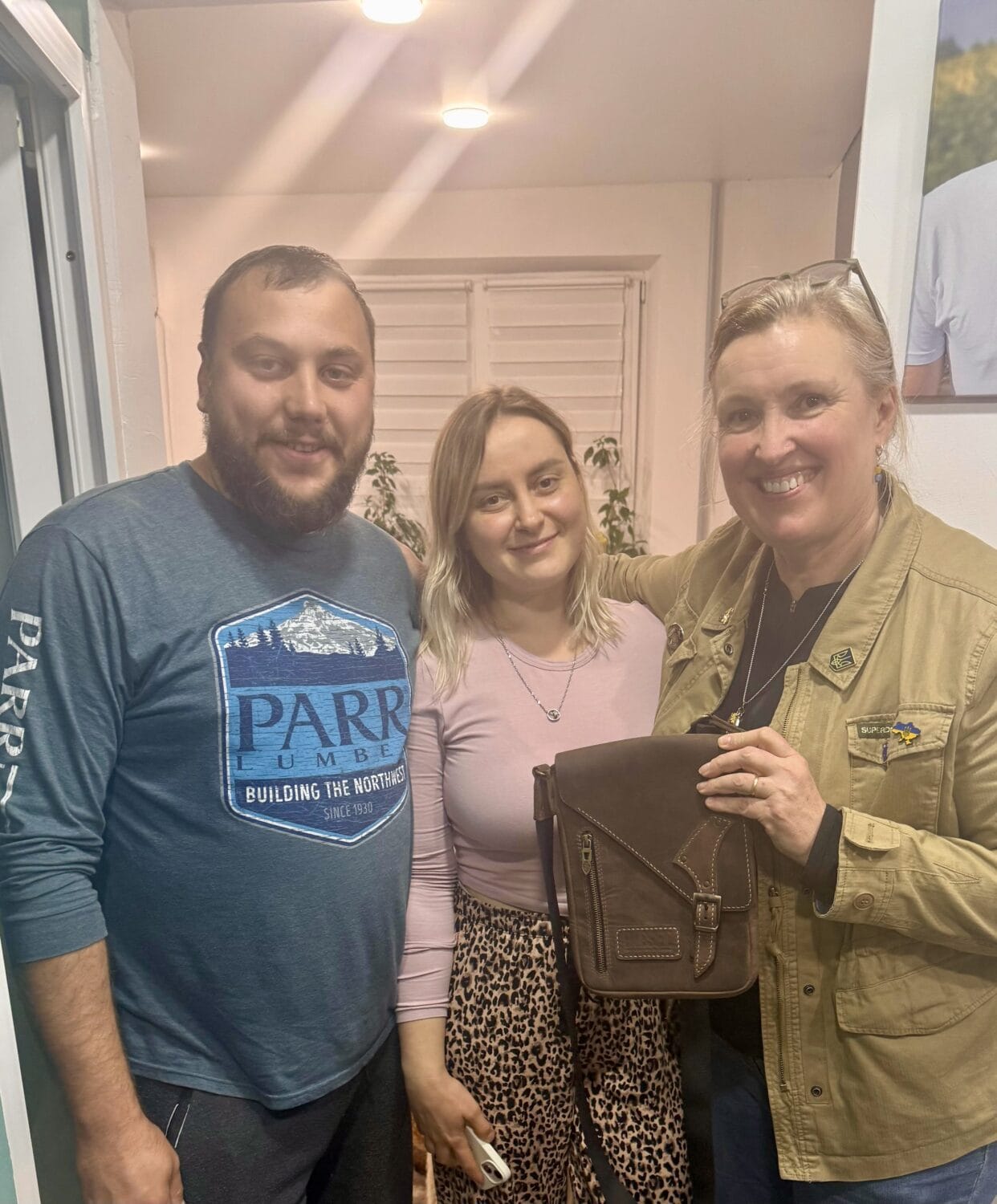
We got back to Lola’s house, and she and her husband and the others served us a magnificent home-cooked dinner with so much amazing food. And then, as if she hadn’t done enough already, they gifted me an incredible handmade leather bag that her husband’s friend had made.
Sunday: When Soldiers Clean Your Car and Everyone Gives You Everything
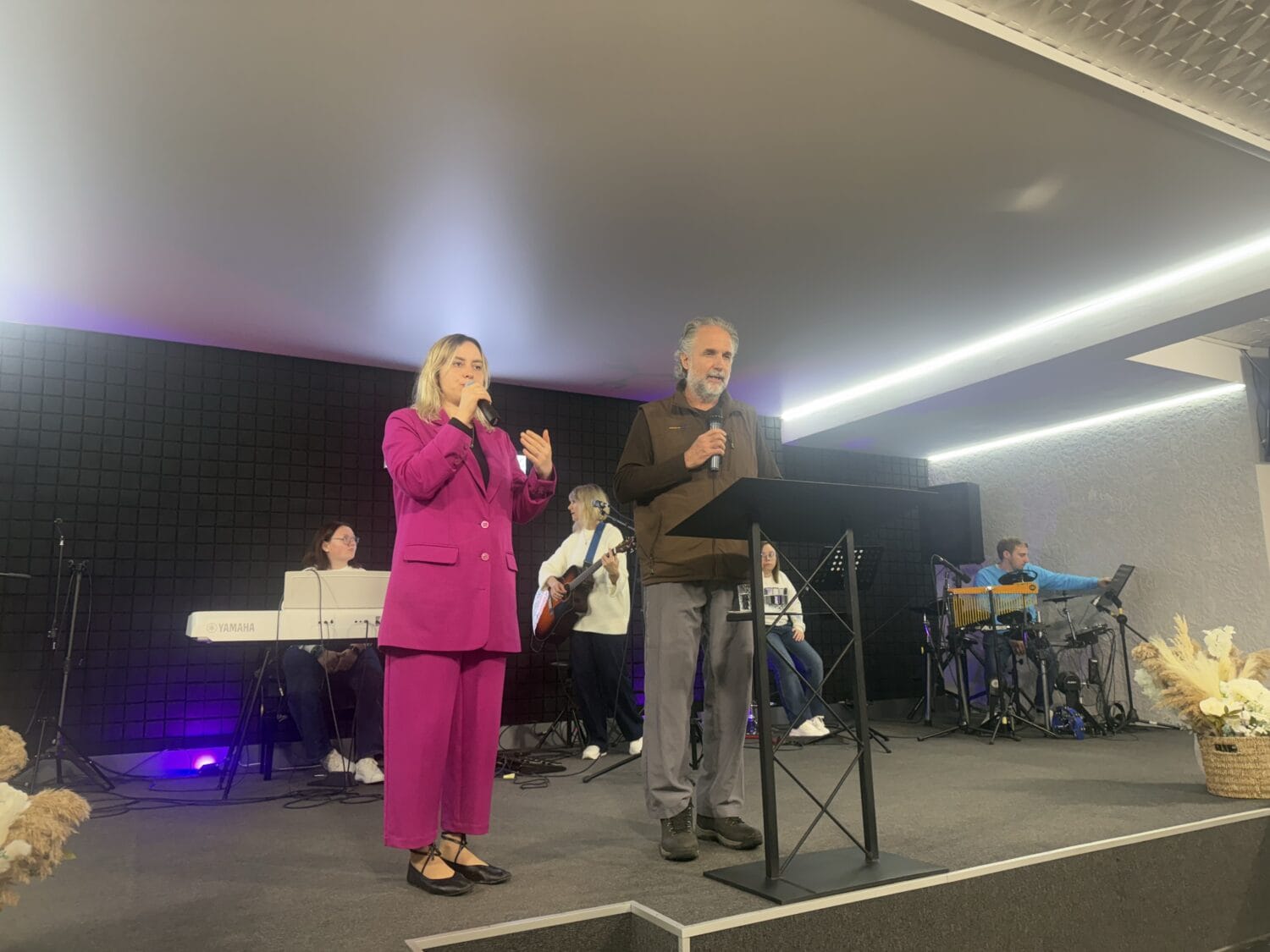
The Banner of Love church service on Sunday was something special. Olena, who had been our fill-in translator before Lola arrived, shared her story. At the beginning of the war, her husband and father went to fight. She became a Christian since the invasion through this church. You can see she’s full of His love, pouring it out into community work helping the broken. She works particularly with soldiers’ wives as a volunteer and is a disability teacher for her day job.
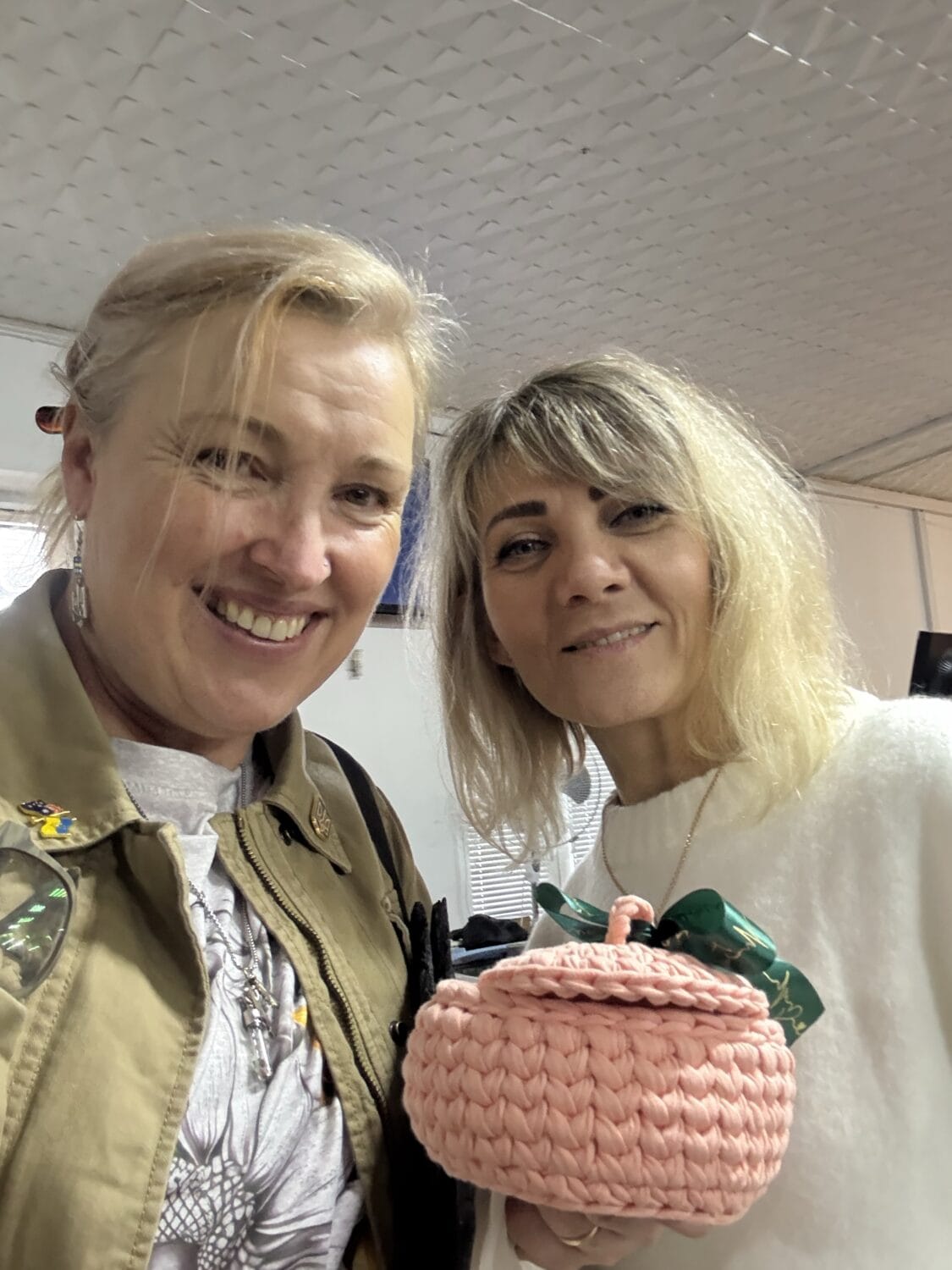
The generosity and gratitude were overwhelming. People gave us bags, handmade gifts, plaques. Someone even cooked us lunch and put it in a container for us to take on the road.
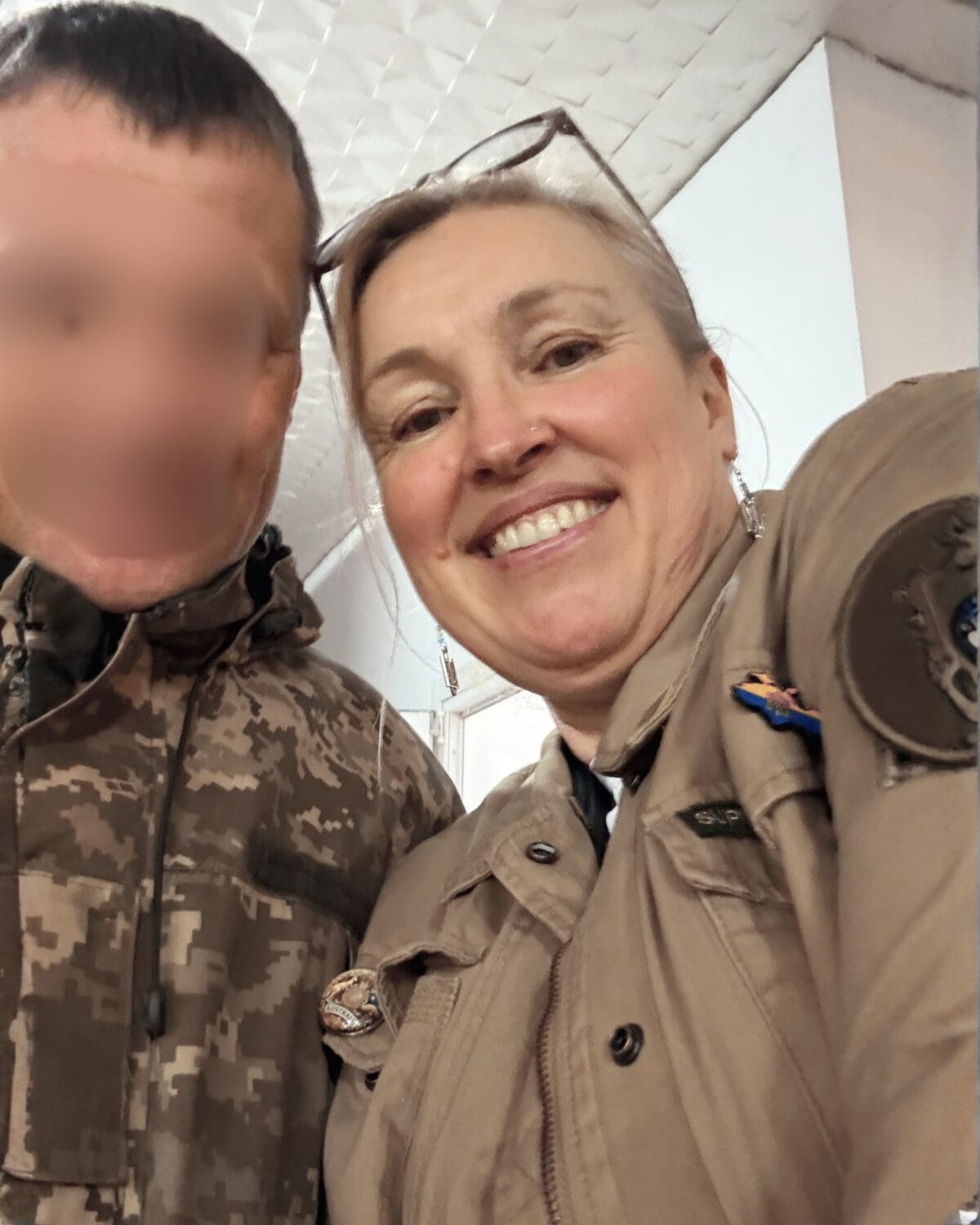
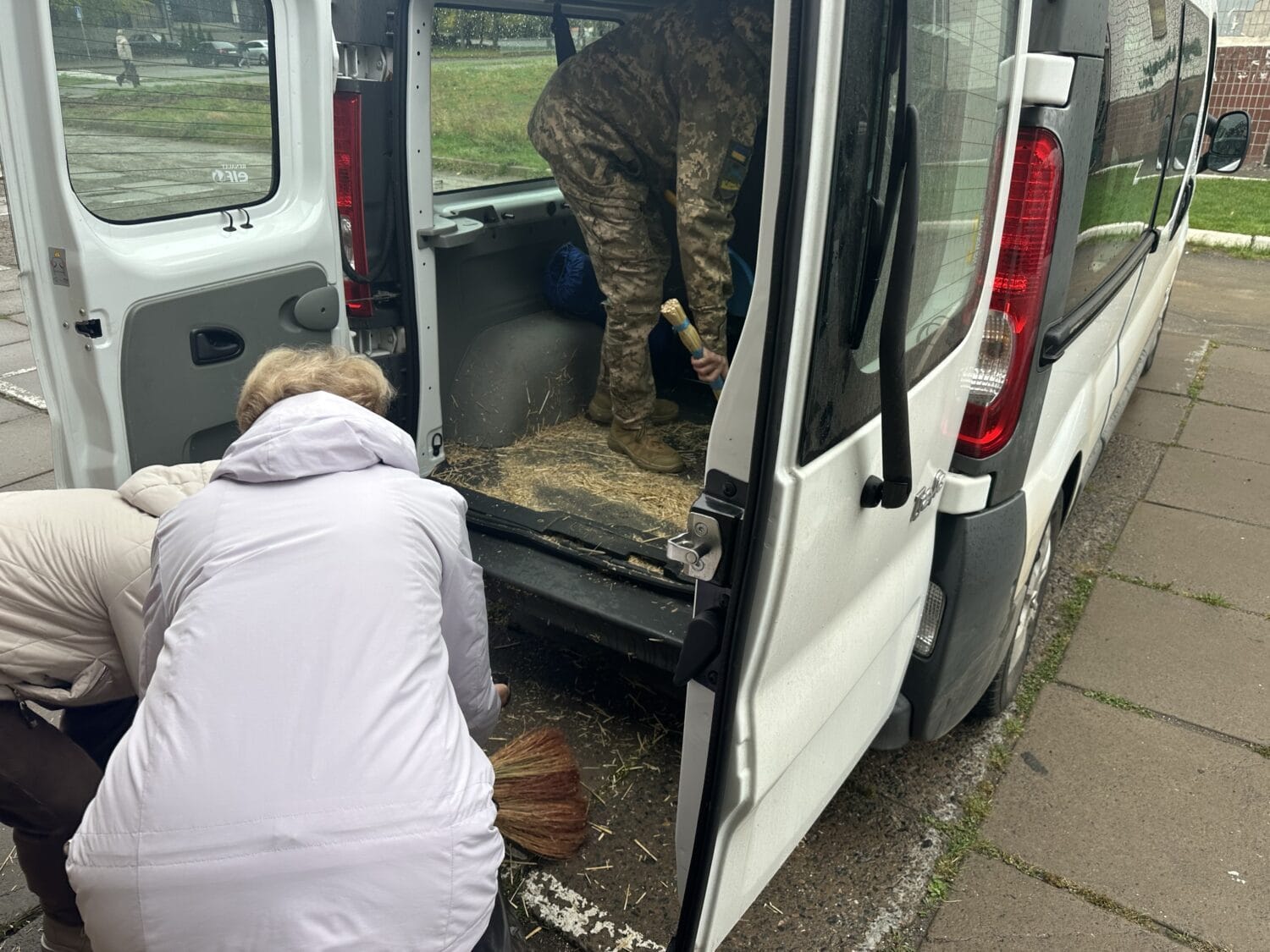
A soldier came and thanked us, hugged us, and gave me one of his chevrons. I gave him an Australian patch in return. Then he went to help Ron clean the hay out of the back of our car – hay we’d brought from the village. Ron told me later he became quite overwhelmed at the thought that a Ukrainian soldier, who already risks and gives so much, would be cleaning out our car.
Someone at the church mentioned that ten members of their congregation are currently on the frontlines.
So many people came and hugged us, thanked us for being there. One guy just randomly walked up and gave us two printed bags as gifts. The warmth and love were palpable.
What They Don’t Tell You About Living Through This
Over lunch with Pastor Oleg, Sveta, and Lola, we learned something interesting: many Ukrainians don’t have air alert apps or follow all the news about Ukraine because of the effect on their mental health. Several people had told us this. Lola mentioned how Ukrainians living abroad contact them about different things happening in Ukraine, and they often have to say they don’t know about it because those abroad follow the news more closely than they do.
It’s a strange reality of living in a war zone – sometimes you have to tune out the constant stream of bad news just to maintain your sanity and keep going.
And somewhere in eastern Ukraine, there are two little boys learning to skip rope, a soldier with an Australian patch, and an old man with four varieties of grapes who helps soldiers find a place to stay.
The medical van continues to serve these communities, bringing not just supplies but connection, hope, and proof that the world hasn’t forgotten them. The needs are enormous and ongoing. If you’d like to support this work – fuel, medical equipment, supplies for these villages, maintenance of the medical training vehicle – you can contribute through our Chuffed campaign or donate directly through our website (less fees).
Every dollar goes directly to the work and a dollar goes much further in Ukraine. These villages would love to know they are not alone. These soldiers deserve to know their sacrifice is known and appreciated. These church volunteers who give all they can, would happily give more if they could. Please, any help would be gratefully and thankfully received.


Heading Title
- Ukraine humanitarian trip
Korosten Mobile Clinic: Caring for Families of Ukraine’s Fallen
by opt@passingthrough.net 17 minutes readMobile clinics in Korosten, Ukraine: caring for families of the fallen, sirens during church, and quiet heroes serving without headlines.
- Posts About Ukraine
Russia Is Now Bombing Ukraine’s Food Supply
by opt@passingthrough.net 5 minutes readRussia is bombing supermarkets and food warehouses across Ukraine. This isn’t about the battlefield — it’s about making life unbearable.
- Ukraine humanitarian trip
This Is Ukraine: Inside a Retreat for War-Weary Healers
by opt@passingthrough.net 7 minutes readInside a Ukraine retreat where students carry whistles, commanders share stories and send flowers, and joy survives the war. Meet the people OPT supports.
- Ukraine humanitarian trip
From Lviv’s Market to a Mountain Retreat: MedMission 2026
by opt@passingthrough.net 11 minutes readFrom Lviv market mornings to a mountain retreat for exhausted doctors: life, loss and resilience as Ukraine braces for its hardest winter yet.
- Ukraine humanitarian trip
Back in Ukraine: Our 2026 Mission Begins
by opt@passingthrough.net 9 minutes readWe’re back in Ukraine for five months. Borders, bureaucracy, air raid sirens and watermelons the size of small children — mission one begins.
- Posts About Ukraine
Today We Begin the Journey Back to Ukraine
by opt@passingthrough.net 2 minutes readToday we start the 3-4 day trip to Ukraine for a five-month deployment. Here’s what we’re doing, and how you can stand with us.
